Half-zip training top
Football / Soccer / Running & Athletics + 2 more
Top only · Long sleeve · half zip
 KITOEM
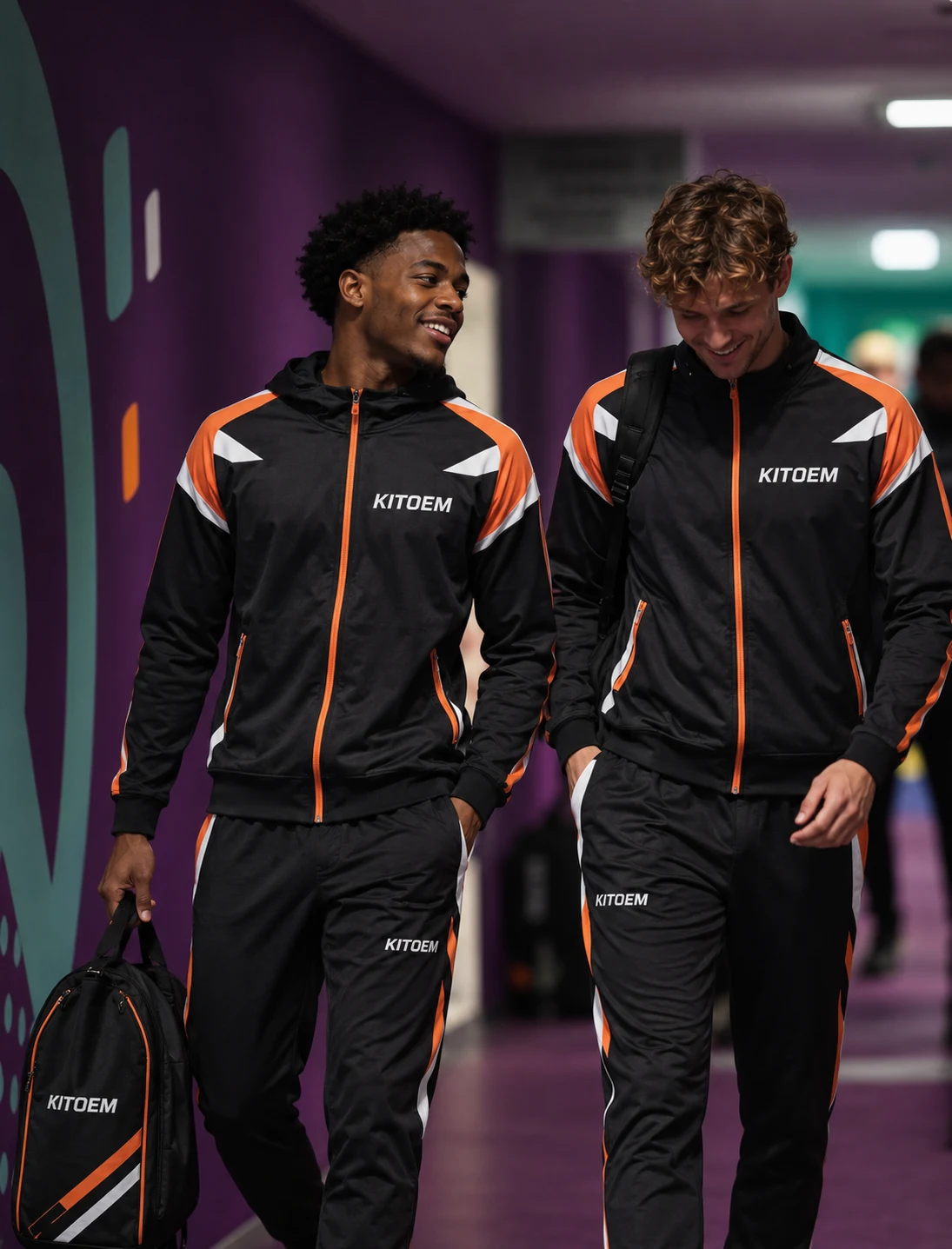
Training apparel connects warm-up, repeated practice and the journey off the pitch. KITOEM’s range includes training T-shirts, half-zips, bibs, practice jerseys, shorts and pants, with sport-specific development directions alongside existing product records.
Build the layers you actually use. The top, lower-body garment and optional warm-up layer remain separate products in your enquiry.
Choose your starting point
Click an image to select or remove a reference.
Set quantities and notes in your enquiry.
63 references
Styles, sport options and design briefs. Counts include related options, not independent products or stock.
Football / Soccer / Running & Athletics + 2 more
Top only · Long sleeve · half zip
Construction, up close
A training sample needs more than a standing fit check. Raising the arms, squatting, sitting and wearing a second layer reveal different pressures on the neckline, pockets and waist. Build those movements into the review for the intended sport.
On a half-zip, define opening length, collar height, zipper pull and the inside finish at the chin. Close and open it while wearing the intended base layer. A longer opening changes access and appearance; it should be a conscious construction choice.
Review the underarm and shoulder through overhead reach and cross-body movement. Compare relaxed and closer fits using the actual cloth, not only a size name. Record sleeve length and cuff opening separately from chest width.
Choose pockets for the session rather than adding them by habit. Specify opening, depth, closure and bag position. For pants and shorts, inspect the waistband while bending and sitting, then decide drawcord location and how it is finished.
Approve the lower opening for bare ankle, socks and the footwear routine. If an ankle zip is requested, define its length and inside finish. Test the complete layering combination so a neat outer silhouette does not conceal a cramped inner layer.
Choose for the wearer
A practice shirt, warm-up layer and underlayer have different jobs. Keep their fabric, fit and quantities independent even when the colours match.
| Session need | Useful starting products | Define before sampling |
|---|---|---|
| Active practice | Training T-shirt, practice jersey, shorts or sport-specific practice bottoms. | Reach and squat fit, shirt/waist overlap, pocket or no-pocket choice and separate size breakdowns. |
| Warm-up & cool-down | Half-zip, shooting top, warm-up jacket and training pants. | Layering ease, opening type, sleeve/cuff length, zip contact points and the changeover routine. |
| Training groups | Bibs and reversible practice-jersey references. | Group colours, over-garment clearance, neckline access and identification on both sides where applicable. |
| Next-to-skin & specialist | Base-layer tops, tights and sport-specific development directions. | Coverage, seam position, intended fit and relationship with the outer garment. Review stretch and recovery through the chosen sample/test scope. |
Working with KITOEM · Xiamen, China
Training apparel is part of KITOEM’s own-production focus in Xiamen. Our primary contact team coordinates development, sample confirmation and production around the product brief, with in-house printing, embroidery, label application and packing.
Build a range for the actual training programme: a practice T-shirt for active sessions, a half-zip for warm-up and separately sized pants or shorts. Shared colours and brand details connect the range visually; each product retains its own fabric, fit, trim, quantity and approved production version.
Explore our production & quality approach ↗A starting point, not three compulsory steps
Bring a Tech Pack, drawing or approved sample. Review measurements, material, construction, artwork and the production version for each product.
Explore this route ↗Bring the intended wearer, use and visual direction. Develop the product brief, then use the sample stage to close fit, cloth, trim and artwork decisions.
Explore this route ↗Select a catalogue record. Identify which base details stay and which colours, marks or trims you want to change, before approving the applicable sample route.
Explore this route ↗From an attractive design to a usable specification
For an academy programme, separate daily-practice T-shirts and shorts from coaches’ layers and warm-up pants. Repeated session use can require a different quantity mix from the player count. Add those quantities in the enquiry, without forcing every wearer into an identical bundle.
Before the next step
Yes. This collection brings together training tops, half-zips, bibs, practice jerseys, pants and shorts, plus sport-specific development directions. The product-form and sport filters help narrow the session you are planning.
Yes. Treat them as separate specifications. Review handle, movement and layering together, but assign each garment its own fabric reference, measurements and approval record.
Not necessarily. Decide the sport and intended use first, then pocket placement, closure and opening. Review the resulting garment during movement; a travel-pocket preference should not automatically become a match or contact-training requirement.
Review it over the actual garment or layering reference. Record body and armhole clearance, finished length and neckline opening rather than copying the shirt’s size label.
Send intended use, fit reference, chest/body/sleeve measurements, collar and opening direction, artwork and trim preferences. A sample or clear inside/outside detail photograph helps communicate the zip and chin finish.
Another product in mind?
Share a product idea, drawing or reference. We accept complete sportswear, team apparel and non-protective supporting-product briefs, with each specification developed for its intended use.