
The decision in one paragraph
Build a training range around use rather than forcing every item into one set. Define whether each piece is for warm-up, regular training, travel or sideline use. Keep tops and pants as separate lines with their own quantities, sizes and construction details.
Map every product to its use
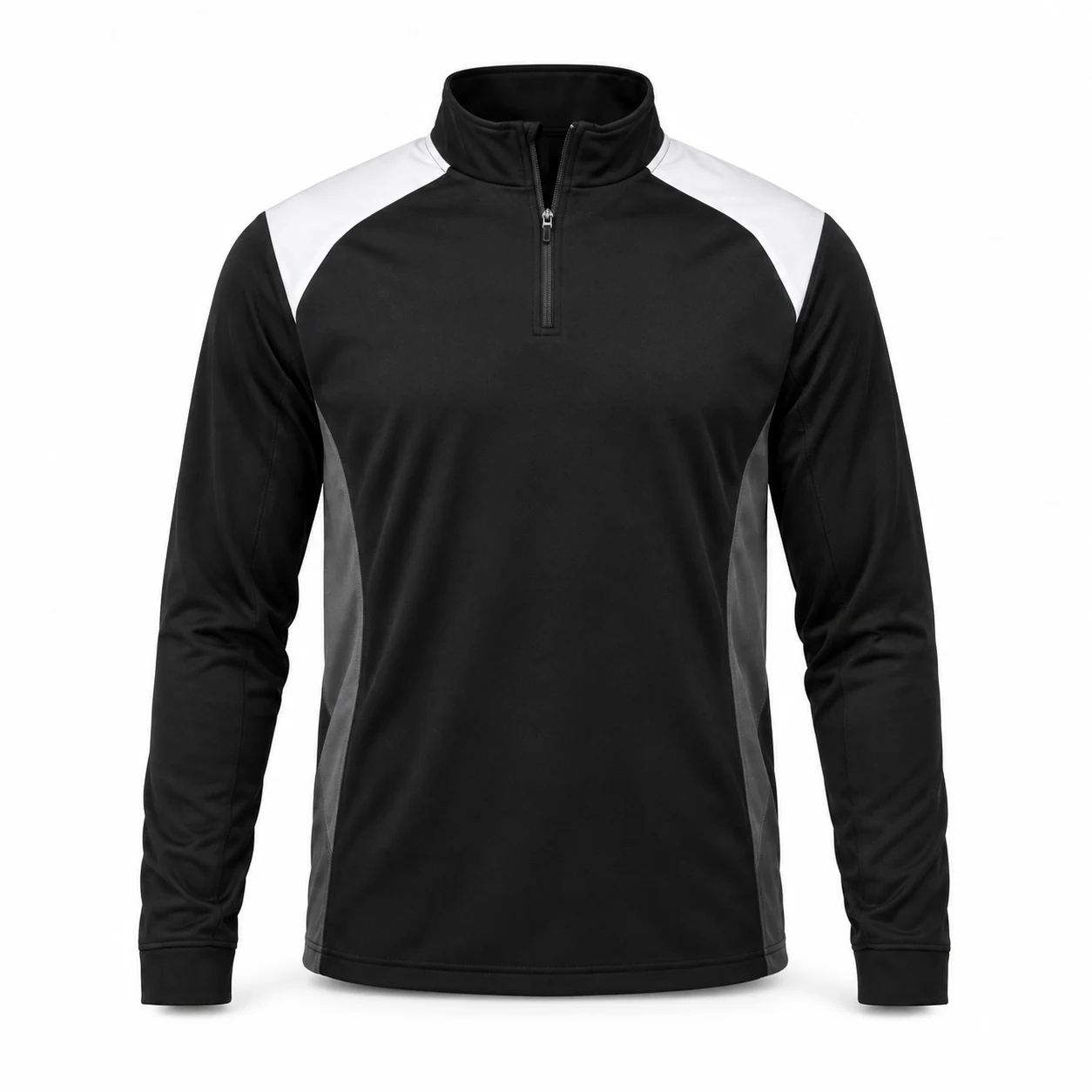
A half-zip top, full-zip jacket, training tee and tapered pant solve different wearing and layering needs. Record the intended activity, climate and wearing period for each.
Do not choose the item only because it appears in a coordinated range image. The selected fabric and construction must be confirmed per product.
Keep top and pant sizing independent
Collect quantities and size splits separately so players can order different top and bottom sizes. Use the chosen garment measurement reference rather than copying retail labels across products.
If a combined pack is offered, the order data should still preserve both component sizes.
Specify the details that affect use
| Area | Decision to record | Sample check |
|---|---|---|
| Zips | Length, tape colour, puller and guard | Operation and alignment |
| Pockets | Position, opening, closure and intended item | Access and usable size |
| Pant hem | Plain or zipped ankle and opening | Removal over footwear |
| Panels | Fabric, colour and stretch direction | Movement and seam behaviour |
Assign each sample a decision
A trim board can close a zipper or colour question but cannot approve fit or pocket construction. A wearable sample is needed when movement, layering or ankle access is a decision point.
Record the purpose and limitations of every sample before approval.
Choose the closure and layer around the activity
A warm-up garment that stays on during movement has different opening and hem needs from a layer removed repeatedly beside the pitch. Describe the activity and changing routine before choosing a half-zip, full-zip or pullover. Coats’ sweatshirt application guide separates seam and front-opening inputs; it does not make one closure correct for every training product.
Try a proposed top over the clothing it will cover. Record collar contact, sleeve reach, body lift and ease at the hem. For pants, record sitting, stepping, ankle access and the intended footwear. These observations are practical sample decisions, not laboratory proof of moisture management or durability.
| Product direction | Useful decision context | What the sample must settle |
|---|---|---|
| Half-zip layer | Neck adjustment while retaining a continuous lower front | Opening length, collar and fit over the base layer |
| Full-zip layer | Frequent changing or removal | Front alignment, pockets and preferred layering ease |
| Tapered pants | Practice and off-pitch movement | Rise, taper, ankle opening and independent size choice |
| Training tee | A lighter base garment in the proposed range | Coverage, artwork and compatible material proposal |
Test the pocket with the item it is meant to carry
A drawing that says “secure pocket” is incomplete. Name the intended item, where the pocket sits, the usable opening and the closure proposal. Ask whether access is needed while sitting, walking or wearing gloves. Keep personal valuables out of trial records; a dummy item with agreed dimensions can test access without collecting unnecessary private information.
At sample review, place that item inside, operate the closure, sit and move normally, then note whether the opening is accessible and whether the item changes garment hang. Do not turn a single successful pocket trial into a universal retention guarantee. If protection from water or a defined load is important, give that requirement its own specification and evidence route.
Approve coordination and the release matrix separately
Matching a knit top, woven jacket and trouser by a screen colour alone is weak control. X-Rite describes metamerism as a colour match that changes with viewing light. Compare the actual materials under agreed lighting and keep the accepted references together. A deliberate tonal difference can be approved; an unexplained near-match should not disappear into a single colour name.
Illustrative planning scenario: an academy wants tops for all players but pants for only one squad. Build that demand into separate order rows and retain different upper- and lower-body sizes. The common mistakes are copying the headcount into every item, borrowing one material approval for another garment, and allowing a temporary zipper to become the undocumented production choice.
- Wearer group and activity per item
- Top and pant quantities collected separately
- Independent upper- and lower-body size references
- Pocket item, access and closure proposal
- Actual material colour references
- Sample disposition and approved substitutions
What to confirm for your project
- Use of every training layer
- Separate product quantities and size splits
- Zip, pocket and hem construction
- Material and colour references
- Artwork and label positions
- Sample purpose and approval owner
MOQ, sampling conditions, production timing, exact material options and service scope are confirmed for the specific product and order. This guide does not replace a current quotation, approved sample or production specification.
Questions to carry into supplier review
- Should the travel jacket share the training-top fabric?
- How are replacement pants ordered separately?
- Which pocket item must the sample hold?
Questions buyers ask next
Can the top and pants use different sizes in one training programme?
They should remain independent selections in the order record. Provide a size split for each item even if you call the visual combination a tracksuit. The quotation must define any commercial set and its component choices.
Is a half-zip always better for warm-up than a full-zip?
No universal choice is implied. Consider whether the garment stays on, how often it is removed, neckline preference and layering. Try the selected closure and construction in the intended wearing routine.
What information makes a travel pocket requirement actionable?
Name the intended item, usable opening, placement, closure and access position. A pocket described only as secure cannot show what it must accommodate or how its sample should be reviewed.
Must matching training garments use identical fabric?
No. Coordination can use shared marks and colour references while materials differ by product. Approve the actual material combination rather than treating one top swatch as approval of the whole range.
Can we approve zipper colour from a trim board?
A trim board can support colour and hardware selection. It cannot show the complete garment’s fit, zipper alignment, pocket assembly or movement. Record which decisions still need a wearable sample.
Technical references and question evidence
- Technical referenceISO 8559-1:2017 — Anthropometric definitions for body measurement
- Technical referenceASTM textile standards catalogue
- Technical referenceCoats — Sweatshirt construction applications
- Technical referenceX-Rite — Metamerism and changes in viewing light
Technical references support the discussion method. Question evidence documents public discussion of an issue; it does not diagnose a KITOEM product or establish a test result.