
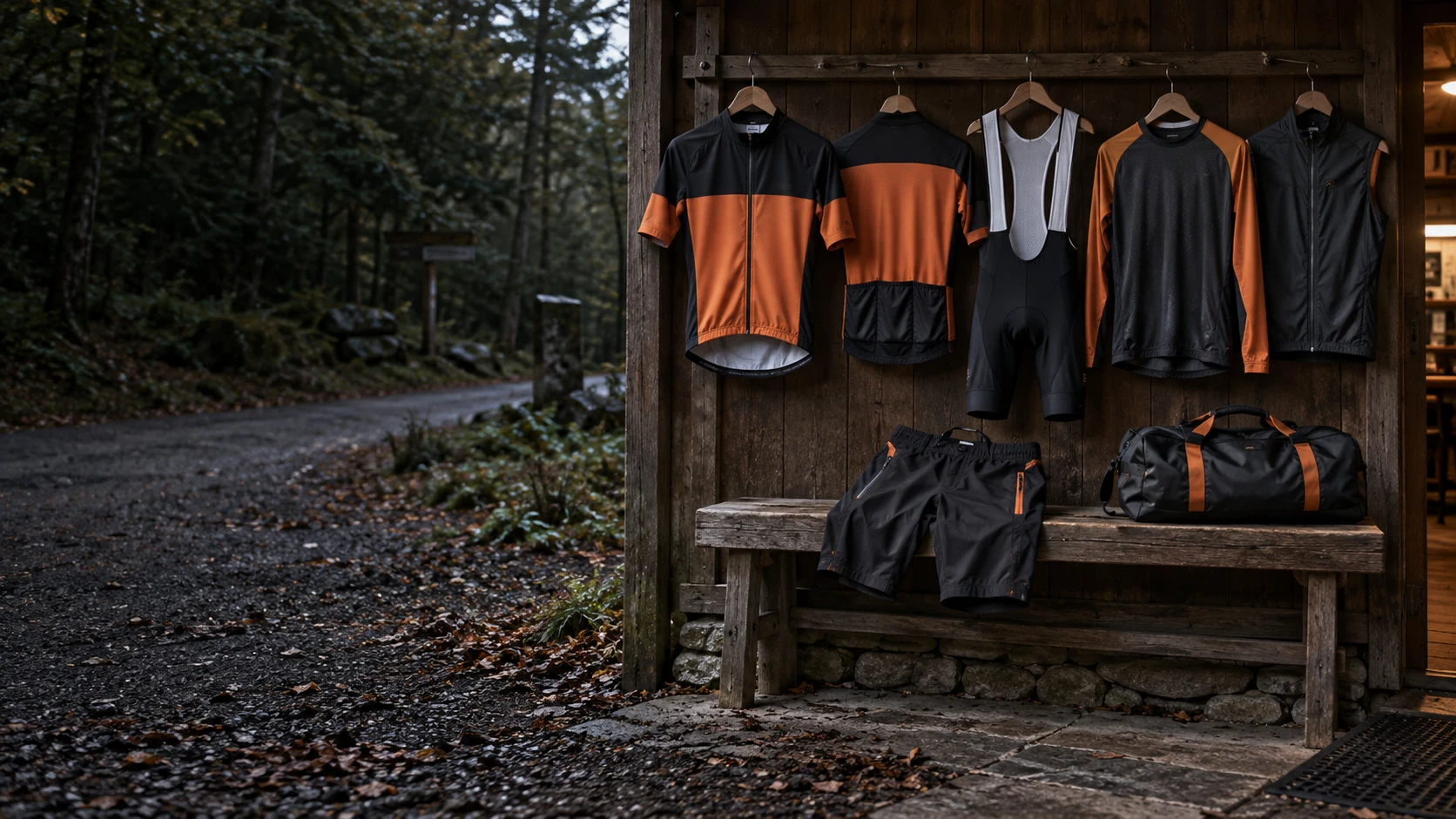
Custom cycling apparel. Road and trail, defined.
KITOEM supports Road cycling and MTB apparel development, ordinary team accessories, event clothing and bags. Plan close-position road garments and roomier trail clothing as different product systems, with each fit, fabric, pocket, zip and layer approved for the intended use.
- Your own colours
- Separate specifications
- One editable project
Build your Cycling / MTB range.
KITOEM accepts customisation, development and supply enquiries across the range below. Every garment, bag and accessory retains its own specification and quantity.
Existing product records and custom development directions are different starting points—not stock claims or fixed commercial bundles. Black, orange and white illustrate one colour direction; share your own palette.
Review garments in riding posture. Tops, bibs and one-piece garments stay distinct product decisions.
Select the layer system from conditions and wearer needs; no performance level is implied by the product name.
Relaxed trail garments use their own sleeve, pocket and lower-body construction rather than renamed road patterns.
Travel and event clothing belong to a separate wearer brief, not to on-bike aerodynamic or weather promises.
Ordinary headwear and textile accessories are separate from safety equipment. Bags are empty carry products.
Choose the shape. Make it yours.
Compare the silhouette, structure and role of each garment. Select optional references for your project; final measurements and details are reviewed with your sample.
Road or MTB first
Road close-position garments and roomier trail products need different pattern and lower-body decisions.
Approve in riding posture
Sleeve reach, torso length and rear coverage should be reviewed with the intended riding position.
Zip and storage layout
Road zip entry and rear pockets are different from MTB trail pocket choices. Check current event clothing rules before fixing a race design.
Build a condition-based layer system
Tell us the conditions and evidence requirements, then select optional garments rather than inferring ratings from their names.
Select more than one reference when your programme needs alternatives. These are optional discussion preferences, not fixed garment specifications. Confirm each product in your enquiry.
Your artwork. The right application.
Bring your own or authorised design. Names, numbers, crests and sponsor marks belong to specific products and positions—not automatically to every item in the project.
Keep seam breaks, reversible faces, zips, pockets and stretch zones in the artwork file. Review application, scale and care on the sample. You can leave the method open at the first enquiry.
Product by productClear decisions behind every direction.
Use an existing product record when it matches. For a new direction, the following construction and sample questions turn the idea into a usable brief.
Long-sleeve road jersey
Check sleeve reach with hands positioned forward and the torso inclined. Set pocket access and fabric choice for the intended season without assigning a temperature range from the picture.
- Forward sleeve reach
- Dropped rear hem
- Season and material
Road bib tights
Measure inseam, strap reach and knee articulation together. Confirm fabric, ankle opening and seat-insert decisions separately from the bib-short record.
- Inseam and knee articulation
- Strap reach
- Ankle and insert choice
Road one-piece suit
Review zipper entry and torso-to-leg balance in riding posture. This product has no asserted aerodynamic advantage; artwork, seams and event requirements are approved for the actual design.
- Entry zipper
- Torso-to-leg balance
- Event and artwork review
Cycling base layer
Set torso length and armhole fit under the selected road jersey. Specify desired material properties independently instead of treating close fit as a compression claim.
- Under-jersey fit
- Torso coverage
- Material and seam choices
Cycling rain-layer jacket
Specify the rain-use requirement and the evidence needed for any water-resistance claim. Approve zip, seams, sleeves and pocket access on the selected construction, not from the illustration.
- Required evidence
- Zip and seam plan
- Layered pocket access
Cycling thermal jacket
Define material handle and layering room around the expected ride conditions. Neither a temperature range nor thermal test result is established by this direction.
- Material and lining
- Layering room
- Ride conditions
Textile arm warmers
Approve length and upper/lower grip in the intended arm position. Select knit and seam choices independently; no protection or compression performance is claimed.
- Sleeve length
- End grip and fit
- Knit and seam choice
Textile leg warmers
Specify upper opening, knee bend and lower termination with the chosen bibs. Review material and fit as apparel rather than promising a temperature or compression rating.
- Upper fit with bibs
- Knee bend
- Lower termination
Short-sleeve MTB jersey
Review sleeve opening and body ease in a forward trail stance. Choose neck, hem and graphics from the MTB brief instead of duplicating the fitted road jersey.
- Trail stance ease
- Sleeve opening
- Neck and hem
MTB trail pants
Review hip, knee and ankle ease in riding posture and off-bike movement. Set closures and carry-pocket positions on the pattern; no impact or abrasion grade is claimed.
- Hip and knee ease
- Ankle taper
- Closure and pocket positions
Cycling team travel jacket
Define casual shoulder and body fit rather than using the riding pattern. Approve the shared team identity and labels on this travel line independently.
- Off-bike fit
- Team identity
- Brand and care labels
Team travel pants
Select the waist and leg length for the travel wearer group. Keep its quantities and material decision independent from bibs or trail bottoms.
- Travel waist and length
- Separate fabric
- Independent quantities
Cycling event staff polo
Allocate organiser, volunteer or support roles with authorised graphics. Confirm staff size matrix and packing without implying official federation affiliation.
- Role allocation
- Staff size matrix
- Artwork permission
Coach & team manager polo
Review coach initials and body fit as an off-bike line. Quantities follow the actual staff list rather than the rider count.
- Staff initials
- Off-bike fit
- Actual staff list
Club merchandise T-shirt
Keep fit and print scale distinct from the road jersey. Obtain artwork rights and specify brand, care, barcode and packing needs for the merchandise line.
- Everyday fit
- Artwork rights
- Retail or event packing
Club & event zip sweatshirt
Approve chest and back marks around seams and pockets. Record which wearer group receives it rather than treating it as a mandatory race garment.
- Artwork clearances
- Wearer allocation
- Casual fit
Club travel hoodie
Discuss hood and body proportions for off-bike use. Keep the sample and labels distinct from the cycling thermal-jacket approval.
- Hood and body
- Off-bike use
- Independent sample
Off-bike team beanie
Set cuff, knit handle and mark application as a separate apparel accessory. This is not a replacement for safety headgear.
- Cuff and fit
- Knit handle
- Mark application
Cycling team socks
Specify foot sizing and cuff appearance for the intended use. If an event sets clothing limits, check that requirement before approving the length and artwork.
- Foot-size bands
- Cuff length
- Event clothing review
Rider kit bag
List the actual clothing and personal items to be carried. Agree compartments, opening and dimensions without inferring a capacity or load rating from a picture.
- Actual contents list
- Opening and compartments
- Dimensions and carry method
Team backpack
Identify garment, document and personal-item needs separately. Use the approved product record and discuss organisation, marks and strap fit for this programme.
- Contents categories
- Internal organisation
- Strap fit and marks
Team travel duffle
Provide the intended clothing load-out rather than importing the football bag packing combination. Agree lining and compartment requirements separately from any weather claim.
- Programme load-out
- Lining and compartments
- Handles and strap
Event drawstring bag
Keep the original approved bag facts and add event identification notes. Participant allocation and any contents are confirmed separately; the bag is not a fixed bundle.
- Original bag facts
- Event identification
- Participant allocation
Club textile towel
Confirm finished dimensions, fibre and artwork for this accessory. Counts and packing can differ from rider clothing quantities.
- Finished dimensions
- Fibre and artwork
- Separate counts
Make the sample answer the right questions.
Compare composition, construction, handle and finished-garment behaviour together. g/m² is mass per area—not a standalone quality or breathability grade.
Knit and posture fit
Compare drape, stretch direction, opacity and seam behaviour on the actual riding-position pattern. Fibre and g/m² need individual records; neither proves aerodynamic or compression performance.
Layer requirements and evidence
Describe rain, wind and seasonal use as requirements to review. Waterproof level, thermal range and related test conclusions require product-specific evidence and agreed construction.
Road versus trail materials
A close road jersey and relaxed MTB lower garment can need different knit or woven choices. Approve each material, closure and care route rather than copying a single fabric across the entire club programme.
Pattern and artwork in riding posture
Review front/rear body balance and sleeve reach before fixing graphics. Prepare measured layouts that account for the zip, seams, pocket tops and any event-specific identification rules.
Independent bib and trail approval
Record bib strap, seat-insert and leg details separately from trail waist, pocket and articulation decisions. Approve a representative sample for each garment instead of treating a kit illustration as fit evidence.
A controlled club-range version
Keep road, MTB, staff and merchandise art and wearer matrices distinct. Confirm labels, barcodes and packing by garment; freeze approved versions and recheck material or event changes before repeat orders.
A starting combination. Not a fixed bundle.
Add a sensible starting list, then remove alternatives and set each quantity in your enquiry. Combinations do not set a price, minimum or delivery promise.
Road race starting pack
Separate jersey and bib rows; event rules and individual specifications remain review inputs.
- Short-sleeve road jersey
- Road bib shorts
- Cycling team socks
MTB trail starting pack
Trail jersey and shorts are editable independent lines.
- Short-sleeve MTB jersey
- MTB trail shorts
- Cycling team socks
Road layer pack
Optional base, long-sleeve jersey and gilet, with no fixed layering requirement.
- Cycling base layer
- Long-sleeve road jersey
- Cycling wind gilet
Club travel pack
Off-bike clothing and carry products have their own sizes and quantities.
- Cycling team travel jacket
- Team travel pants
- Team travel duffle
Seasonal ride pack
A discussion starting point; performance and conditions require product-specific agreement.
- Cycling thermal jacket
- Cycling rain-layer jacket
- Textile arm warmers
- Textile leg warmers
Coach & support-team pack
Separate staff clothing and identification from rider products.
- Coach & team manager polo
- Cycling event staff polo
- Cycling team travel jacket
Club merchandise pack
Ordinary apparel with rights-cleared club artwork.
- Club merchandise T-shirt
- Club & event zip sweatshirt
- Off-bike team beanie
Ride & event programme pack
Plan participant merchandise, volunteer marks and packing without a fixed bundle.
- Cycling event staff polo
- Club merchandise T-shirt
- Event drawstring bag
Rider carry pack
Empty clothing carry products chosen from the buyer contents list.
- Rider kit bag
- Team backpack
- Team travel duffle
Road & MTB clubs
Build two clear garment systems where needed rather than sharing one undifferentiated jersey and bottom.
Plan this role ↗Teams, schools & academies
Collect riding-position measurements and wearer groups, including a separate youth review when requested.
Plan this role ↗Events, corporate & community rides
Separate rider, participant, volunteer and support-team lines with actual destination and arrival-date inputs.
Plan this role ↗Brands, distributors & dealers
Approve discipline-specific patterns, material and decoration evidence, and label/packing references for each product.
Plan this role ↗Approve the discipline-specific sample
No cycling customer delivery or race-performance case is asserted here. These directions support Road and MTB product development with separate pattern and specification approvals.
Customer identities, private artwork and rosters stay confidential. Any public case or photograph requires its own publication permission.
Discuss sample and evidence requirements ↗Keep the approvals connected.
A complete project record connects garment decisions, player or recipient data and the dispatch plan.
- 01
Define the project
Share wearer roles, products, separate quantities, design references, destination and required arrival.
- 02
Develop the sample
Agree garment measurements, material, artwork, components and what each sample must resolve.
- 03
Freeze the approved version
Confirm size tables, roster spelling, colour references, approved artwork, labels, packing and the quotation.
- 04
Coordinate production checks
Use the agreed reference for first-piece and in-process review. Product-specific checkpoints belong in the order record.
- 05
Prepare dispatch & reorder records
Review final checks and packing. Keep production, dispatch, transport, customs and arrival as separate milestones.
- Garment measurements and size split
- Team palette and authorised artwork
- Names / numbers / role allocations
- Brand and care-label content
- Hangtags and barcode requirements
- Packing by team, size or recipient
- Approved-sample comments and version
- Destination, required arrival and transport plan
The questions that shape this order.
How are Road and MTB products different?
Road directions review close-position torso and sleeve fit, zip entry, rear coverage and pocket layout. MTB directions review roomier trail posture, separate lower-body articulation, waist and carry-pocket choices.
Are jerseys and bib shorts sold as one fixed set?
No. They are separate editable enquiry lines. Each can have its own quantity, size route, specification and note; a pack only provides a starting combination.
Can we brief women, adult and youth patterns?
Yes. Provide the wearer groups and riding-position measurement matrix. Approve each fit route through samples rather than interpreting a generic size label as the complete pattern.
What should we include for jersey pockets?
Specify location, opening, height, intended contents and any closure. For competition clothing, provide the current governing and event requirements before the pocket design is approved.
Does a close fit imply aerodynamic performance?
No. Fit, material and seam design are specification decisions. Any aerodynamic or compression conclusion needs its own relevant evidence; none is asserted by these visual directions.
Does a rain-jacket name establish waterproof performance?
No. Give the required property and relevant evidence expectations. Fabric, zip, seams and construction must be reviewed and agreed for that particular product.
Are arm and leg warmers protective equipment?
No. The directions here are ordinary textile layers for seasonal clothing briefs, not impact protectors. Their length, fit, knit and seams are reviewed as apparel.
Can MTB and Road clothing share one project?
Yes. Keep each product row and garment specification distinct within the same editable draft. Adding a new discipline should not replace saved quantities or notes.
How is a skinsuit reviewed?
Review zip entry, torso-to-leg balance, seams and artwork as one garment. Sample in the intended posture, confirm event requirements and keep any technical-performance claims separate.
Can we include volunteers and merchandise?
Yes. Staff polos, casual apparel and participant bags are separate lines with role notes and independent quantities. Use authorised event or club graphics rather than implying federation affiliation.
What is needed before sampling or quotation?
Supply discipline, garments, wearer groups, approximate quantities, art, desired fit, material or performance requirements, destination and required arrival date. Sample and commercial terms are then agreed for the project.
How should repeat orders be controlled?
Retain approved pattern measurements, art, labels, sample and packing versions. Recheck event rules and any material, colour, insert or closure changes before confirming the next production version.
Useful guides. Clear next steps.
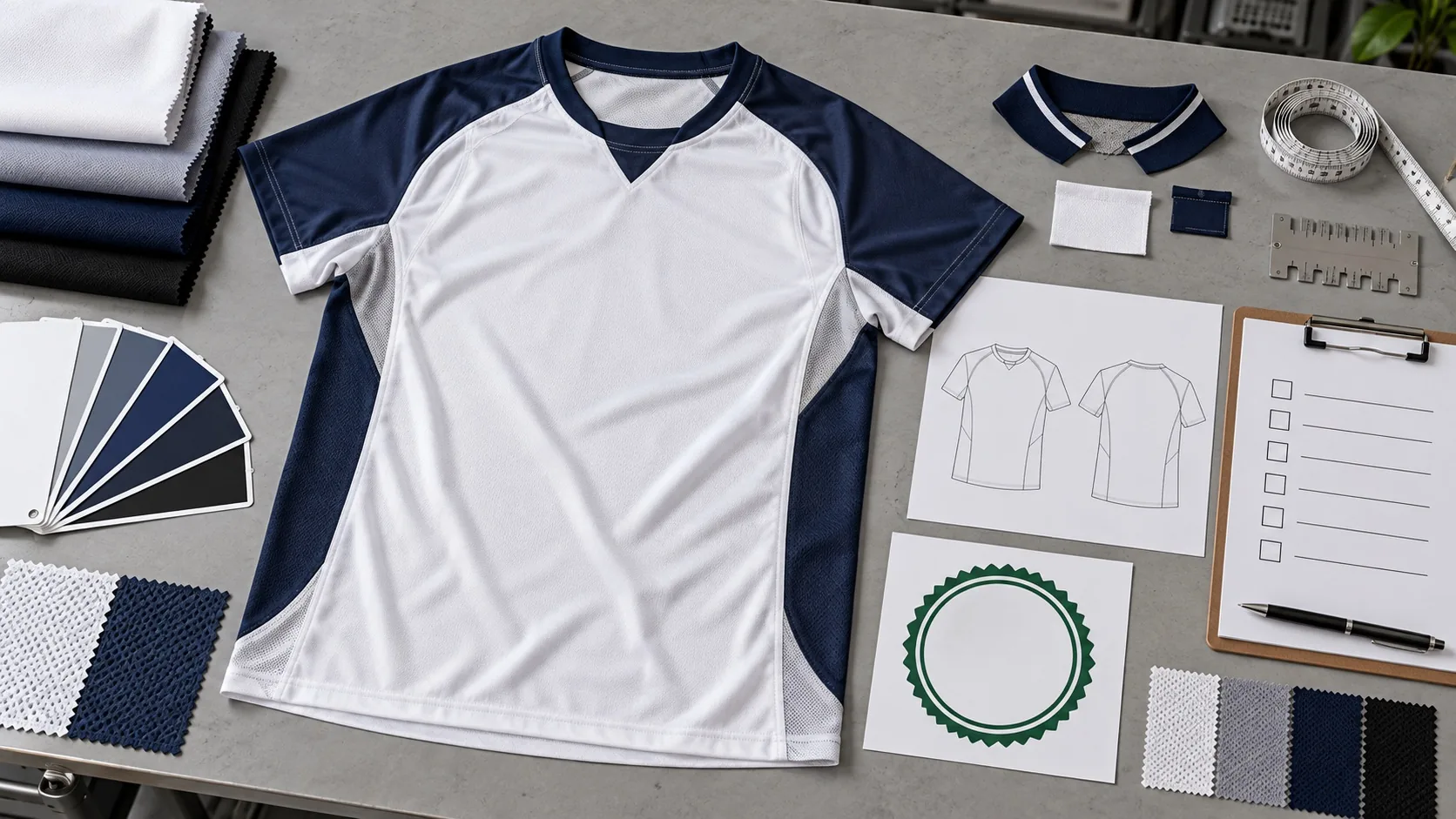
How to Approve a Custom Sportswear Sample Before Bulk Production
Turn fitting, construction and decoration observations into a versioned sample decision.
Read the guide ↗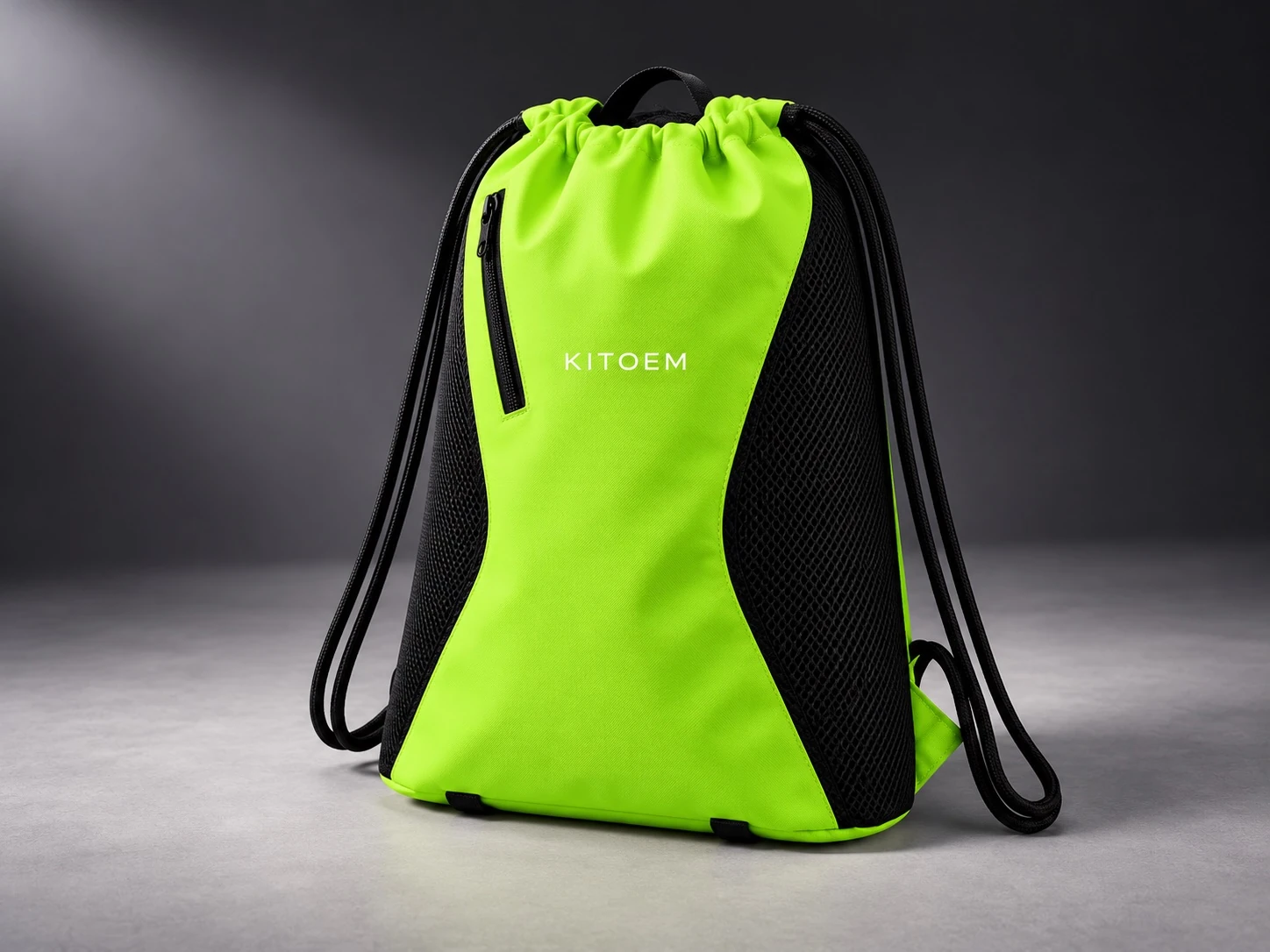
How to Write a Team Bag Specification
Specify what the bag carries, its opening and identification rather than guessing usable capacity.
Read the guide ↗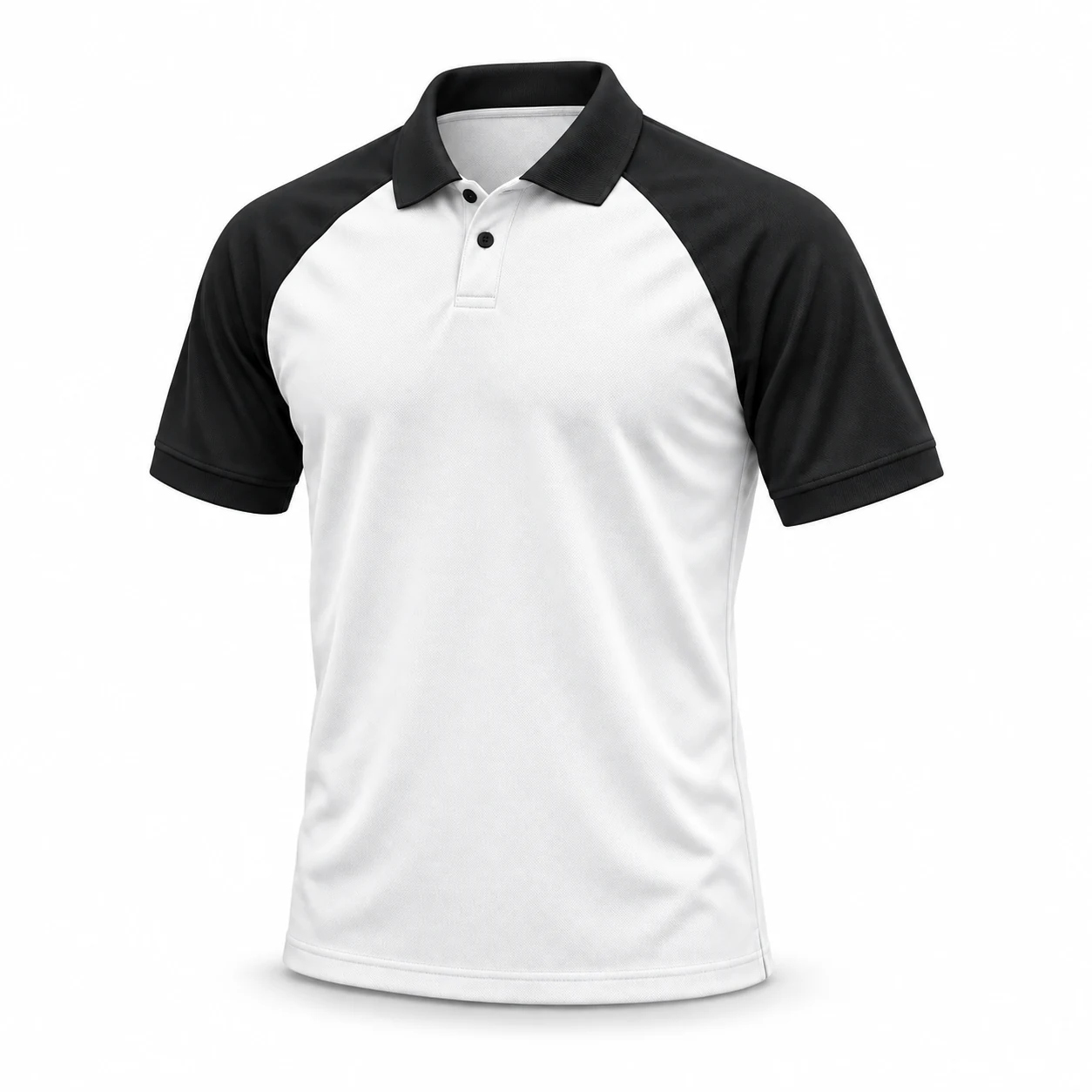
How to Brief Staff and Travel Wear
Separate wearer roles, travel layers, staff sizes and delivery destinations.
Read the guide ↗Your programme.
Your next approval.
Share the product mix, design reference, separate quantities, destination and desired arrival. Missing specifications can become sample decisions—not invented values.
Start your Cycling / MTB project ↗