
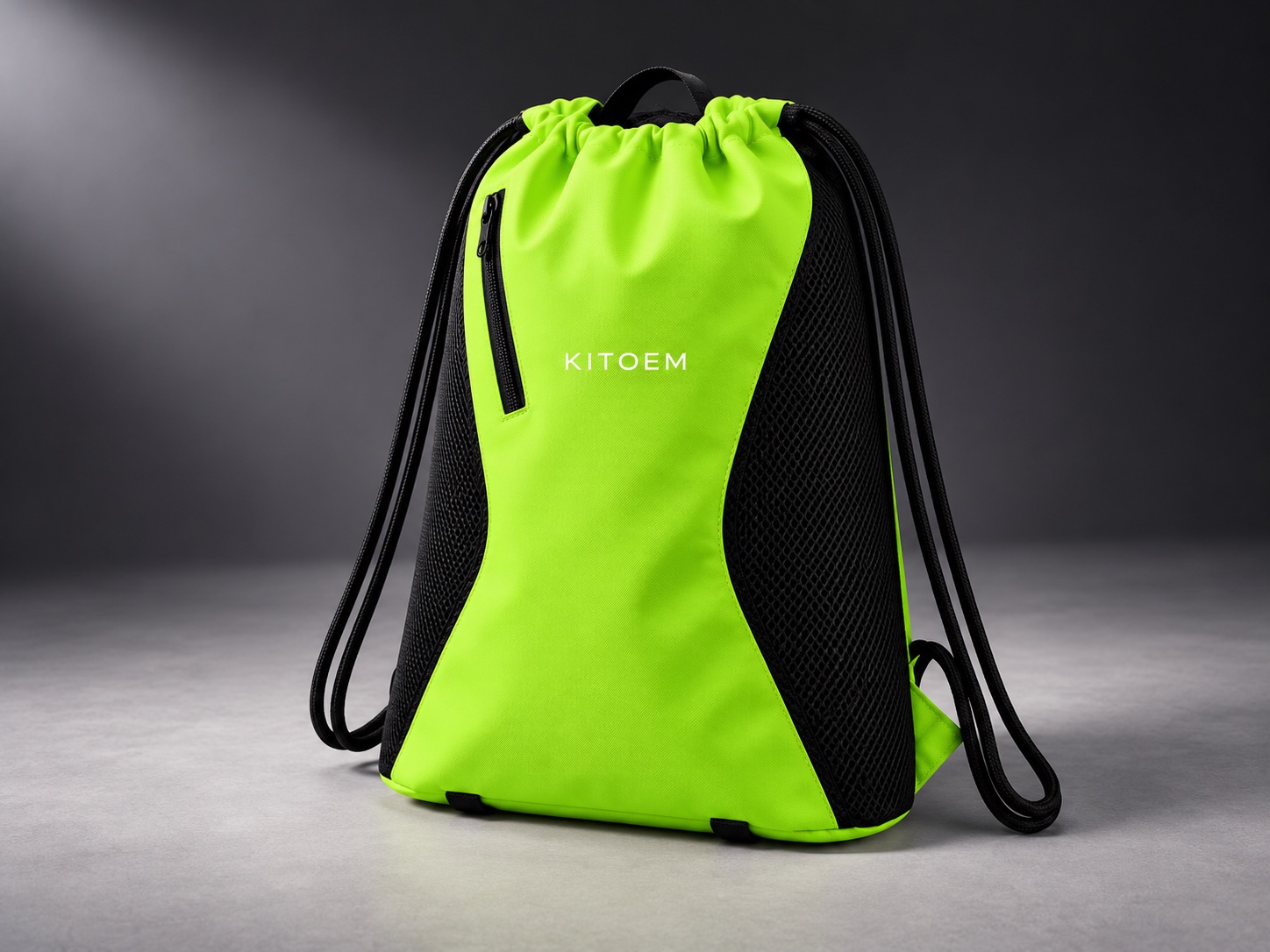
The decision in one paragraph
Specify a team or race bag from the packed contents and handling route. Record finished dimensions, compartment needs, closures, straps, branding and packing. Do not describe a bag as waterproof or water-resistant without an agreed material specification and test basis for the exact product.
List the packed contents first
Measure the folded shirt, footwear, medal, leaflet, bottle or other rigid item in the arrangement the team will actually use.
Choose a drawstring bag, backpack, duffle or shoe bag after the contents and distribution workflow are known.
Specify finished dimensions and usable space
Record external finished dimensions and identify seams, gussets or closures that reduce usable capacity.
A visual or flat material width does not establish internal volume. Approve the actual packed configuration when fit is important.
Define construction and handling details
| Area | Decision |
|---|---|
| Body and lining | Named material references and colour |
| Compartments | Purpose, opening and finished position |
| Closures | Zip, cord, buckle or other hardware |
| Carry system | Handle, strap, adjustment and load expectation |
| Branding | Method, physical size and placement |
| Packing | Fold, inserts, labels and carton grouping |
Tie resistance claims to evidence
Waterproof, water-resistant and durable are not interchangeable descriptions. Define the required property, test method, sample condition and acceptance result.
If no test is agreed, describe the material and intended use without upgrading the claim from an image or water-droplet photograph.
Approve a packed sample where capacity matters
Use the intended contents and branding to check closure, shape, handle access and distribution labels.
Record whether the sample approves capacity, construction, colour, artwork or the complete bag. Unchecked properties remain open.
Compare bag formats against the packing task
Begin with an actual contents list and the order of access. A folded garment, rigid sponsor leaflet and footwear do not occupy space in the same way. Measure the proposed packed arrangement, including the part that must remain flat or accessible. Then shortlist the formats rather than choosing a bag by a photograph or a nominal capacity label.
An external dimension is a useful control, but it does not describe every opening, gusset or usable compartment. Record where and how the finished product is measured and which loading condition is being discussed. A supplier can propose dimensions from a contents brief; the accepted packed sample closes the fit decision for that exact arrangement.
| Format direction | Task to evaluate | Trade-off to review |
|---|---|---|
| Drawstring bag | Simple issue pack or light everyday carrying | Opening behaviour, cord carrying and separation needs |
| Backpack | Hands-free carrying with organised access | Strap adjustment, actual compartments and usable openings |
| Duffle | Bulkier team equipment or travel contents | Carry options, access order and the agreed packed arrangement |
| Shoe bag or pouch | A specifically separated item group | Opening size, lining and how it fits the wider programme |
Keep surface repellency separate from finished-bag protection
AATCC lists spray repellency and hydrostatic-pressure resistance as different test subjects. A material report for one question does not settle another, and neither automatically establishes a finished bag’s behaviour at zips, seams and openings. If resistance matters, state whether the requirement concerns a material, a panel or the assembled product.
Request the tested sample identity, method, condition and result needed for the intended claim. Without that evidence, use observable construction wording and the agreed application, not a waterproof promise. Product illustrations can locate pockets or show a proposed shape; they are not capacity, load or water-resistance test records.
Create a packed-sample acceptance sheet
Illustrative planning scenario: an event includes a folded shirt, medal and rigid leaflet. Arrange those actual items or agreed equivalents, insert them in the proposed bag, close it and check access and shape. Record the reference and condition of the items used. A different mix later may need another review; the one demonstrated arrangement is not universal capacity proof.
Add the body and lining proposal, closure and handle or strap details, artwork placement and packing method. Where a carry load is a formal requirement, agree the applicable evidence separately from a casual carry trial. Common mistakes are measuring flat material instead of the finished bag, assuming every visible side mesh area is a bottle pocket, and leaving the branding method until after the bag structure is approved.
- Contents and access order
- Finished dimensions and measurement method
- Compartment and closure proposals
- Handle or strap construction decisions
- Final-size artwork on the actual surface
- Packed-sample scope and any formal resistance or load evidence
What to confirm for your project
- Packed contents and arrangement
- Finished dimensions and usable capacity
- Materials, closures and straps
- Branding size and placement
- Claim and test basis
- Packed-sample approval scope
MOQ, sampling conditions, production timing, exact material options and service scope are confirmed for the specific product and order. This guide does not replace a current quotation, approved sample or production specification.
Questions to carry into supplier review
- Does the rigid leaflet change the required gusset?
- Which compartment must be accessible first?
- Is the resistance claim material-only or finished-product evidence?
Questions buyers ask next
How do we determine bag dimensions for a folded shirt and rigid leaflet?
Measure the intended packed arrangement and identify the largest rigid item and required opening. Ask for finished dimensions and a proposed construction, then verify fit in the actual packed sample. Flat fabric width alone does not answer the question.
Does a water-repellent fabric report prove the finished bag is waterproof?
No. Surface repellency, pressure resistance and assembled-product behaviour concern different evidence. Clarify the material and finished-bag scope, including seams, zips and openings, before making a protection claim.
Can one demonstrated load-out apply to every team bag?
No. A confirmed load-out concerns that product and contents arrangement. Different dimensions, construction or contents require their own review; do not transfer a duffle example to a drawstring bag or backpack.
What should the bag artwork approval include?
The actual product surface, decoration method, physical mark size, placement and any obstruction from seams, pockets or closures. One shirt logo mock-up is not a bag decoration sample.
Which bag features should stay separate quotation decisions?
Materials, compartments, closures, carrying system, branding, packing and any requested testing. Itemise the supplier proposal and accepted alternatives so an attractive image does not substitute for a controlled specification.
Technical references and question evidence
- Technical referenceAATCC — Standard test methods: repellency, resistance and care
- Technical referenceGS1 General Specifications
- Technical referenceGS1 — Serial Shipping Container Code identifies logistics units
Technical references support the discussion method. Question evidence documents public discussion of an issue; it does not diagnose a KITOEM product or establish a test result.