
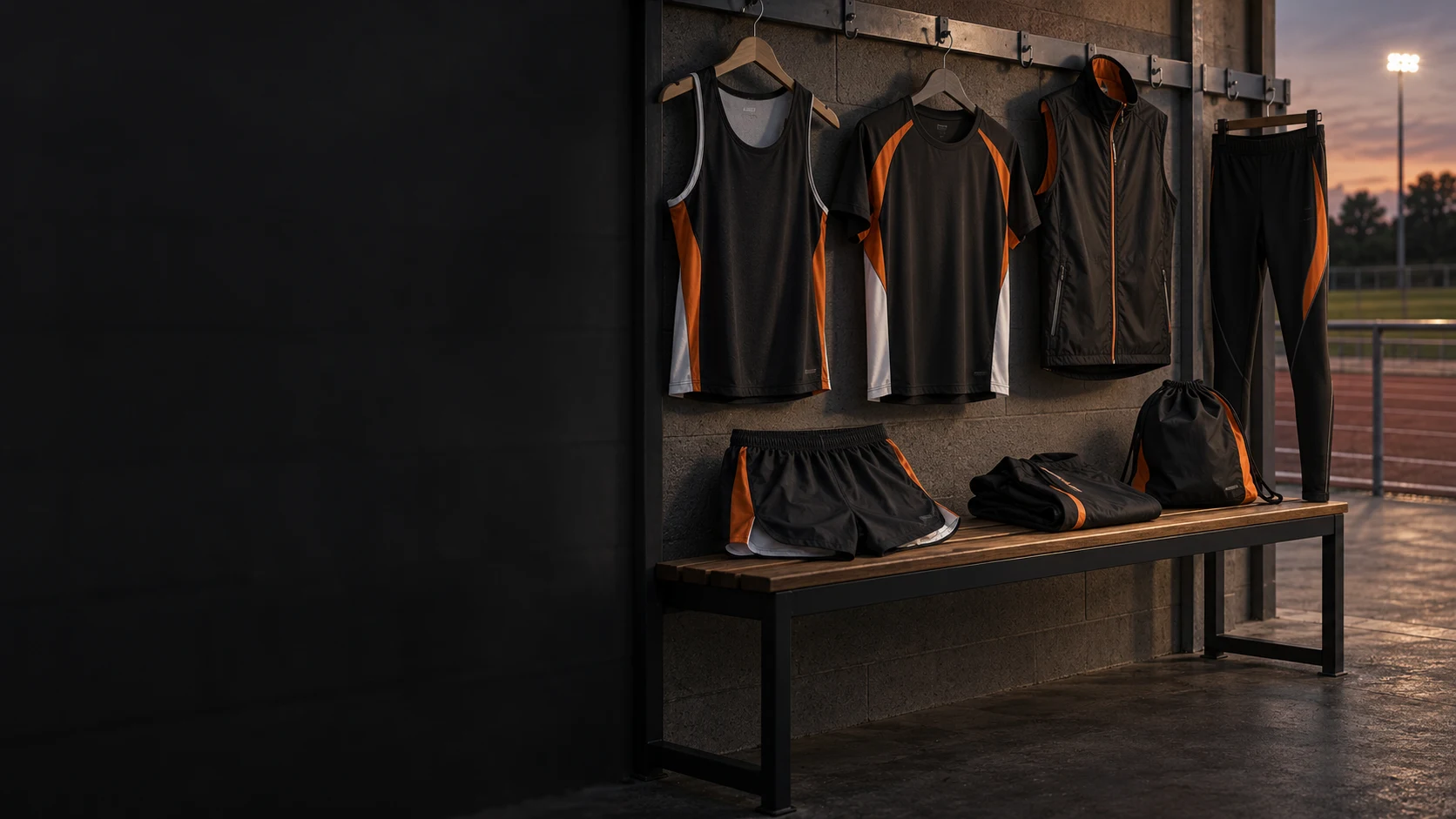
RUNNING KIT. EVERY ROLE. ONE PROJECT.
KITOEM supports custom development and supply of running and athletics clothing, clubwear, event merchandise, non-protective accessories and bags. Build separate athlete, participant and event-crew requirements in one editable project enquiry.
- Your own colours
- Separate specifications
- One editable project
Build your Running range.
KITOEM accepts customisation, development and supply enquiries across the range below. Every garment, bag and accessory retains its own specification and quantity.
Existing product records and custom development directions are different starting points—not stock claims or fixed commercial bundles. Black, orange and white illustrate one colour direction; share your own palette.
Build athlete kit around event, coverage and movement, with each upper and lower garment specified separately.
Connect the run itself with warm-up, waiting and travel; select layers for the project environment, not a blanket temperature promise.
Athlete kit, participant merchandise and operational staff clothing serve different wearers and should not share an assumed fit or quantity.
Complete the programme with non-protective headwear, socks and carry products, each with its own construction and quantity.
Choose the shape. Make it yours.
Compare the silhouette, structure and role of each garment. Select optional references for your project; final measurements and details are reviewed with your sample.
Choose the athlete top
Choose the coverage and fit first, then approve armholes, sleeves and bib space for the relevant athlete group.
Plan the stride and lower layer
Separate split, liner, rise and pocket decisions; a fitted garment is not itself evidence of compression performance.
Layer for the actual programme
Distinguish clothing used during the run from layers worn at the start, after the finish and during travel.
Allocate by wearer role
Use independent artwork versions, size breakdowns and packing instructions for each audience.
Select more than one reference when your programme needs alternatives. These are optional discussion preferences, not fixed garment specifications. Confirm each product in your enquiry.
Your artwork. The right application.
Bring your own or authorised design. Names, numbers, crests and sponsor marks belong to specific products and positions—not automatically to every item in the project.
Keep seam breaks, reversible faces, zips, pockets and stretch zones in the artwork file. Review application, scale and care on the sample. You can leave the method open at the first enquiry.
Product by productClear decisions behind every direction.
Use an existing product record when it matches. For a new direction, the following construction and sample questions turn the idea into a usable brief.
Running T-shirt
A tee gives more shoulder coverage than a singlet without requiring the same armhole pattern. Review underarm seam position and the space needed for a race bib.
- Sleeve width at arm swing
- Underarm seam position
- Bib and sponsor layout
Running crop tank
Plan coverage, neckline and hem placement around the intended movement and athlete fit. A crop top is not automatically a support garment; specify any separate inner-layer requirement.
- Hem coverage when reaching
- Neck and armhole binding
- Separate inner-layer brief
Running half tights
Specify rise, leg length and seam placement before choosing the stretch fabric. Assess garment recovery and opacity on the sample rather than treating close fit as a compression claim.
- Rise and leg opening
- Seam placement through stride
- Opacity and recovery review
Running leggings
A full-length lower layer requires its own waist, rise and leg-length approval. Review pocket placement against the athlete movement and intended load.
- Waist height and drawcord
- Leg length and ankle opening
- Pocket placement and sample load
Running base-layer top
Plan the base layer as an independent garment beneath the outer top. Review seam contact, neck overlap and fit; no thermal or compression rating is implied.
- Skin-contact seam route
- Neck overlap beneath outer layer
- Separate size chart
Club warm-up jacket
Coordinate a warm-up jacket with, but do not merge it into, the pants line. Assess zip clearance, hem fit and pockets with the sample.
- Zip and hem fit
- Pocket position
- Colour pairing with pants
Club warm-up pants
Review waist, calf width and hem opening for changing before the start. Keep every pants size and quantity editable independently from the jacket.
- Waist and rise
- Calf width
- Hem opening for changing
Woven running warm-up pants
A woven pant is a separate construction decision from a knit tapered pant. Check ease, pocket shape and ankle access in the intended warm-up routine.
- Woven ease through stride
- Pocket closure
- Ankle access
Running wind gilet
Review armhole clearance over the planned underlayer and the stability of the hem. Weather performance, fabric permeability and any treatment need project-specific evidence.
- Armhole clearance over tee
- Zip and pocket layout
- Hem stability during movement
Running weather shell
Choose hood, cuff and closure details for the expected event environment. Specify any rain or visibility requirement in the brief and agree the relevant sample or test scope.
- Hood fit and field of view
- Cuff and zip closure
- Required weather evidence
Club travel hoodie
Set travel fit and hood shape separately from race apparel. Check decoration scale and the pocket area on the approved size sample.
- Travel-fit ease
- Hood and pocket shape
- Decoration clear of pocket
Club crew sweatshirt
A crew sweatshirt offers a different layering route from the hoodie. Define neckline rib, cuff fit and artwork scale across the proposed size range.
- Neck rib depth
- Cuff and hem fit
- Artwork scaling
Running coach polo
Choose coach identification and pocket needs around the working role. A polo uses its own collar and fit approval rather than the athlete singlet specification.
- Collar and placket
- Role identification
- Working fit
Event staff polo
Keep staff artwork readable while reserving areas for the organizer marks. Separate operational roles and size counts from participant distribution.
- Staff colour distinction
- Organizer artwork positions
- Role-specific size counts
Volunteer T-shirt
Plan volunteer clothing for recognition on the course and at registration. Keep it a separate order line from athlete or finisher garments so role quantities remain visible.
- Recognition colour
- Front and back identification
- Shift and size allocation
Club supporter T-shirt
Specify the everyday fit, fabric handle and print positions for the supporter audience. It need not copy the athlete race pattern or technical fabric.
- Everyday fit
- Print positions
- Adult and youth sizing
Participant event tank
Choose a participation garment around event identity and wearer preference. Distinguish it from competition kit with its own armhole, fabric and artwork approval.
- Participant fit
- Armhole coverage
- Event artwork version
Participant event T-shirt
Approve the participant fabric and size chart for the planned distribution. Keep sponsor artwork, packaging and event date as explicit brief inputs rather than inheriting the athlete kit.
- Distribution size chart
- Sponsor artwork permissions
- Packing by wearer group
Running club cap
Confirm crown profile, adjustment and decoration area for the target wearers. Sun-protection or other performance claims require their own evidence.
- Crown depth
- Adjustment range
- Decoration position
Running visor
Review brim shape, headband width and the rear adjustment. A visor has different marking space and coverage from a full cap.
- Brim shape
- Headband comfort
- Adjustment and mark area
Club running beanie
Agree knit structure and head fit separately from woven caps. Review cuff depth and label or embroidery placement on the actual construction.
- Knit and fit
- Cuff depth
- Label or embroidery backing
Running crew socks
Specify foot sizing and leg height separately from clothing sizes. Review yarn, toe seam and artwork placement without assuming a cushioning or compression result.
- Foot-size grouping
- Leg height
- Toe seam and yarn brief
Race drawstring bag
Use the existing drawstring-bag record as a starting point for the event brief. Artwork, final packing mix and any physical load test are separate approval decisions.
- Event artwork area
- Cord and handle review
- Packing mix
Club travel backpack
Plan the backpack against the actual kit to be carried. Specify compartment and strap needs rather than importing another sport packing promise.
- Kit list and compartment needs
- Strap and handle sample
- Identification placement
Club kit duffle
Review the planned athlete clothing load and the chosen bag construction together. Final capacity and any wet-item separation are specific to the approved sample.
- Packing list
- Compartment construction
- Handles and decoration
Race-kit pouch
Define the contents before selecting the pouch size and zip opening. It is a carry direction, not a promise to fit all race materials or electronic devices.
- Contents and finished size
- Zipper opening
- Carry loop and artwork
Club and event towel
Specify size, handle and decoration for the towel independently from garments. Absorbency and wash performance are not inferred from the image.
- Finished dimensions
- Decoration method
- Care and packing
Make the sample answer the right questions.
Compare composition, construction, handle and finished-garment behaviour together. g/m² is mass per area—not a standalone quality or breathability grade.
Race top fabric
Compare knit structure, handle, opacity and decoration compatibility on a swatch and garment sample. g/m² is mass per unit area, not a stand-alone breathability or quality grade.
Woven shorts and stretch lowers
Choose shorts fabric around split, liner and drape; review tights around stretch, recovery, seam placement and opacity. Approve top and lower fabrics separately.
Weather and crew garments
A running shell, volunteer tee and travel sweatshirt need different material briefs. Give the intended conditions and any test requirements rather than assigning one fabric to all roles.
Artwork that respects the race
Map club marks, participant graphics and sponsor areas separately. Sublimation suits compatible polyester constructions; transfer or screen-print artwork needs a compatible fabric and application sample, while embroidery or badges add structure and need location review.
Fit and movement review
Use the sample to review arm swing, stride, coverage, liner edges and storage. Record agreed points of measure and tolerances for each top, lower layer and wearer group.
Event version and distribution control
Freeze the artwork, garment size charts and role allocation before production approval. Provide brand labels, care labels, hangtags, barcode and pack-label inputs where needed, then retain approved versions for future events and reorders.
A starting combination. Not a fixed bundle.
Add a sensible starting list, then remove alternatives and set each quantity in your enquiry. Combinations do not set a price, minimum or delivery promise.
Athlete Race Pack
Start with race garments and change each line to suit the event.
- Race singlet
- Race shorts
- Running crew socks
Club Training Pack
Build the weekly-session range without making every garment mandatory.
- Running T-shirt
- Running half tights
- Long-sleeve running top
Start-Line Warm-Up Pack
Keep warm-up top and pants independently sized.
- Half-zip warm-up top
- Club warm-up pants
- Running club cap
Club Travel Pack
Separate travel clothing from race-day specifications.
- Club travel hoodie
- Club warm-up pants
- Club kit duffle
Weather-Layer Pack
Agree conditions and required evidence for the proposed layers.
- Running base-layer top
- Running wind gilet
- Running weather shell
- Club running beanie
Coach & Crew Pack
Use role-specific marks and quantities.
- Running coach polo
- Event staff polo
- Running club cap
Club Merchandise Pack
An editable supporter starting point, not a fixed commercial bundle.
- Club supporter T-shirt
- Club crew sweatshirt
- Club running beanie
Participant & Volunteer Pack
Keep wearer groups, sizes and artwork separate.
- Participant event T-shirt
- Volunteer T-shirt
- Participant event tank
- Race drawstring bag
Race & Travel Carry Pack
Choose bags around the actual packing list.
- Race-kit pouch
- Race drawstring bag
- Club travel backpack
Athletes, clubs & academies
Race and training apparel with separate fit, bib and lower-layer decisions.
Plan this role ↗Schools & universities
Youth and adult athlete sizes, coach clothing and team allocation in one brief.
Plan this role ↗Participants & community programmes
Participation garments and distribution sizes distinct from competition kit.
Plan this role ↗Organizers, volunteers & event operators
Recognizable crew garments and role-specific packing instructions.
Plan this role ↗Sportswear brands, dealers & corporate programmes
Develop a coherent product range with private-label, packaging and version inputs.
Plan this role ↗Your running programme starts with an approved brief.
Product directions and imagery explain planning choices. Samples, order details and any test evidence are agreed for your project.
Customer identities, private artwork and rosters stay confidential. Any public case or photograph requires its own publication permission.
Discuss sample and evidence requirements ↗Keep the approvals connected.
A complete project record connects garment decisions, player or recipient data and the dispatch plan.
- 01
Define the project
Share wearer roles, products, separate quantities, design references, destination and required arrival.
- 02
Develop the sample
Agree garment measurements, material, artwork, components and what each sample must resolve.
- 03
Freeze the approved version
Confirm size tables, roster spelling, colour references, approved artwork, labels, packing and the quotation.
- 04
Coordinate production checks
Use the agreed reference for first-piece and in-process review. Product-specific checkpoints belong in the order record.
- 05
Prepare dispatch & reorder records
Review final checks and packing. Keep production, dispatch, transport, customs and arrival as separate milestones.
- Garment measurements and size split
- Team palette and authorised artwork
- Names / numbers / role allocations
- Brand and care-label content
- Hangtags and barcode requirements
- Packing by team, size or recipient
- Approved-sample comments and version
- Destination, required arrival and transport plan
The questions that shape this order.
Can the athlete, participant and volunteer ranges be ordered together?
Yes. Keep each wearer role as separate product lines in the project enquiry, with its own quantities, size breakdowns, artwork and packing instructions.
Should race singlets and shorts share one size breakdown?
No. Approve upper and lower sizes independently, including separate counts for athletes who need different sizes in each garment.
What should we specify for split running shorts?
Give the preferred length, split overlap, waist construction, liner and pocket needs. Review movement and coverage on a sample instead of relying only on a flat drawing.
Can we develop women’s, men’s and youth directions?
Yes. Describe the intended wearers and provide size references or points of measure. Each fit direction needs its own approved coverage and grading rather than a universal size assumption.
How should race bibs and sponsor logos be planned?
Provide the current event and federation requirements, bib dimensions and permitted marking areas. Reserve these in the artwork proof; an approved graphic alone does not certify race compliance.
Does a higher g/m² fabric mean better breathability?
No. It describes mass per unit area. Knit structure, fibre, finish, garment coverage and test conditions also affect how the material behaves.
Can tight-fitting running garments be labelled compression wear?
A close fit alone does not support a compression claim. Define the intended fit and any pressure or performance requirement, then agree the evidence and sample scope before using that claim.
Which decoration methods suit the running range?
Map each mark to its fabric and location. Compare compatible sublimation, transfer or screen print through an application sample; use embroidery or badges where the added structure suits the garment and wearer.
What belongs in an event enquiry?
Include wearer roles, product lines, quantities and units, sizes, authorized artwork, destination, desired arrival date and distribution packing. The desired arrival date is a buyer requirement, not a confirmed supplier deadline.
How are volunteer and participant garments packed?
Provide role, size and distribution-point instructions. Confirm hangtags, barcodes and pack labels as part of the approved order rather than assuming every event uses the same packing system.
Can packs be changed after adding them to the enquiry?
Yes. A pack is a procurement starting point. Its independent lines can be removed or given different quantities and notes in the unsent enquiry.
What information helps a club reorder?
Keep the approved garment and artwork versions, size chart, colour reference and labelling file. State whether the repeat must match the earlier sample or deliberately changes any detail.
Useful guides. Clear next steps.
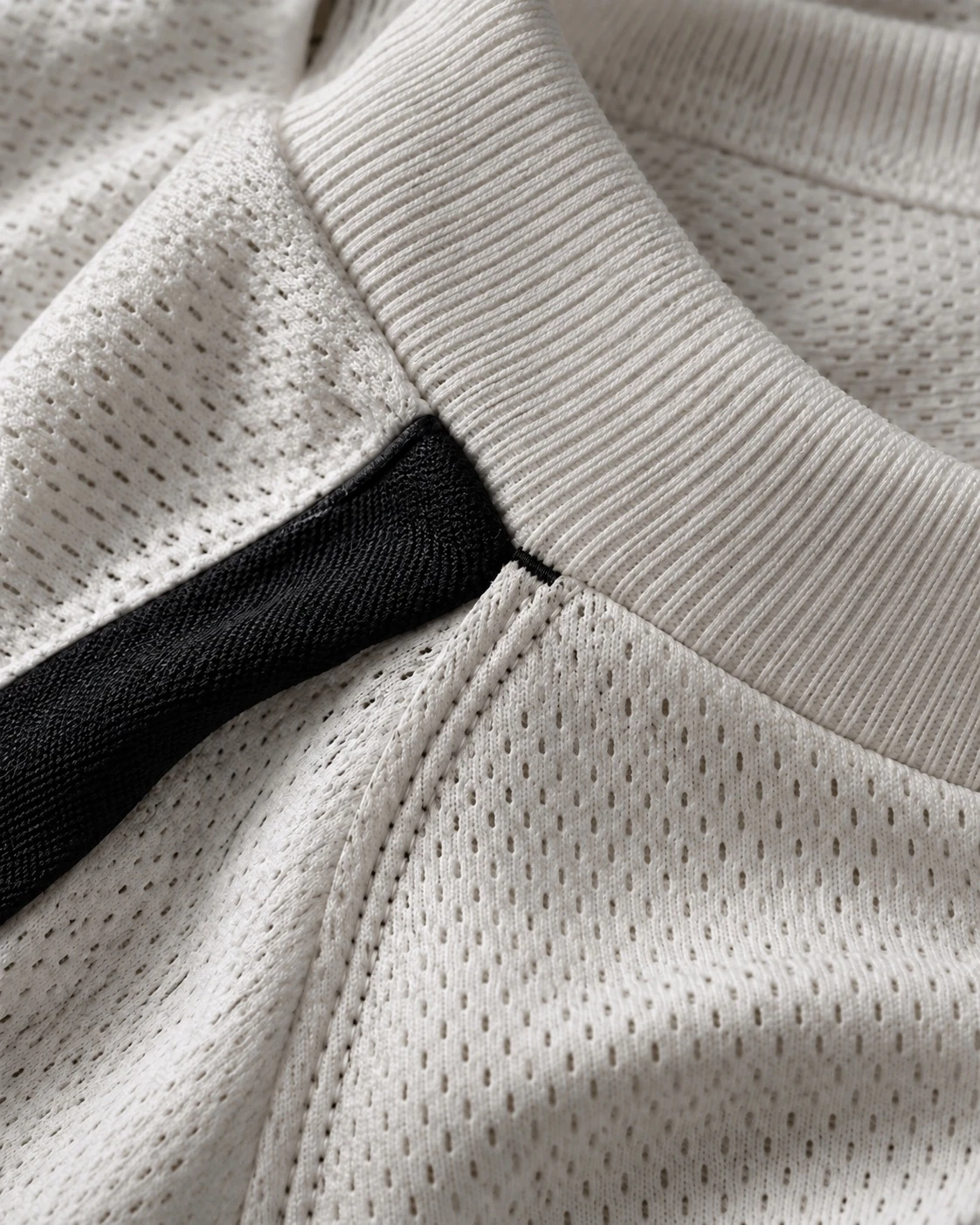
How to Choose Fabric for Custom Running Shirts
Compare race-top fabric decisions
Read the guide ↗How to Choose Fabric for Custom Running Shirts
Organize the running-shirt specification
Read the guide ↗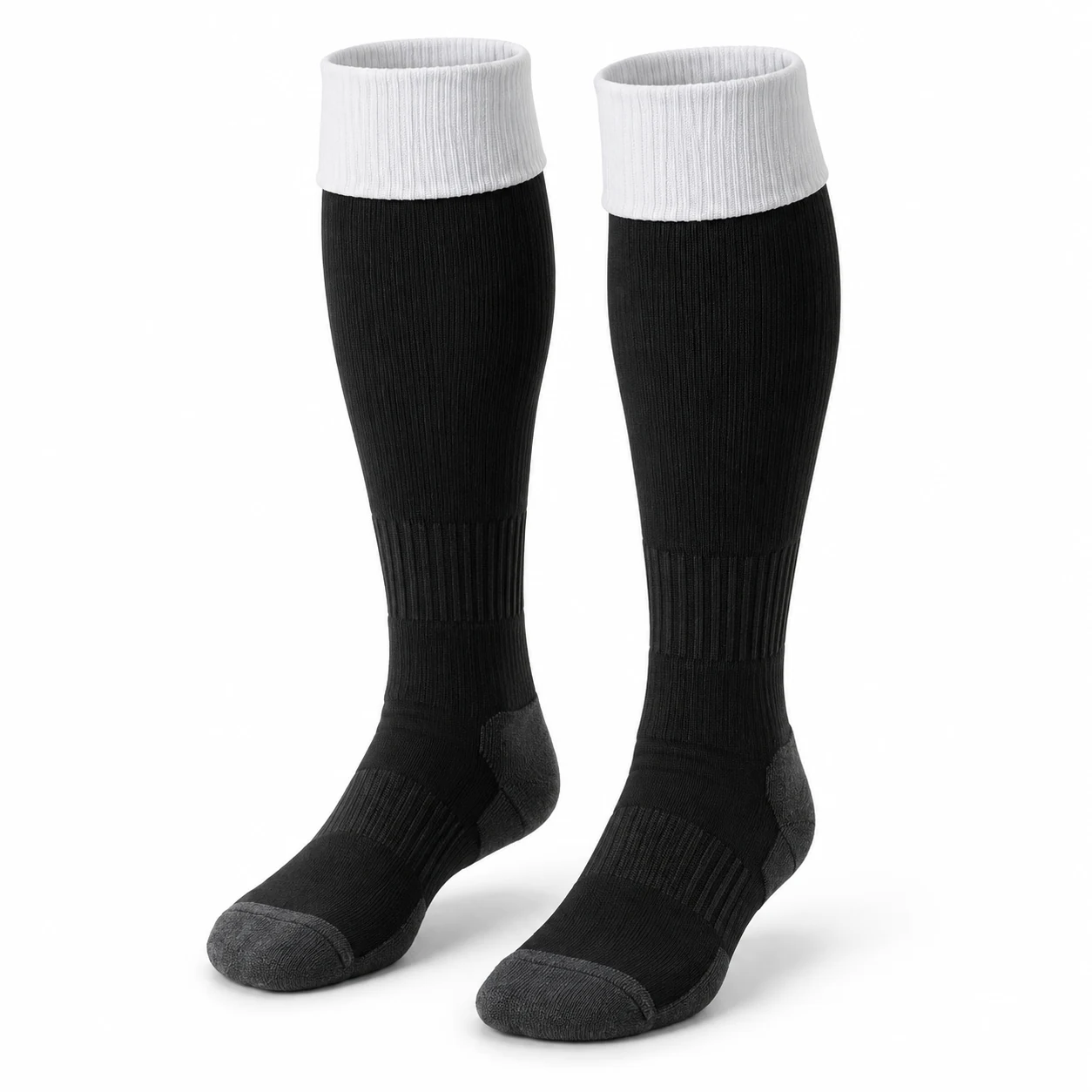
How to Brief Team Socks and Accessories
Separate event roles and pack inputs
Read the guide ↗Your programme.
Your next approval.
Share the product mix, design reference, separate quantities, destination and desired arrival. Missing specifications can become sample decisions—not invented values.
Start your Running project ↗