
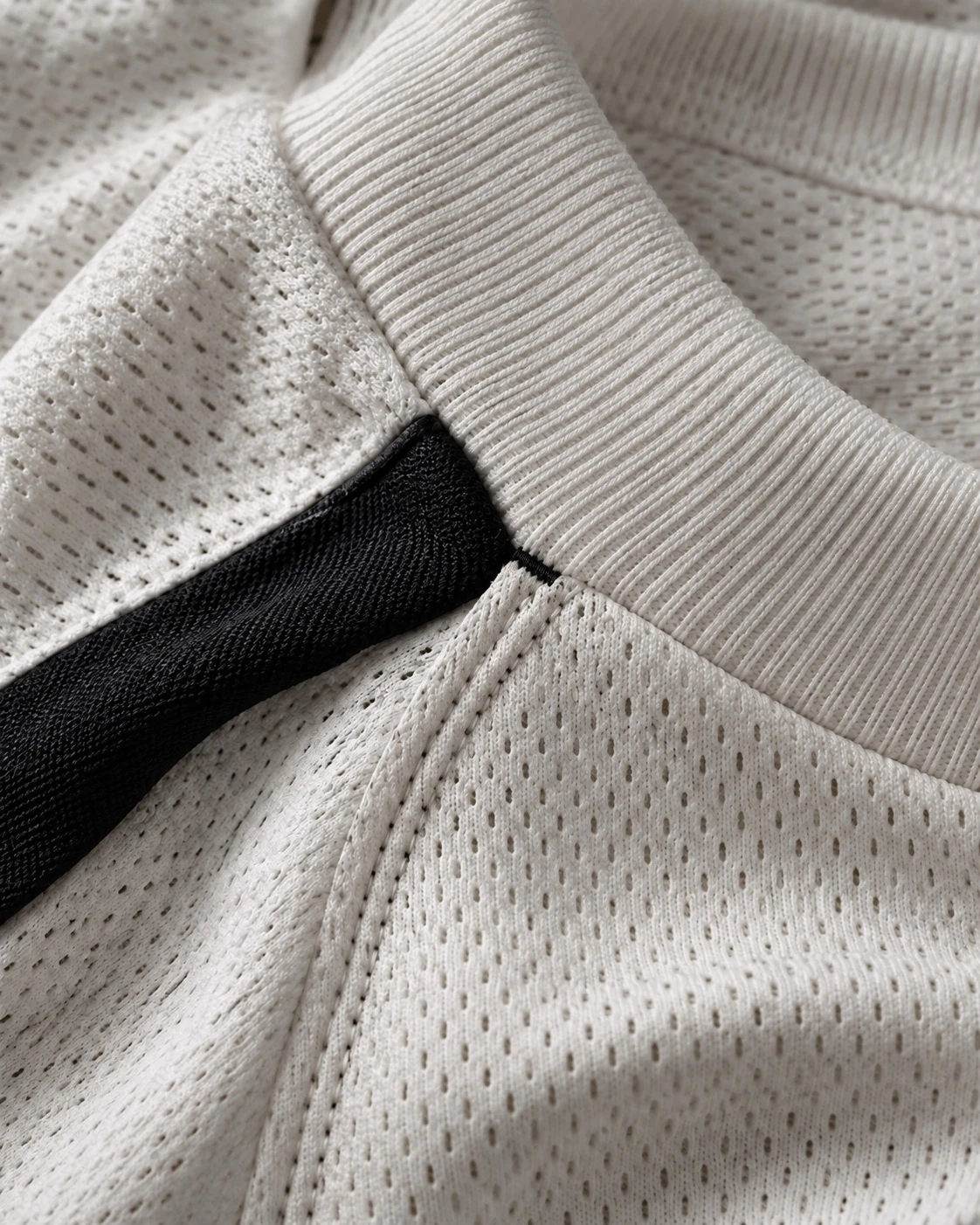
The decision in one paragraph
Choose a running-shirt fabric by linking its structure to the wearer, climate, artwork, fit and care expectations. GSM is one controlled measurement, not a performance grade. Compare the actual swatches, then confirm the important claims through a garment sample or an agreed test method.
Start with the runner and the conditions
A useful fabric brief begins with use, not a supplier fabric code. State whether the shirt is for a short road race, regular club training, long-duration trail use, volunteer staff or a retail range. Add expected weather, layering, fit, colour and the areas that carry graphics.
This context changes what should be compared. A loose participant shirt with a large sponsor print creates a different decision from a close-fitting club singlet worn in heat. The buyer should define the decision before requesting “lightweight performance fabric”.
- Wearer group and intended fit
- Climate, duration and layering
- Areas of high sweat, pack contact or abrasion
- Artwork coverage and required colour
- Care instructions and expected use cycle
Use GSM as one measurement, not the verdict
GSM describes fabric mass per unit area. ASTM D3776 provides methods for measuring that mass, including a small-swatch option whose result applies to the tested sample rather than automatically to the whole production lot. A quoted GSM therefore needs a measurement basis and an agreed tolerance if it matters commercially.
Two fabrics at the same stated GSM can still differ in yarn, knit geometry, density, finish, stretch, opacity, hand feel and airflow. A higher GSM does not by itself prove better durability, and a lower GSM does not by itself prove better cooling.
Compare mesh and smooth knit without relying on labels
Mesh and smooth knit are broad visual descriptions rather than complete specifications. Record a swatch reference, fibre composition, construction, colour, finish and approved end use instead of approving the word “mesh”.
| Decision | Mesh structure | Smooth knit structure | What the buyer should check |
|---|---|---|---|
| Surface | Openings may be visible and vary in scale | More continuous visual surface | Front and reverse swatches under the same light |
| Airflow | Open geometry may change air movement | Depends on yarn, density and finish | Ask for comparable test data if airflow is a requirement |
| Print detail | Openings can interrupt fine marks | May present a more continuous print surface | Print the smallest real logo and text at final size |
| Opacity | May show skin or base layers more readily | Can still become translucent when stretched | Check dry, stretched and wet appearance where relevant |
| Snag risk | Larger openings may expose loops | Surface may be less open but still snag | Review use, packs, hook-and-loop contact and an agreed test |
Translate performance words into evidence
Words such as breathable, moisture-wicking and quick-drying describe different questions. ASTM D737 measures air permeability. AATCC TM195 evaluates liquid moisture-management behaviour from the fabric structure and the fibres or yarns. Other AATCC methods address wicking and drying rate. One result should not be presented as proof of every comfort claim.
Decide which property matters enough to test. If formal testing is not justified for the project, compare named swatches using the same practical sample protocol and state the limitation clearly.
Move from swatch to garment sample
A swatch helps compare touch, structure, colour and print trials. It cannot show the finished garment’s fit, seam behaviour, panel interaction or appearance when stretched. The garment sample should use the intended fabric and artwork where those factors drive the decision.
Record what the sample is intended to approve: construction, fit, colour direction, artwork reproduction or a combination. Unchecked properties remain open rather than silently approved.
Use a short scenario matrix to narrow the swatches
Illustrative planning scenarios: a club training shirt in humid weather, a sponsor-heavy event shirt, and a trail shirt worn beneath a pack. All three can be described as running shirts, but their approval priorities differ. The first may prioritise coverage and comfort in its intended conditions, the second readable graphics, and the third contact areas as well as movement.
Ask for a named material proposal for each priority rather than an unexplained “premium dry-fit” label. Record composition, construction, weight in g/m², colour and finish only when supported by that material’s record. Available library references are starting points for a discussion; visual similarity does not assign a reference automatically to a running garment.
| Planning context | First comparison | Garment-level review |
|---|---|---|
| Hot or humid club training | Named mesh and smooth-knit proposals | Coverage, drape and intended movement |
| Large sponsor artwork | Actual print trial at final size | Small text, contrast and panel interruption |
| Pack contact during a run | Proposed surface and reinforcement decisions | Strap contact, seams and reach |
| Shared participant and staff programme | Different wearer and use requirements | Separate fit and issue quantities |
Make the trial comparable and modest in its claims
Keep the compared swatches and garments clearly identified. Use the same artwork, garment size or agreed fit reference, lighting and intended movement where those factors are being compared. A casual try-on can settle preference or reveal an issue, but it should be recorded as wearer feedback rather than a drying-rate measurement.
The test question must match the claim: fabric mass, air permeability and liquid moisture management are distinct topics covered by ASTM D3776, ASTM D737 and AATCC TM195 respectively. Request the applicable method, conditions, sample identity and result when a formal property is part of acceptance. A method name alone is not a result for the proposed fabric.
Check the printed garment before releasing the club order
Print the smallest real sponsor text and the largest graphic in the positions the club intends to use. Review openings in the material, seam crossings and appearance when the garment is normally stretched. The artwork trial should include the actual colour direction; a plain swatch cannot close a decision about a densely printed shirt.
Useful approval comments describe a location and an observation: a mark is difficult to read at a side seam, a light body panel needs another coverage review, or a neck opening feels restrictive on the chosen fit sample. Avoid conclusions such as “all lightweight mesh is cooler” or “higher weight means longer life.” Keep the swatch, artwork and garment revision together so a substitution reopens the relevant decision.
- Climate, duration, layering and wearer group
- Named material with weight in g/m²
- Coverage and artwork priorities
- Comparable practical trial conditions
- Any formal test requested with its scope
- Approved material and garment revision linked
What to confirm for your project
- Named fabric reference and supplier version
- Composition, construction and stated GSM with tolerance
- Colour reference and approval method
- Actual artwork trial at final scale
- Required tests or practical comparison protocol
- Garment sample purpose and approval record
MOQ, sampling conditions, production timing, exact material options and service scope are confirmed for the specific product and order. This guide does not replace a current quotation, approved sample or production specification.
Questions to carry into supplier review
- Does a lighter fabric automatically dry faster?
- Should the same fabric be used for the body and ventilation panels?
- What changes when a dark print covers a large area of a light running shirt?
Questions buyers ask next
Is open mesh automatically the best fabric for hot-weather running?
Not automatically. Compare the actual knit, finish, coverage, print requirements and garment fit for the intended conditions. Visible holes are a structure clue, not a complete comfort or performance rating.
Should the RFQ use g/m² or GSM?
g/m² is the unit for mass per unit area; GSM is a commonly used abbreviation for grams per square metre. Record the value, material identity, measurement basis and any agreed tolerance together, not a weight number detached from a swatch.
Can a wearer trial prove the drying-rate claim?
A practical trial can record wearer preference and observations under stated conditions. A formal drying-rate claim needs the agreed method and relevant result. Do not relabel casual feedback as a laboratory test.
Can the body and ventilation panels use different materials?
They can be proposed as separate construction decisions. Review their seam interaction, shade, coverage and intended positions on a garment sample; one panel approval should not silently apply to another material.
What should we attach for a sponsor-heavy running shirt?
Attach final-size artwork, placement views, the smallest required text and the intended material or an open material proposal. Request an actual print trial where reproduction and coverage determine the selection.
Technical references and question evidence
- Technical referenceASTM D3776 — Fabric mass per unit area
- Technical referenceASTM D737 — Air permeability of textile fabrics
- Technical referenceAATCC TM195 — Liquid moisture management
- Technical referenceAATCC standard test methods and procedures
Technical references support the discussion method. Question evidence documents public discussion of an issue; it does not diagnose a KITOEM product or establish a test result.