
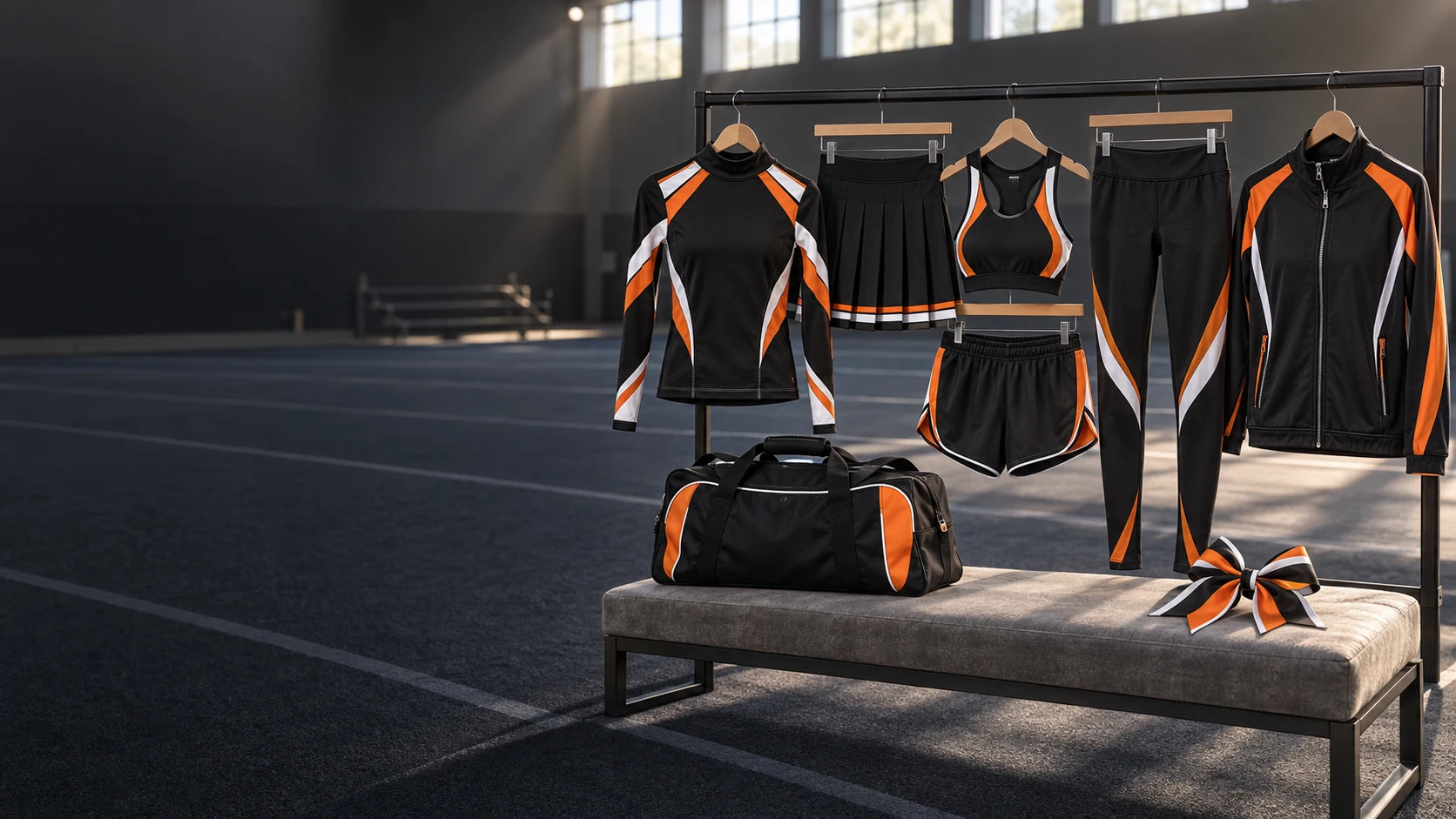
Custom cheer apparel. One team identity.
KITOEM supports custom cheer competition clothing, practicewear, warm-up and travel apparel, ordinary accessories and bags. Build each garment around the wearer group, movement coverage and named event division rather than assuming one uniform meets every programme.
- Your own colours
- Separate specifications
- One editable project
Build your Cheer range.
KITOEM accepts customisation, development and supply enquiries across the range below. Every garment, bag and accessory retains its own specification and quantity.
Existing product records and custom development directions are different starting points—not stock claims or fixed commercial bundles. Black, orange and white illustrate one colour direction; share your own palette.
Approve the top, skirt, dress and under-garment directions independently around the division and wearer group.
Practice clothing supports repeated movement and separate fit decisions; competition garments are not the default training uniform.
Warm-up and travel layers can carry a shared identity while keeping their pattern and material requirements separate.
Distinguish performance participants, coaches, event teams and supporters in one coordinated brief.
Ordinary accessories coordinate the team appearance; carry products are briefed from real contents.
Choose the shape. Make it yours.
Compare the silhouette, structure and role of each garment. Select optional references for your project; final measurements and details are reviewed with your sample.
Programme and division
School, club, camp and event divisions can set different coverage and presentation requirements. Name the rule owner before freezing the design.
Top construction and coverage
Review standing, reach and routine movement coverage with the coach and wearer group.
Lower garment independently
Skirts, briefs, shorts and leggings are separate choices with their own waist and coverage approvals.
Visual identity across the season
A shared lettering system can connect competition, practice and travel without copying every decoration to every garment.
Select more than one reference when your programme needs alternatives. These are optional discussion preferences, not fixed garment specifications. Confirm each product in your enquiry.
Your artwork. The right application.
Bring your own or authorised design. Names, numbers, crests and sponsor marks belong to specific products and positions—not automatically to every item in the project.
Keep seam breaks, reversible faces, zips, pockets and stretch zones in the artwork file. Review application, scale and care on the sample. You can leave the method open at the first enquiry.
Product by productClear decisions behind every direction.
Use an existing product record when it matches. For a new direction, the following construction and sample questions turn the idea into a usable brief.
Long-sleeve competition top
Measure reach and sleeve length alongside torso coverage. Check the planned decoration on the actual stretch fabric rather than assuming a flat graphic will behave identically in motion.
- Reach and sleeves
- Torso coverage
- Decoration with movement
Competition dress
Review torso length, skirt coverage and entry/closure as a single pattern. Keep any separate briefs or shorts on their own specification and quantity lines.
- Torso and skirt balance
- Closure and entry
- Division review
Coordinated competition briefs
Define waist, leg opening and opacity with the wearer group. Review coverage with the chosen skirt during a supervised fitting and record the approved garment combination.
- Waist and leg opening
- Opacity and coverage
- Skirt pairing
Unisex competition top
Agree shoulder width and body length rather than scaling a fitted shell indiscriminately. Map the team lettering to the selected cut and approve the wear group independently.
- Shoulder width
- Full-length body
- Shared team lettering
Practice leggings
Locate seams and waist height around the intended movement range. Close fit does not establish compression, recovery or tested durability.
- Waist height
- Seam locations
- Opacity during movement
School spirit practice tank
Give the school programme its desired coverage and fit before selecting lettering. Review neck and arm openings across the intended age groups.
- Full-length coverage
- Neck and arm openings
- Age-group fit
Athletic rehearsal shorts
Specify fit, rise and optional inner construction for the programme. Keep this alternative separate from the established practice-short record.
- Rise and fit
- Inner construction choice
- Rehearsal movement
Long-sleeve rehearsal top
Check sleeve movement and layered fit with practice shorts or leggings. Finalise fabric and artwork together for the intended wash-care routine.
- Sleeve movement
- Layered fit
- Fabric and care
Cheer warm-up jacket
Review shoulder clearance over the selected top and the required front opening. Approve chest and back graphics before fixing the pack version.
- Shoulder clearance
- Front opening
- Chest and back artwork
Warm-up pants
Set waist and ankle access around practicewear and changing routines. Sizes and quantities stay independent from the warm-up jacket.
- Waist adjustment
- Ankle access
- Independent sizes
Seasonal travel jacket
Provide layering needs and the expected travel environment. Filling, lining and any weather requirements are agreed separately; no temperature rating is implied.
- Layering allowance
- Filling and lining
- Destination conditions
Team travel sweatshirt
Set body length and rib finish around the wearer matrix. Review letters and brand labels independently from competition decoration.
- Body and rib
- Travel wearer matrix
- Labels and letters
Team travel hoodie
Keep the hoodie fit and front-pocket clearance distinct from a fitted shell. Approve team wording and packing labels as an off-floor line.
- Off-floor fit
- Pocket clearance
- Team wording
Coach polo
Agree coach initials or role marks and a separate staff fit. Coach quantity is not inferred from athlete numbers.
- Role or initials
- Staff fit
- Separate coach count
Coach T-shirt
Select sleeve length and body fit for the coaching task. Keep readable role identification separate from the athlete design.
- Sleeve and body fit
- Coach identification
- Clinic artwork
Event staff T-shirt
Name volunteer, judge-support or organiser roles in the brief without implying official-event affiliation. Confirm print rights and quantities for each wearer group.
- Role distinction
- Artwork permission
- Group quantities
Spirit fan T-shirt
Use approved team wording and choose the everyday fit separately. Set retail or participant packing and size labels for this merchandise product.
- Team wording rights
- Everyday fit
- Merchandise packing
Spirit cap
Review crown, adjustment and decoration on the curved front. Keep cap quantities separate from the apparel pack.
- Crown and closure
- Curved-panel marks
- Independent quantities
Team beanie
Specify cuff depth and mark application for the intended wearer group. It is apparel headwear, not safety or impact equipment.
- Cuff depth
- Knit and fit
- Mark application
Team crew socks
Record foot-size bands and the visual relationship to the outfit. Sock fibre, construction and decoration are not inherited from the garments.
- Foot-size bands
- Cuff appearance
- Independent specification
Team backpack
Supply the contents list and any personalised identification needs. Agree compartment access and strap adjustment rather than inferring capacity from the image.
- Contents list
- Personal identification
- Compartment access
Team travel duffle
List the planned clothing load-out before confirming bag size. Linings, compartment separation and water performance remain separate specification questions.
- Clothing load-out
- Compartment separation
- Handles and straps
Cheer equipment carry bag
Identify items and opening needs before arranging internal divisions. This bag includes no equipment and implies no tested load or impact function.
- Buyer-specified contents
- Zip opening
- Internal divisions
Camp drawstring bag
Use the original product detail for approved construction rather than inventing a load-out. Keep participant marks and packing allocation on the bag brief.
- Original construction record
- Participant marks
- Pack allocation
Make the sample answer the right questions.
Compare composition, construction, handle and finished-garment behaviour together. g/m² is mass per area—not a standalone quality or breathability grade.
Stretch, opacity and coverage
Compare the material in relaxed and extended positions with the intended pattern. Stretch percentage, recovery and opacity require defined methods or sample decisions; appearance alone establishes none of them.
Decoration on moving garments
Sublimation, transfers, screen prints, stitching and badges interact differently with stretch and seams. Review the exact material, method and placement rather than assuming a shared finish suits every line.
Warm-up versus competition handle
A warm-up woven, sweatshirt knit and fitted shell have different drape and layering roles. Keep composition, g/m² and care records attached to the garment where they are approved.
Coverage-first fitting
Collect the event division, age groups and garment measurement chart first. Review movement with the coach and record the approved top/lower-garment pairing without implying a universal competition approval.
Lettering and trim approval
Control the artwork file, scale, placement and trim version. Include seams, closures, labels and decoration behaviour in the representative sample decision rather than using an illustration as a test result.
A season-long team brief
Keep competition, practice, warm-up and merchandise wearer matrices distinct. Confirm labels, barcodes and packing by role, then freeze production versions and retain references for repeat-order discussions.
A starting combination. Not a fixed bundle.
Add a sensible starting list, then remove alternatives and set each quantity in your enquiry. Combinations do not set a price, minimum or delivery promise.
Competition starting pack
Separate shell, skirt and lower garment; edit the combination for the event and wearer group.
- Competition shell top
- Competition skirt
- Coordinated competition briefs
- Team hair bow
Practice pack
Independent training-top and shorts quantities, with leggings as an optional line.
- Practice top
- Practice shorts
- Practice leggings
Warm-up pack
Jacket and trousers are separately graded products.
- Cheer warm-up jacket
- Warm-up pants
Team travel pack
Off-floor apparel and a carry direction with no fixed price or item ratio.
- Team travel sweatshirt
- Team travel hoodie
- Team travel duffle
Seasonal arrival pack
Discuss destination and layering before agreeing the padded garment.
- Seasonal travel jacket
- Team beanie
- Warm-up pants
Coach & staff pack
Plan staff measurements and role marks separately.
- Coach polo
- Coach T-shirt
- Event staff T-shirt
Spirit merchandise pack
Authorised school or club graphics with independently editable lines.
- Spirit fan T-shirt
- Spirit cap
- Team travel hoodie
Camp & event pack
A starting point for camp participation and event staff allocation.
- School spirit practice tank
- Athletic rehearsal shorts
- Event staff T-shirt
- Camp drawstring bag
Team carry pack
Empty bags arranged around clothing and the supplied contents list.
- Team backpack
- Team travel duffle
- Cheer equipment carry bag
Schools, universities & academies
Name the division and wearer matrix; approve age-appropriate fit, coverage and school artwork before sampling.
Plan this role ↗Club & competition teams
Separate performance garments from practice and travel layers, including each approved garment pairing.
Plan this role ↗Camps, events & community programmes
Plan participant, volunteer and staff products with distinct identification and pack allocation.
Plan this role ↗Brands, distributors & dealers
Build specialist style and size references with controlled lettering, labels and merchandise packing.
Plan this role ↗Make the approved garment pairing the reference
These product directions support an individual programme brief, fitting and sample review.
Customer identities, private artwork and rosters stay confidential. Any public case or photograph requires its own publication permission.
Discuss sample and evidence requirements ↗Keep the approvals connected.
A complete project record connects garment decisions, player or recipient data and the dispatch plan.
- 01
Define the project
Share wearer roles, products, separate quantities, design references, destination and required arrival.
- 02
Develop the sample
Agree garment measurements, material, artwork, components and what each sample must resolve.
- 03
Freeze the approved version
Confirm size tables, roster spelling, colour references, approved artwork, labels, packing and the quotation.
- 04
Coordinate production checks
Use the agreed reference for first-piece and in-process review. Product-specific checkpoints belong in the order record.
- 05
Prepare dispatch & reorder records
Review final checks and packing. Keep production, dispatch, transport, customs and arrival as separate milestones.
- Garment measurements and size split
- Team palette and authorised artwork
- Names / numbers / role allocations
- Brand and care-label content
- Hangtags and barcode requirements
- Packing by team, size or recipient
- Approved-sample comments and version
- Destination, required arrival and transport plan
The questions that shape this order.
Are top and skirt treated as one fixed set?
No. They are independent products with separate sizes, quantities and notes. A pack is an editable starting combination, not a fixed order ratio.
Can we develop a dress rather than a shell and skirt?
Yes. Brief torso length, skirt coverage, closure and the intended division. Any accompanying lower garment is specified separately.
Will a pictured design meet every cheer rulebook?
No. Supply the current school, federation or event division requirements. Coverage, trim and accessory decisions are reviewed for that specific programme.
How should movement coverage be checked?
Agree the wearer group and garment pairing first. During fitting, review standing, reaching, bending and relevant routine positions with the coach, and record any corrections.
Can we include men, women and youth in one identity?
Yes. Use distinct measurement and fit routes where needed while sharing controlled lettering and colours. Do not replace garment measurements with age or generic size labels alone.
Are practice clothes different from competition clothes?
They can be. Practice tops, shorts and leggings have their own coverage, material and care decisions; competition trims and decoration should not automatically transfer to them.
How are bows included?
Bows are an optional separate accessory line. Confirm dimensions, attachment, team colours and event accessory instructions rather than assuming one bow per garment.
Can you coordinate coaches and fanwear too?
Yes. Add coach, staff and merchandise lines with separate role marks, fits and quantities. Use only artwork the buyer is authorised to provide.
What should we send for the first sample?
Provide the programme and division, wearer measurements, preferred garment directions, approved graphics, material requirements and the purpose of the sample. Define coverage and decoration checks before approval.
Does a stretch illustration prove recovery or durability?
No. Specify any required properties and relevant test evidence separately. The garment sample is used to review agreed fit and construction; an image is not a test report.
Can event and team clothing share one enquiry?
Yes. Product rows remain independent, so participation clothing, staff garments and carry items can have different quantities and notes without automatically sending the enquiry.
How should a repeat order be prepared?
Reference the approved pattern measurements, lettering, colour, labels and sample version. Recheck wearer changes and the current division requirements before the next production confirmation.
Useful guides. Clear next steps.
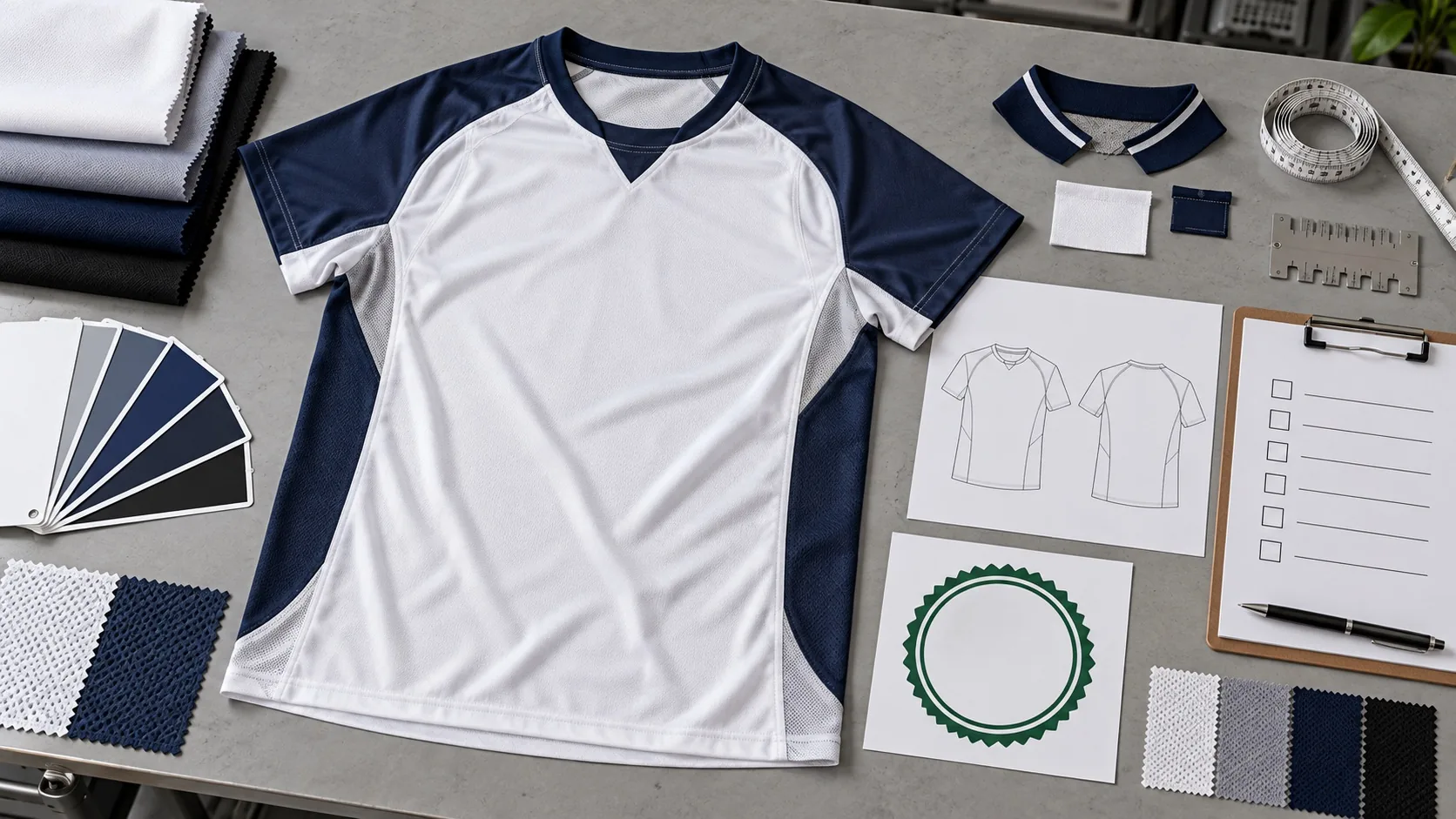
How to Approve a Custom Sportswear Sample Before Bulk Production
Turn fitting, construction and decoration observations into a versioned sample decision.
Read the guide ↗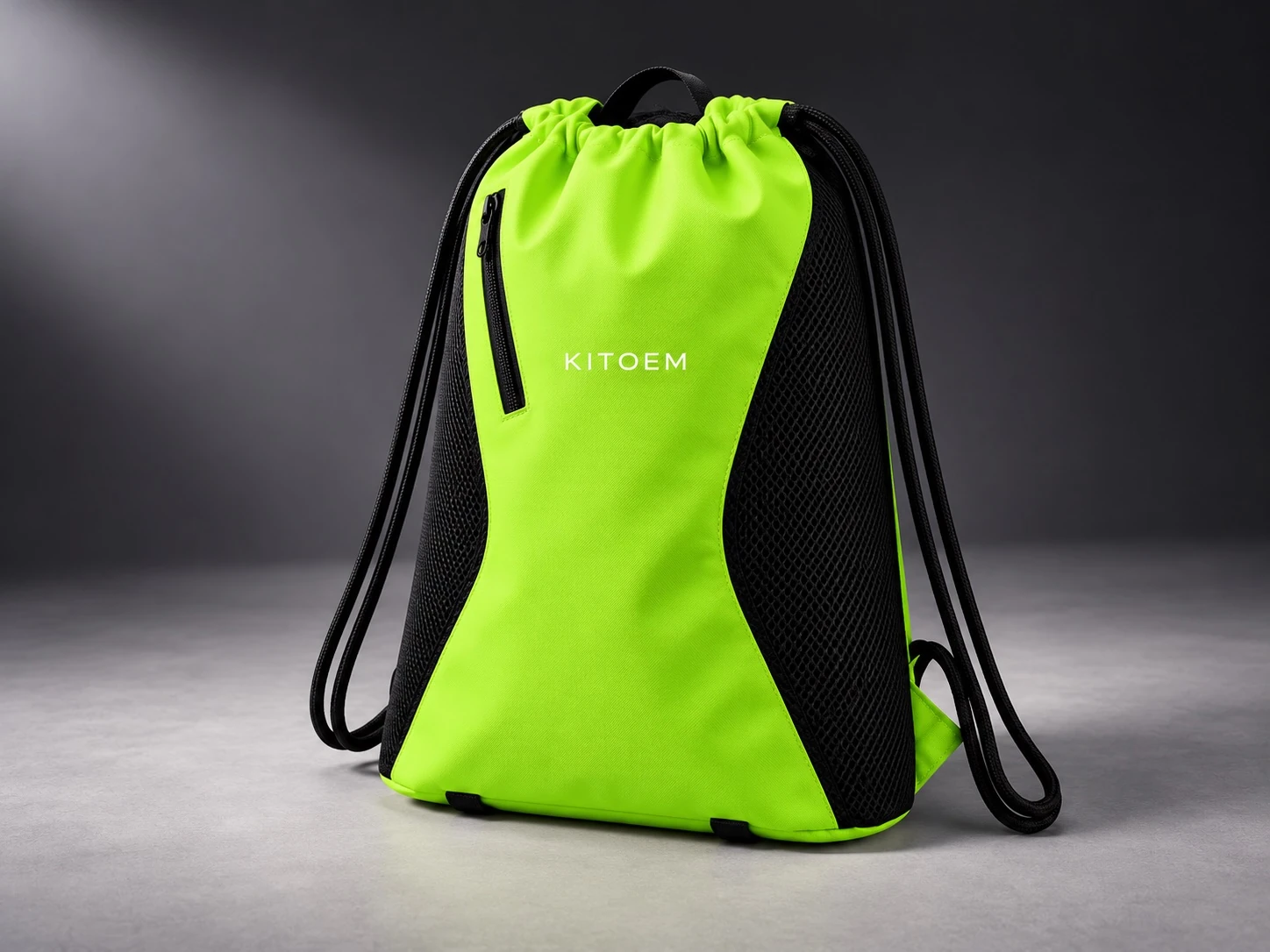
How to Write a Team Bag Specification
Specify what the bag carries, its opening and identification rather than guessing usable capacity.
Read the guide ↗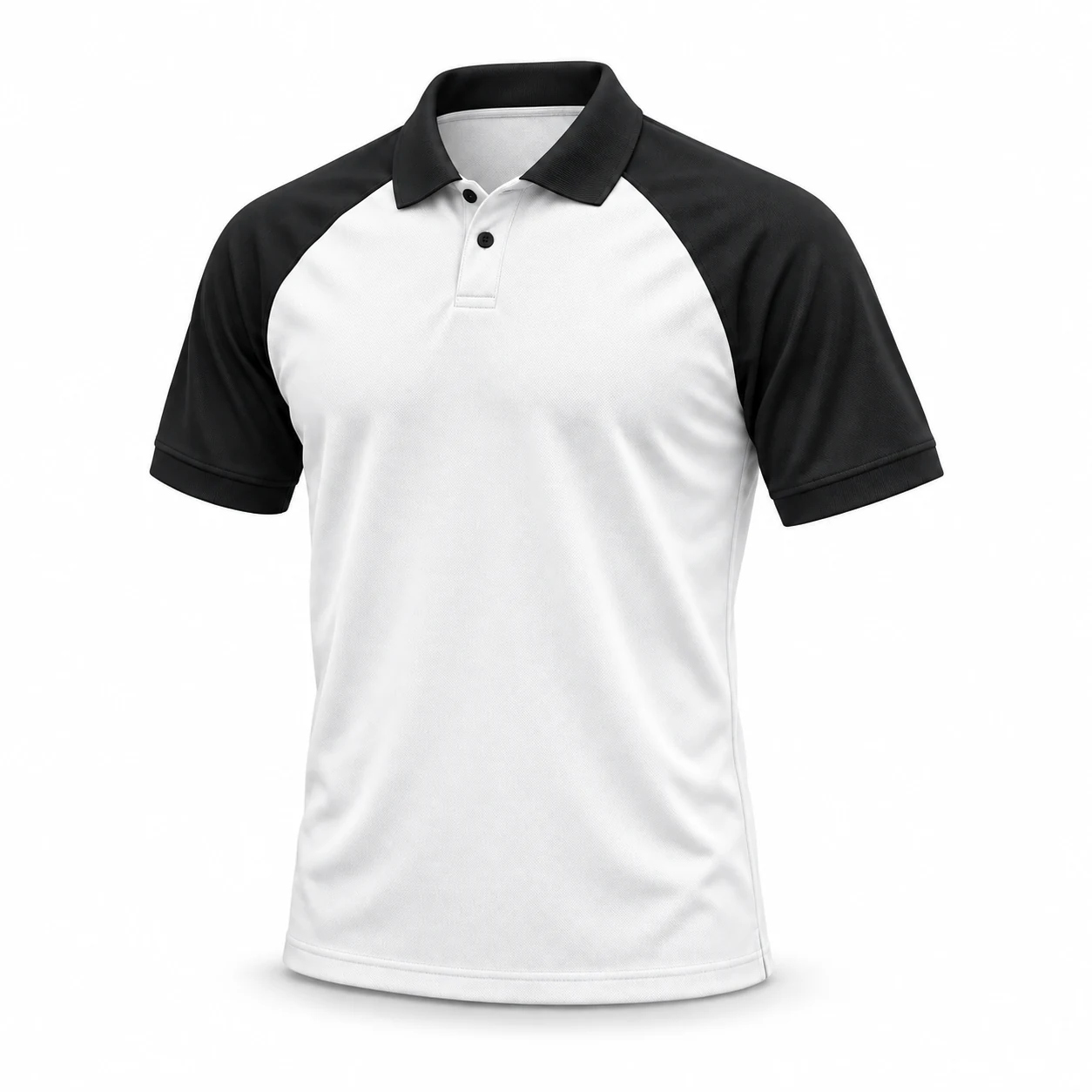
How to Brief Staff and Travel Wear
Separate wearer roles, travel layers, staff sizes and delivery destinations.
Read the guide ↗Your programme.
Your next approval.
Share the product mix, design reference, separate quantities, destination and desired arrival. Missing specifications can become sample decisions—not invented values.
Start your Cheer project ↗