
The decision in one paragraph
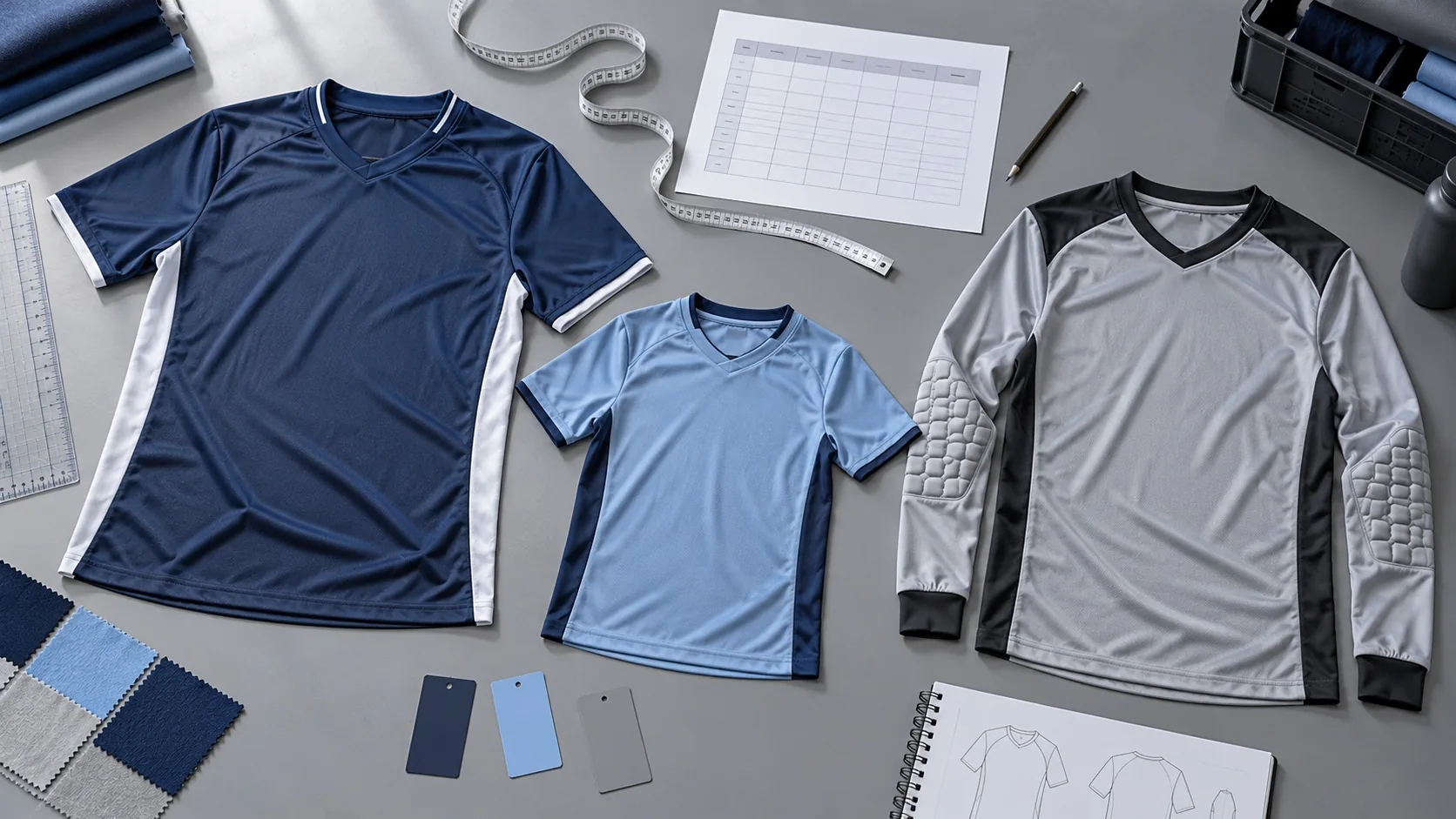
Collecting team sizes starts with the garment, not the spreadsheet. Confirm the exact style, fit intention and finished-garment measurement chart; decide whether the group needs fitting samples; then use one roster owner and one deadline. Every row should identify the wearer or allocation code, product, size, quantity, name and number status. Do not convert body measurements directly into a size unless the supplier provides a documented method. Freeze the approved roster before production, and treat every later change as a controlled exception with a recorded effect on cost and timing.
1. Separate body measurements, garment measurements and size labels
A size label is a code inside one product system. It is not a universal body measurement. A medium training shirt from one pattern may be wider or longer than a medium match jersey from another. Youth, women’s, unisex and goalkeeper styles can use different proportions even when labels look similar. Begin by naming the exact product and fit category for every roster line. If the product changes, review the size decision again.
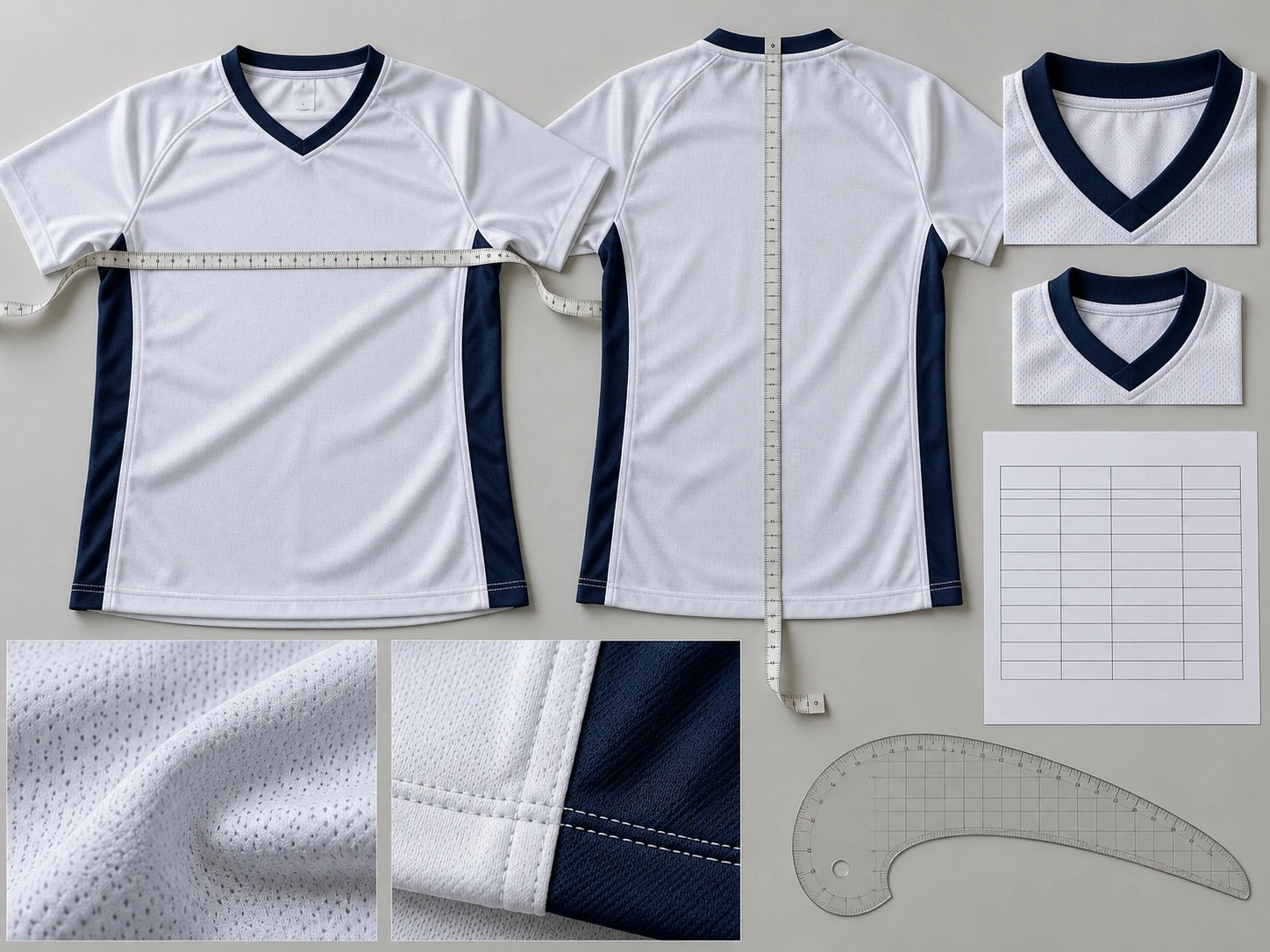
Body measurements describe the wearer. ISO 8559-1 provides anthropometric definitions and procedures for body measurement, helping teams use consistent terms such as chest girth, waist girth and stature. Finished-garment measurements describe the laid-flat product, often including half chest, body length and sleeve length. The supplier’s chart should state which system it uses, how each point is measured and whether values are targets or ranges.
Do not select a size by matching a body chest girth to a half-chest garment value. The garment needs ease, and the required ease depends on design and use. Instead, follow the supplier’s documented body-to-size recommendation, compare a garment that fits, or use fitting samples. Record which evidence produced the choice.
2. Use one repeatable measuring method
When body measurements are needed, provide a short method sheet. The wearer should use a flexible tape, wear light clothing, stand in the stated posture and keep the tape level and comfortably close to the body. Each measurement needs a named start and end point. If different volunteers measure in different ways, the spreadsheet can look precise while the inputs remain inconsistent.
When comparing a familiar jersey, lay it flat without stretching, smooth obvious folds and follow the supplier’s garment-measurement diagram. Record the actual product and its condition. A heavily worn or shrunk shirt is evidence of personal preference, but it may not represent its original dimensions. If the wearer wants the new garment to fit differently, add a note rather than silently changing the measured value.
Use centimetres or inches consistently and state the unit in the column heading. Avoid entering bare numbers in a mixed-market team. Do not round measurements before applying the supplier’s size guidance. If a value falls between sizes or different body points indicate different sizes, escalate it for fit review instead of creating an unsupported rule.
3. Plan a fitting-sample session that produces evidence
Fitting samples are usually the clearest route for a mixed team, provided they match the proposed product or a documented equivalent. Confirm the sample style, fabric and size range. A different garment may still help, but its limits should be stated. Label each sample clearly, inspect it before the session and keep the complete set together so that players compare the same reference.
Organise the session by squad or size range. Ask each wearer to try the garment in the context in which it will be used: over a base layer if relevant, with the required movement, and with any padding or goalkeeper equipment that changes fit. The aim is to select an intended fit, not simply the tightest garment that can be worn. For children, involve the buyer’s authorised guardian process and avoid collecting unnecessary personal information.
Record the chosen product and size immediately. Do not rely on memory or a pile of sticky notes. If a wearer is absent, assign a clear unresolved status and a deadline. Keep a small set of borderline cases for review by the roster owner and supplier before the final file is frozen.
4. Build one controlled roster
The roster should contain only fields needed to make, personalise, pack and reconcile the order. A practical structure includes squad, wearer or allocation ID, product code, fit category, size, quantity, printed name, number, goalkeeper or special role, and notes. Separate given name from printed name if the latter may contain accents, spaces or abbreviations. Keep the number as text when leading zeros are possible.
Use drop-down values for product, size and status where possible. Restrict free text to names and genuinely exceptional notes. Highlight duplicates, missing mandatory fields and numbers outside the competition’s allowed range. A blank cell should mean “not supplied,” not “same as above” or “to be guessed by the factory.”
Give the file an owner, version and issue date. Collect changes through that owner rather than allowing multiple copies to circulate. Protect personal data by limiting access, using allocation codes where names are unnecessary and agreeing how long the file will be retained. The production supplier needs accurate instructions, not the team’s broader membership database.
5. Handle youth, goalkeeper and non-player groups separately
Youth sizing needs particular care because age is not a body measurement and growth is uneven. Do not add arbitrary “growth room” to every child. Use the relevant chart or samples and agree how the club wants to balance current fit, season length and replacement policy. If parents select sizes, give them the same product reference and method rather than a generic age table.
Goalkeeper shirts may have different sleeve length, cuff, padding, fabric or layering assumptions. Staff, coaches and substitutes may use different products or fits from players. Create separate product columns or roster sections so that the same size label is not accidentally applied across unlike garments.
Inclusive sizing also requires an exception route. If the offered range does not cover a wearer, ask the supplier what pattern, sample, MOQ, price and timing consequences apply before promising a solution. Record the answer against that line. Never conceal an unsupported custom size inside the standard roster.
6. Run a four-part review before the roster is frozen
First, verify completeness: every required wearer or allocation is present, and each required product has a size and quantity. Second, verify product logic: sizes come from the correct chart, and goalkeeper, youth and staff lines use the intended style. Third, verify personalisation: printed names, numbers, accents, case and spacing match the approved artwork rules. Fourth, reconcile totals with the commercial order.
Send each player, squad manager or authorised approver a view that is easy to check. Ask for an affirmative approval rather than silence. The final team approver should receive a summary of quantities by product and size plus a list of unresolved exceptions. Record the approval date and lock the production version.
The roster, artwork and quotation must agree. If the quotation allows 18 personalised shirts but the roster contains 19, the discrepancy should be resolved before release. The production file should not be treated as a place where commercial quantities are discovered.
Missing size replies: what should remain pending?
A previous order can help you check a repeat order, but it should not automatically become the new production instruction. Confirm the garment style, fit category and size-chart revision, then obtain confirmation from the wearer or authorised buyer representative.
Keep unresolved entries visible. If someone has not replied, mark the row as Pending confirmation rather than copying a previous size into the approved total. Before releasing the order, the buyer’s approver should decide how each pending entry will be handled and confirm any quantity, price or timing implications with the supplier.
Repeat-order size confirmation record: use one record for each wearer and garment. Blank fields mean information is missing; they do not mean approval has been given.
Keep the previous record unchanged. If an approved size later changes, record the request separately and obtain the supplier’s confirmation before issuing a revised production file.
| Field | What to record | Entry |
|---|---|---|
| Wearer or allocation ID | Use an internal code where a personal name is unnecessary. | ______ |
| Garment reference | Exact style, fit category and size-chart revision. | ______ |
| Previous order reference | Previous order or roster version, with the recorded size. | ______ |
| Current size decision | Size selected for this order and the basis for the choice, such as a chart comparison or fitting. | ______ |
| Confirmation status | Pending confirmation / Confirmed for buyer review / Approved for production. | ______ |
| Confirmation record | Who confirmed the selection and when. | ______ |
| Exception decision | Follow-up required, held from the main order, or submitted for a separate quotation. | ______ |
| Approval and version | Final buyer approver, approval date and released roster version. | ______ |
Confirm size-exchange terms before releasing personalisation
Before approving names or numbers, ask the supplier to confirm size-exchange and amendment terms for each product line. Record both how the garment is supplied and what decoration will be applied. Stock availability, a school crest, personal printing and made-to-order production can affect the options available.
Keep size approval and personalisation release as two recorded decisions. Use the table below to identify the questions that need a written answer.
For each order line, retain the product, size, sizing evidence, exchange terms, change deadline, approval owner and personalisation-release record. Add any accepted cost or timing changes to the same record.
| Product or order status | Questions to confirm before approval | Record to retain |
|---|---|---|
| Stock garment without decoration | Is a size exchange available? What condition, tags, packaging, deadline and stock availability requirements apply? | Supplier’s written terms and the product reference. |
| Garment with a standard school or club crest | Does the supplier treat this as a standard stocked item or as an individually decorated order? Which exchange conditions apply? | Confirmation for the exact crested product. |
| Garment with a player’s name or number | What changes remain possible before decoration starts? What happens after work has begun? | Approved name-number file, release authorisation and supplier acceptance. |
| Made-to-order garment | At which stages can the selected size still change? Would a later request require a replacement or separate reorder? | Supplier’s confirmed production stage and agreed response. |
| Wearer’s size remains unconfirmed | Can the affected line be held separately? Would this change the order’s minimum, cost or delivery plan? | Unresolved line, decision owner and agreed next step. |
| Delivered item appears incorrect or faulty | What evidence and reporting process apply? Compare the received item with the approved order and specification. | Order line, product label, relevant measurements, photographs and supplier response. |
7. Control late changes instead of hiding them
A roster freeze does not make change impossible; it makes the consequence visible. For a requested change, identify the affected product, production status, replacement line and deadline. Ask the supplier whether panels have been printed, garments have been cut, decoration has been applied or packing has started. The answer determines whether the change is feasible and whether it creates waste, additional cost or delay.
Keep the original approved row and add a change record rather than overwriting history. The record should show who requested the change, who approved it, the supplier’s acceptance, any revised price and the final status. If the supplier cannot accommodate it in the main run, decide whether a separate reorder is operationally better than disrupting the team order.
After delivery, reconcile received items against the frozen roster and approved changes. Record mis-sizing separately from production errors: a garment that matches the approved size but does not fit is a different issue from a garment labelled or made incorrectly. That distinction gives the club better evidence for both supplier review and the next collection cycle.
What to confirm for your project
- Exact product and fit category for every line
- Body and garment measurement methods and units
- Fitting-sample style, range and session owner
- Roster fields, file owner, version and deadline
- Separate youth, goalkeeper and staff logic
- Final quantity reconciliation and late-change procedure
MOQ, sampling conditions, production timing, exact material options and service scope are confirmed for the specific product and order. This guide does not replace a current quotation, approved sample or production specification.
Questions to carry into supplier review
- Which measurement chart belongs to this exact product?
- Does the team need fitting samples or only a garment comparison?
- Who has authority to freeze and later amend the roster?
- How will missing and borderline cases be handled?
Questions buyers ask next
Can a jersey with only a school or club crest be exchanged for another size?
Ask the supplier about the exact product. A standard crested stock item may have different conditions from a garment decorated after ordering. Confirm eligibility, garment condition, availability, deadlines and costs in writing before communicating an exchange option to players or parents.
Can a player change size after names and numbers have been approved?
Contact the supplier promptly and identify the affected order line. Ask which production steps have already started and what changes remain possible. Obtain confirmation of any revised cost and delivery effect before approving the change. Record the accepted replacement instruction against the original approved version.
What if a player tried a sample but the delivered jersey still does not fit?
Compare the delivered garment with the approved product, size and measurement specification. Check whether the fitting sample represented the same style and record any differences. If the delivered item matches the agreed order, ask about available exchange or replacement options. If it differs, submit the discrepancy evidence for review.
Should we release personalisation while some players have not confirmed their sizes?
Mark those lines as unresolved and ask whether they can be held separately. Confirm any effect on production, minimum quantities, price and delivery. Release only the lines specifically approved for that step, and record who will decide the remaining sizes and when.
Can we reuse the previous size if a team member does not reply?
Use it as a reference, not as automatic approval. Check whether the garment, fit and size chart remain the same, and whether the wearer’s requirements have changed. Obtain confirmation through the agreed buyer-side approval process. Until that happens, keep the entry pending and separate from approved production quantities.
Does no reply count as size approval?
For this workflow, require an affirmative confirmation. A reminder or an unanswered message does not establish that the wearer checked the correct garment and size reference. Record who confirmed the selection and when, then let the designated buyer approver release the final roster.
What should we do if sizes are still missing at the deadline?
Separate confirmed entries from unresolved ones. The buyer’s approver should decide whether to extend collection, hold affected entries or request a separate order. Before changing the main order, ask the supplier to confirm the effect on quantity, minimum-order requirements, price and timing. Do not assume a split order will retain the original terms.
Can a late reply change a size already approved for production?
Ask the supplier to check the affected item’s production status first. Send the original approved reference and the requested change. Obtain written confirmation of feasibility, any additional cost and the revised timing before updating the released file. If the change cannot be accepted, discuss a separate replacement or reorder.
Should a team order one size larger for every child?
No general rule is reliable. Growth, garment proportions, sport, layering and season length differ. Use the offered youth chart or fitting samples, then let the club apply a documented policy for growth and replacement. Arbitrarily moving every child up one size can create unsafe or impractical fit and does not solve proportion differences.
Can players submit the size shown on a jersey they already own?
They can provide it as a reference, but record the brand, product and how that jersey fits. Compare its finished measurements with the proposed garment. The same label can represent different dimensions and ease, so a label alone should not be converted automatically.
What if chest and height point to different sizes?
Do not average the values. Check the product’s fit guidance, the wearer’s priorities and any critical dimensions such as length or shoulder width. A fitting sample is useful for borderline cases. If no offered size works, ask about an alternative product or a documented custom-size route.
How many spare garments should be included?
There is no universal percentage. Base spares on roster stability, event or season duration, expected replacements, goalkeeper or specialist roles, budget and the supplier’s reorder conditions. Record spares as separate inventory with product and size, rather than assigning them to invented players.
Who should approve the final team-size file?
Use one named buyer-side authority, such as the club kit manager or procurement contact. Individual wearers can confirm their rows, but the final approver should reconcile all products, quantities, personalisation and exceptions with the commercial order before releasing the version to production.
Technical references and buyer discussions
- Institution ordering exampleSunshine Coast School Sport — uniform ordering and selected-size conditions
- Supplier policy exampleKS Teamwear — FAQs and product-specific return conditions
- Technical referenceISO 8559-1:2017 — Anthropometric definitions for body measurement
Technical references explain the methods discussed. Public buyer discussions show how a problem is described in practice; they are not reports on KITOEM products or test results.