
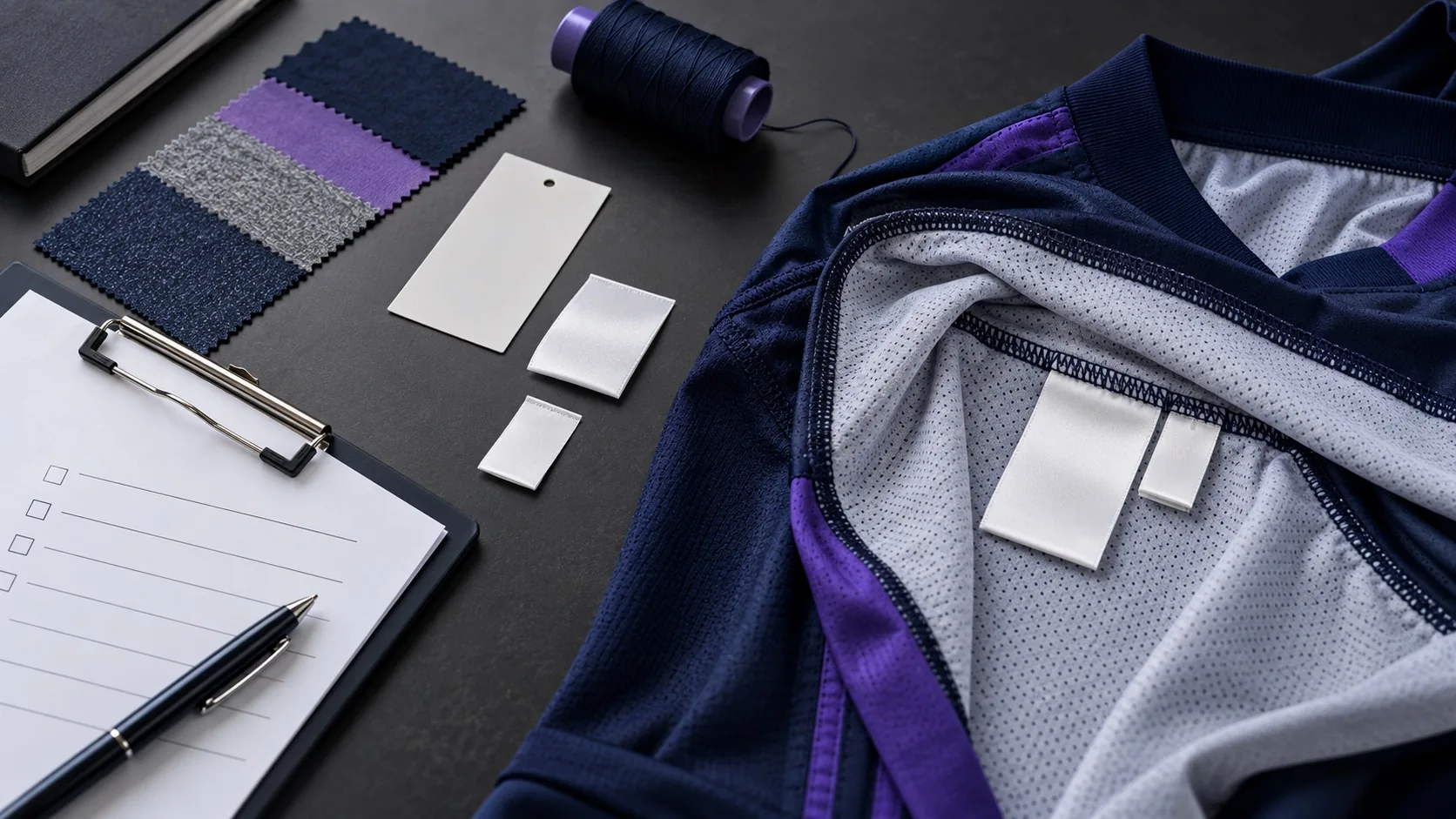
The decision in one paragraph
For U.S.-bound sportswear, buyers should review whether the product falls within FTC textile and care-labeling rules, then confirm fiber content, country of origin, responsible business identity and care instructions where applicable. The exact wording, placement, permanence, exemptions and any additional federal or state requirements depend on the product and transaction. Treat this checklist as a briefing tool, not legal advice, and obtain compliance review before bulk production.
Confirm whether the product is in scope
Do not copy one label across every item. Jerseys, jackets, caps, socks, bags and accessories may have different materials, construction and regulatory treatment. Identify the product, fiber components, country of manufacture, importer or responsible business and sales channel before preparing artwork.
The FTC guidance contains exceptions and special rules. A qualified reviewer should confirm whether the Textile Fiber Products Identification Act, Wool Products Labeling Act, Care Labeling Rule or another requirement applies to the exact item.
Build a label data sheet
| Field to review | Buyer evidence |
|---|---|
| Fiber content | Bill of materials and component-specific composition records |
| Country of origin | Manufacturing route and origin determination for the finished product |
| Responsible business | Correct registered identification number or permitted company identity |
| Care instructions | Reasonable basis covering the whole product and relevant components |
| Placement and permanence | Product-specific label plan and durable application route |
| Language and claims | Final market wording reviewed for accuracy and applicability |
Do not derive care from a fabric card alone
Care instructions need a reasonable basis for the finished product. A fabric supplier’s general guidance may not cover the printed colour, trim, transfer, elastic, lining, seam, finish or combined garment. Review the complete item and the proposed care procedure.
If testing is used, connect the method and sample to the actual production reference. An informal wash may reveal a development problem, but it should not be represented as a formal compliance test without controlled conditions and traceability.
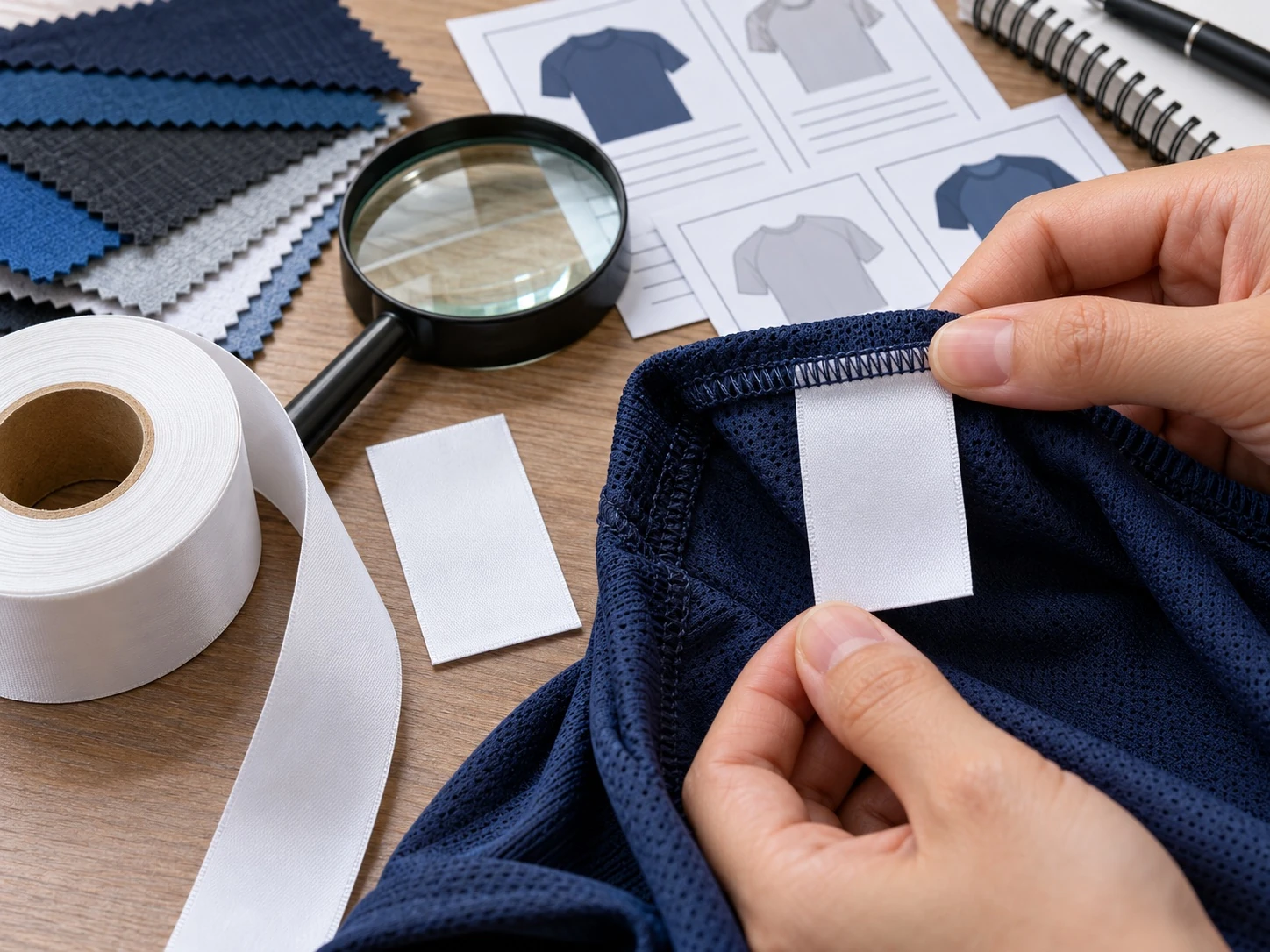
Keep product identity connected to production
The label artwork should have a version, product reference, size range and approved placement. Confirm who supplies the data, who prepares the artwork, who checks it and who authorises changes. A compliant draft can become incorrect if the fabric composition or country of manufacture changes.
Include labels in sample approval and pre-shipment inspection. If multiple products are packed as a set, review the labeling treatment for each component and the package rather than assuming one garment label covers everything.
Pre-production checklist
- Product and intended U.S. sales route identified
- Applicable FTC rule and any exemption reviewed
- Fiber names and percentages supported by current records
- Country-of-origin wording reviewed for the finished product
- Responsible company identity or RN confirmed
- Care instructions supported for the complete product
- Label location, permanence and legibility approved
- Packaging and hangtag claims checked against the garment
- Final artwork version linked to the order
- Professional compliance review completed where required
Keep the manufacturer brief separate from legal approval
A supplier can help gather fiber, origin, construction and care evidence and can apply approved labels. The buyer or importer should not delegate the legal interpretation invisibly. Record who provides the final wording and who approves it.
For a KITOEM project, the quotation and specification can identify the label content supplied by the buyer, the production evidence supplied by the manufacturer and any third-party review required. Final U.S. applicability and wording should be approved for the exact product and market route before bulk production.
What to confirm for your project
- Applicable product and rule scope
- Fiber and component evidence
- Finished-product origin
- Responsible business identity
- Reasonable basis for care
- Placement and permanence
- Final legal/compliance approval
MOQ, sampling conditions, production timing, exact material options and service scope are confirmed for the specific product and order. This guide does not replace a current quotation, approved sample or production specification.
Questions to carry into supplier review
- Which rule applies to this exact product?
- What evidence supports the final label content?
- Who approves the legal wording before bulk production?
Questions buyers ask next
Does every sportswear product use the same U.S. label?
No. Product type, materials, construction and applicable exceptions can change the requirements.
Can a fabric composition certificate determine the final garment label?
It can support one input, but the finished item, all relevant components and the actual production material must be confirmed.
Can the factory write the care instructions?
A supplier can propose care based on evidence, but the party responsible for the U.S. product should review and approve the final instructions and reasonable basis.
Is this checklist legal advice?
No. It is a procurement briefing tool. Obtain qualified review for the exact product and market route.
Technical references and buyer discussions
- Technical referenceFTC — Threading Your Way Through the Labeling Requirements Under the Textile and Wool Acts
- Technical referenceFTC — Clothes Captioning: Complying with the Care Labeling Rule
Technical references explain the methods discussed. Public buyer discussions show how a problem is described in practice; they are not reports on KITOEM products or test results.