The decision in one paragraph
Build the budget from the team’s operating needs, not from a supplier’s largest bundle. Define the mandatory match kit, minimum training and staff items, spares and replacement risk first. Then price each product, decoration, sample, freight, duty and contingency as a separate line. Compare options at the same specification and delivery basis. If the total is too high, reduce low-use products, colourways, packaging or custom complexity before weakening fit, roster control or the evidence needed to approve bulk production.
1. Start with the season, squads and rules
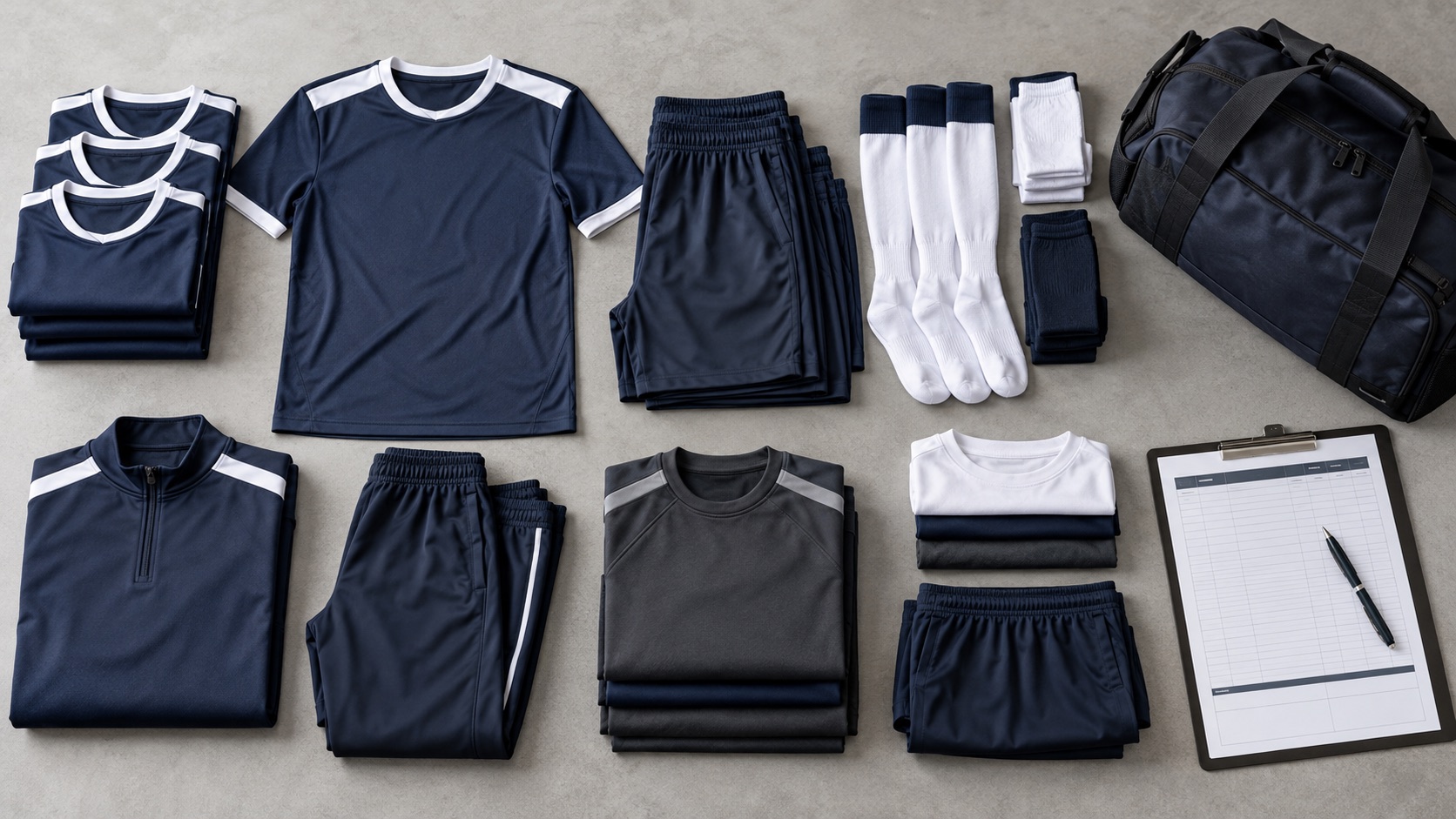
A club kit budget is an operating plan expressed in products and quantities. Begin with the competition rules, number of squads, player and staff counts, season length, training frequency, climate, laundry arrangements and travel demands. These facts determine what must be available, how often it is used and where failure would stop participation. A package built from a catalogue image can look complete while omitting goalkeeper cover, away-colour requirements, replacement stock or weather protection.
Separate the purchaser from the wearer and funder. The club may buy match shirts, families may buy training wear and a sponsor may fund warm-up tops. Record which party owns each product, who approves branding and whether the item remains club property. A low family price can still create an unaffordable total if optional products become socially compulsory. Publish the mandatory list and the optional list clearly.
Use one scope table with squad, product, purpose, user, mandatory status, expected uses, quantity and owner. The table exposes duplication. If two jackets perform the same job, or a travel top will be worn twice, the club can challenge that line before negotiating fabric or decoration.
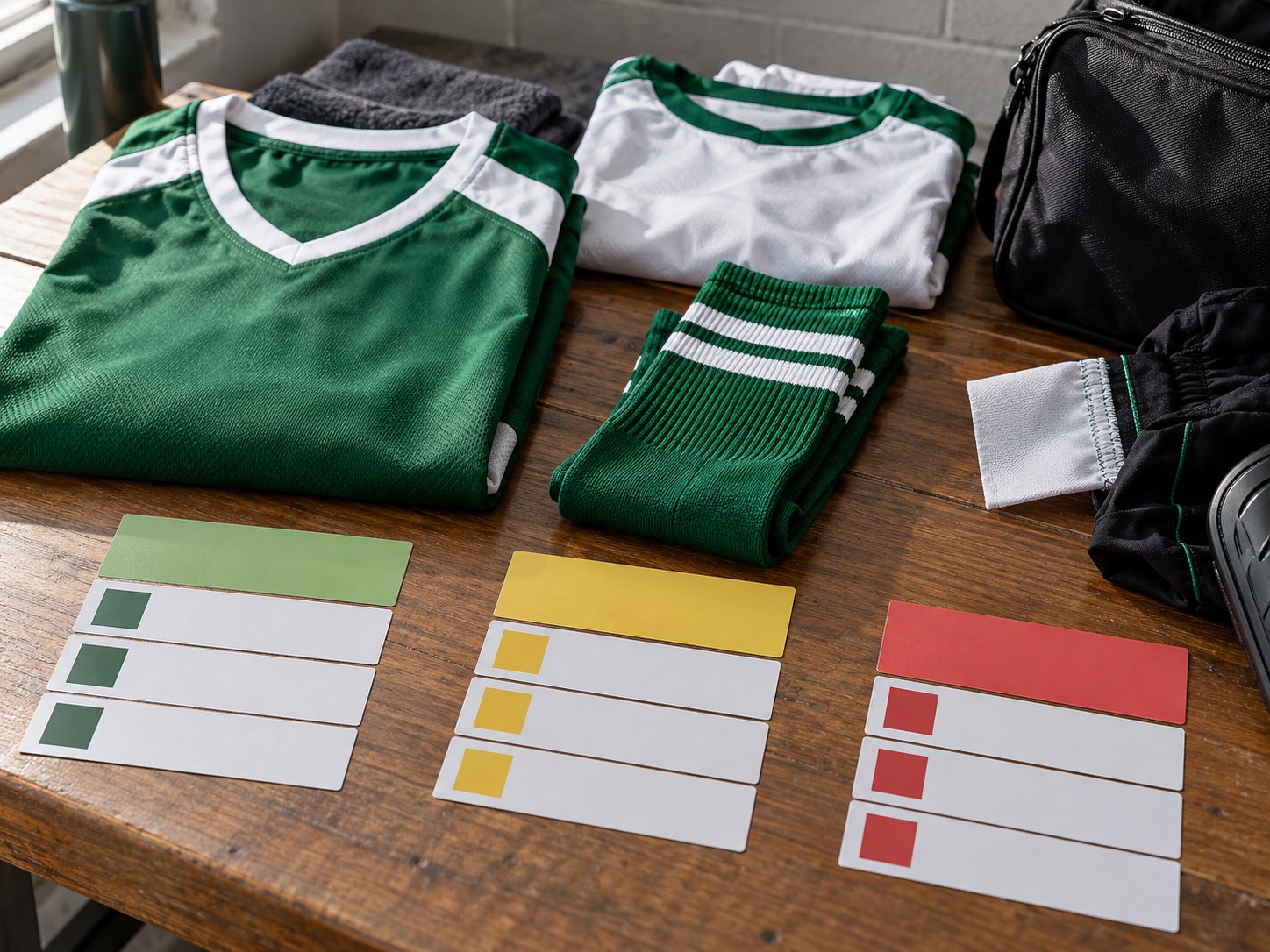
2. Divide the package into protected, useful and optional layers
The protected layer contains what the team needs to play safely and comply with competition rules: the correct match garments, goalkeeper distinction where required, approved numbers and any mandatory identity. Fit and legibility belong in this layer because a cheap garment that cannot be allocated or approved is not a saving. Define the minimum viable specification before considering presentation items.
The useful layer supports repeated operation: training tops, shorts, socks, a weather layer, staff identification and realistic spares. Rank these by frequency and consequence. A second training top may reduce laundry pressure more than a presentation polo. A modest stock of common sizes may solve replacements faster than a heavily personalised spare that fits only one player.
The optional layer includes travel, retail, gifting and premium presentation items. These can have real value for sponsorship or club identity, but they should compete for budget openly. If an optional item is sponsor-funded, record whether that funding includes samples, artwork, freight and replacements rather than assuming the headline contribution covers the delivered cost.
3. Model quantities by product instead of multiplying one pack
“Twenty-five player packs” is convenient but often inaccurate. Goalkeepers, coaches, substitutes and new joiners require different combinations. Build quantities at product level: issued units, stock units, fitting or approval samples, sponsor or staff units and anticipated replacements. Reconcile the total with the roster but keep unallocated stock visible.
Choose spares from exposure rather than a generic percentage. Consider roster changes, damage frequency, critical match colours, player size concentration, supplier reorder minimums and lead time. One spare in the most common sizes can be more useful than a full duplicate set, but a fixed-date tournament may justify broader cover. State the reasoning so the next season can improve it using actual replacement data.
Personalisation changes the value of a spare. A shirt carrying a player name has limited reuse; a numbered but unnamed club-owned shirt may be more flexible. Compare the competition’s identification rules with the club’s presentation preference before personalising every reserve garment.
4. Compare landed, approved cost rather than unit price
Request a line-item quotation showing product, quantity, unit price, decoration, labels, packaging, sample charges, tooling or setup, freight basis and taxes or duties that are included or excluded. Incoterms define specific delivery responsibilities and risk points, but the quote still needs a named place and enough detail for the buyer to estimate the delivered position. Two suppliers cannot be compared fairly when one price includes freight and the other stops at origin.
Add buyer-side costs: payment fees, import handling, local delivery, roster administration, fitting events, third-party inspection and contingency. Approval evidence also has a cost. Removing a pre-production sample may reduce the invoice while increasing the chance of an expensive error. Treat that choice as risk acceptance, not a free saving.
Use the same currency date and specification for comparisons. A lower price based on lighter fabric, fewer colours, a different decoration method, generic packaging or a longer schedule is a different offer. Create a variance column that describes each difference in plain language before choosing a supplier.
5. Reduce complexity where it adds the least value
If the package is over budget, remove or simplify the lowest-priority complexity first. Fewer garment constructions, shared fabrics, a controlled colour palette and common label or packaging standards may improve purchasing efficiency and reorder clarity. This does not guarantee a lower price; ask the supplier to re-quote the exact revised scope.
Personalisation should be designed for purpose. Full variable names, multiple sponsor positions and different graphics by squad create file-control and production work. A shared club design with controlled team identifiers can be easier to approve and repeat. Do not simplify critical legibility or competition requirements merely to reduce setup.
Avoid savings that move cost into operations. Extremely limited size coverage can create exceptions; no spare allowance can force urgent freight; elaborate individual packs can slow distribution; and a one-season fashion item can strand stock. Evaluate cost per useful season and replacement path, not only the opening order.
6. Protect the approvals that prevent expensive errors
Budget pressure often targets samples and review steps because they do not become player inventory. Keep the approvals tied to material risks: fit and size allocation, artwork and sponsor accuracy, colour reference, construction, personalisation data and packaging. Decide which can be confirmed through swatches or digital files and which require a physical garment. The supplier should state where sample materials differ from bulk.
Set a cost authority for changes. A supplier proposal, late sponsor request or roster increase should not silently enter production. Record the change, incremental cost, schedule effect, funding source and approver. If the club accepts a substitution to protect timing, preserve the original specification and the written disposition.
Reconcile quotation, roster and purchase approval before the deposit, then reconcile the final roster before production release. This two-stage control allows early commercial commitment without pretending that names and sizes were final from day one.
7. Turn the first order into a better next-season budget
Record issued, unused, replaced, lost and reordered items by product and size. Note why replacements occurred: roster change, fit selection, damage, manufacturing issue or sponsor change. The next budget should be based on this evidence rather than the previous order quantity copied forward.
Preserve approved artwork, colour and material references, measurement charts, roster structure, supplier terms and remaining stock. Ask before the first order how repeats will be priced, what minimums apply, how long files and materials are retained and what triggers a new sample. A cheap opening package with an unusable repeat route can cost more across the season.
Report the budget in three figures: opening approved cost, delivered cost and season-end cost after replacements. The difference shows where assumptions failed. It also gives committees and sponsors a clearer basis for deciding whether the next investment belongs in product durability, additional stock, simpler branding or a different procurement timetable.
Keep contingency as a visible budget line with a named release authority. It can cover approved roster movement, replacement freight or a documented correction, but it should not become an unexamined allowance for scope growth. Record every use against its cause. Unused contingency remains evidence that the plan absorbed uncertainty rather than money that must be spent.
What to confirm for your project
- Competition and operating requirements
- Mandatory, useful and optional product layers
- Product-level quantities and spare logic
- Landed-cost comparison at the same specification
- Change authority and protected approvals
- Reorder terms and season-end review method
MOQ, sampling conditions, production timing, exact material options and service scope are confirmed for the specific product and order. This guide does not replace a current quotation, approved sample or production specification.
Questions to carry into supplier review
- Which items would stop the team playing if unavailable?
- Which products are mandatory for players or families?
- What cost is excluded from the supplier quotation?
- Which complexity can be removed without damaging use or approval?
Questions buyers ask next
What is a reasonable team uniform budget per player?
There is no reliable universal figure because sport, product count, specification, decoration, country, freight, tax and funding model differ. Define the mandatory package and quantities, then obtain like-for-like written quotations. Show delivered cost per player and total club-held stock separately.
Is it cheaper to order every item from one supplier?
It may reduce coordination and freight complexity, but only if the supplier is suitable for every product and the consolidated price remains competitive. Compare product capability, approval control, packing and responsibility as well as price. One weak component can delay a complete pack.
How should clubs budget for spares?
Use roster volatility, common sizes, critical products, season length, damage history and reorder conditions. Keep spares in the budget as named stock lines. Do not hide them by increasing player quantities or rely on an urgent repeat order until MOQ, price and timing are confirmed.
Should optional clubwear be included in the main order?
Include it when quantities, funding and approvals are clear and consolidation creates a practical benefit. Keep it as separate quotation lines so optional demand cannot consume protected match-kit funds. For uncertain retail demand, discuss samples, pre-orders or a later production window.
Which costs are most often missed?
Buyers frequently omit samples, decoration setup, freight basis differences, import charges, payment fees, local distribution, late changes, replacement stock and inspection. Ask suppliers to state exclusions and build a buyer-side landed-cost sheet before comparing offers.
Technical references and question evidence
- Technical referenceICC — Incoterms 2020 questions and answers
Technical references support the discussion method. Question evidence documents public discussion of an issue; it does not diagnose a KITOEM product or establish a test result.