
The decision in one paragraph
A useful volleyball uniform brief connects the wearer, the garment and the approval decision. List jerseys and shorts separately, define the team and contrasting player colour directions, identify the textile, and match artwork to a controlled size-and-number roster. Then agree sample review, production release and transport as separate milestones. KITOEM’s 60-set cooperation project provides one concrete example: 100% polyester micro-mesh at 160 g/m², full sublimation and a recorded 7-business-day expedited production period.
One project, four useful starting points
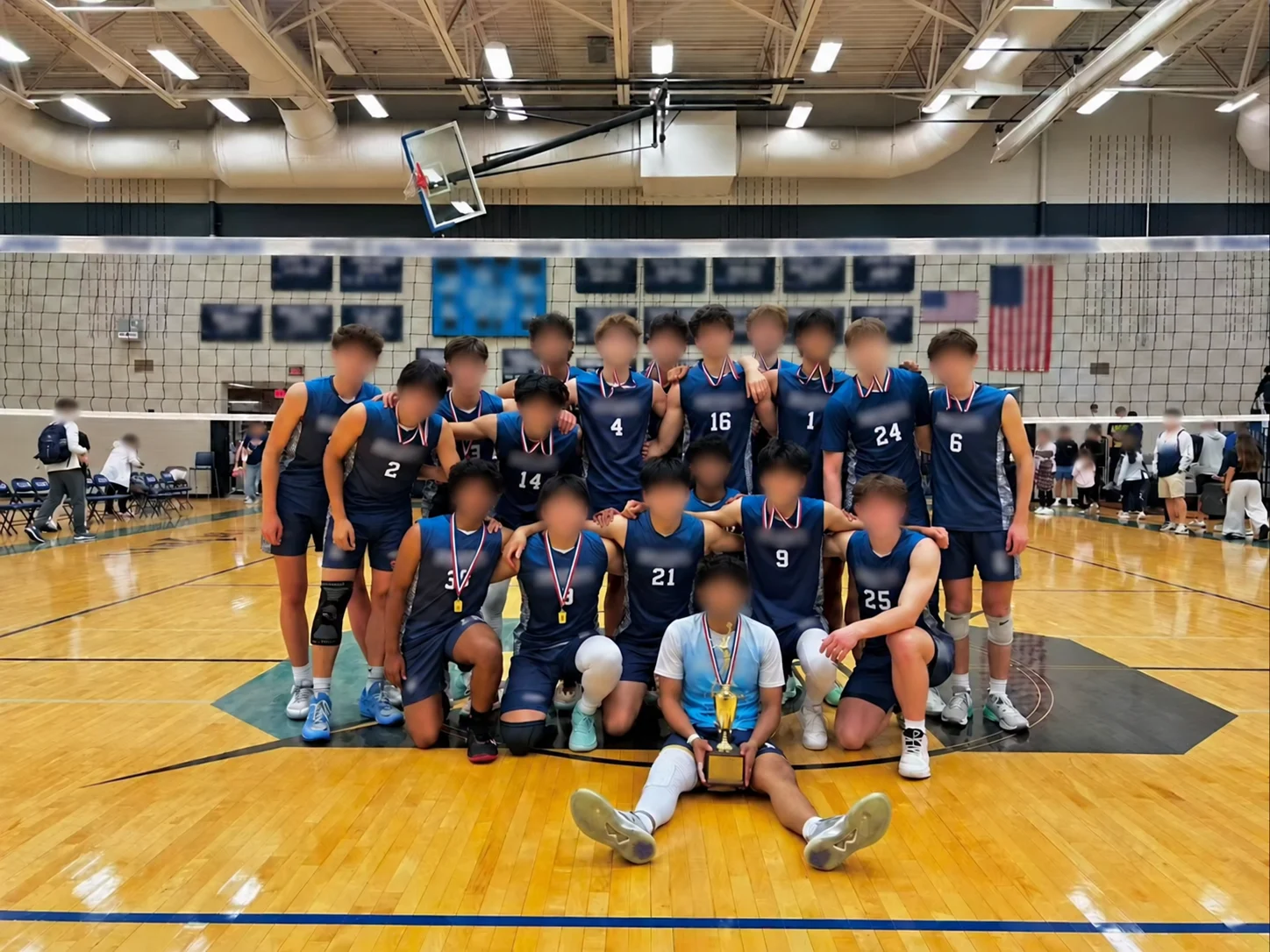
In the supplied team photograph, navy sleeveless uniforms create a shared visual identity. Individual numbers separate the players; a light-blue uniform adds a contrasting direction within the group. That is a useful design conversation for a new buyer: which elements should stay consistent, and which need to distinguish a role? The image records appearance, while the project owner separately confirms the order’s material, printing, quantity and production period.
The project comprised 60 sets using 100% polyester micro-mesh at 160 g/m² and full sublimation. Its recorded expedited production period was seven business days. These details form one order record, not a standard minimum quantity or a production promise for every enquiry. Use them to ask specific questions about your own scope rather than copying the past schedule into a purchase order.
| Recorded project detail | Decision for your own brief |
|---|---|
| 60 sets | Define the total, the size breakdown and what each set includes. |
| 100% polyester micro-mesh, 160 g/m² | Identify the exact proposed textile and review it in the intended garment. |
| Full sublimation | Bring colour, numbers and authorised graphics into one artwork approval. |
| 7 business days, expedited production | Agree your own approval start, production slot, dispatch and arrival milestones. |
Start with the garments—not just a team headcount
“Uniforms for our team” leaves too much room for interpretation. A set might mean one jersey and one pair of shorts, but a buyer could also need a second jersey colour, reserve pieces or a separate warm-up layer. Write each garment as its own line before grouping it into sets. Give the supplier one agreed definition of the set and a quantity for each individual item.
Keep the wearer groups visible. List the main squad, the contrasting player uniform, staff and any replacement garments as separate requirements. For example, an illustrative brief can contain one row for the main navy jersey direction and another for the light contrasting direction, even when both belong to one team identity. Leave unknown quantities open for the buyer to complete rather than silently distributing a total.
This structure also makes quotation comparison easier. Two suppliers can appear to quote the same “team kit” while including different garments, artwork or packing. An item-by-item scope helps procurement see what is included and what must be priced separately.
Keep the team identity coherent across player roles
Think of the design as a shared visual language rather than a single colour. Number typography, graphic proportions, panel rhythm and authorised marks can connect the main team uniform with a contrasting player direction. Provide front and back views for both, with the number positions and any differences explicitly marked.
Prepare one artwork review that names the exact garment, colour direction and revision. Include spelling, number layout, logo permissions and the approved scale of each mark. If the team needs a uniform that follows competition-specific rules, supply the relevant requirements for review; a contrasting photograph alone does not establish compliance.
Full sublimation is the confirmed process in the featured project. For your order, review the proposed process on the actual textile and garment, including fine text, large numbers, light areas and any graphics crossing a seam. Keep the approved artwork attached to the final specification so a later edit cannot quietly become the production version.
Bring the fabric choice into the garment review
The case identifies a specific textile: 100% polyester micro-mesh at 160 g/m². Composition describes the fibre blend; g/m² describes mass per unit area. Those are useful starting points for discussing the fabric, but neither replaces the finished garment review. A texture photograph cannot show how a particular armhole, neckline or side panel will feel on a wearer.
Use the sample conversation to connect material, cut and movement. Have the intended wearer reach overhead, turn and bend. Check the position of the openings, the ease through the body and the way the shorts sit during movement. Review the printed design in the same session: fit and graphics need to work together, not pass through separate approval discussions that never meet.
Record the chosen material reference, the agreed measurements and the sample revision. If a measured performance property is important to the purchase, put that requirement and its evidence into the specification. For a first enquiry, a clear description of the garment and its use is more productive than claiming a universal “best volleyball fabric.”
Give sizes and numbers one controlled home
A roster is a production input, not a marketing asset. Keep names, numbers, garment sizes and quantities in one buyer-approved file with a revision and an accountable approver. Cross-check duplicate numbers, spelling and any player receiving a different jersey direction before releasing the file.
Do not assume that the same size label means the same measurements across styles. Review the actual garment measurements and clarify whether jerseys and shorts can be selected in different sizes. Keep the two garment lines separate in the roster where needed, and agree how replacements or spare pieces will be identified.
For packing, decide whether the order should be grouped by player, size or garment type. These are practical receiving choices: a club distributing kits directly to players has a different unpacking task from a distributor holding items by size. Carry that decision into the quotation and packing instructions.
Work backwards from the match date
The date a team needs to wear its uniforms is the end of a calendar, not the start of production. Work backwards through receiving and distribution, transport, dispatch, production and final approval. Give each milestone a responsible person and leave enough space for the actual review and logistics arrangements.
The featured order records seven business days of expedited production. That period is not seven calendar days, shipping transit or a destination-arrival guarantee. A new project needs its own agreement on when the production clock starts, what approvals release it and what happens if files change. Ask for the schedule that applies to your order rather than treating a past example as a universal slot.
A deadline becomes actionable when the brief carries the destination country, required arrival date, item quantities, artwork readiness and outstanding sample decisions. This lets buyer and manufacturer separate a production request from the freight and receiving plan.
Make the first enquiry easy to evaluate
You do not need to solve every technical detail before starting. Send the product scope, known quantities, colour and artwork direction, destination and required date. Add what is already approved and what is still open. The strongest brief is not the longest one; it makes the next decision clear.
Use the linked cooperation case to discuss a comparable order, the volleyball product range to select garment directions, and the material library to build a sample conversation. The existing enquiry form keeps those choices editable. Reviewing a guide or following a link does not send an enquiry; the customer still checks and submits the form.
What to confirm for your project
- Garment lines and the exact definition of each set.
- Main and contrasting uniform directions with approved artwork.
- Actual size requirements, textile reference and sample decisions.
- Buyer-approved roster revision and packing structure.
- Destination, desired arrival date and separately agreed production and transport milestones.
Questions to carry into supplier review
- Who approves the final artwork and roster?
- Which sample decisions must be completed before production release?
- How should spare garments and later reorders be documented?
Questions buyers ask next
What can I send if I only have a team photo?
Use the photo to explain the visual direction, then list the garments, known quantities and desired changes. Share identifying player details privately. A photo is a starting point for discussion, not a complete textile, fit or artwork specification.
Should jerseys and shorts use the same size on the roster?
Record the requirements separately and review the actual garment measurements. The buyer should approve the size pairing; do not assume a matching label gives the intended fit in both garments.
How do I brief a contrasting player uniform?
Provide its own front/back artwork and quantity line while keeping the shared team design elements clear. Include any applicable competition requirements for review instead of relying on colour contrast alone.
Can I use 160 g/m² as the only fabric requirement?
No. Include composition, the identified material, intended garment and sample review. Weight alone does not describe construction, fit or a tested performance property.
Which date belongs in my first enquiry?
Give the date you want the goods to arrive and the destination. Treat it as a buyer requirement. Production release, production time, dispatch and freight must then be agreed separately.