
The decision in one paragraph
Select each outerwear material by the job it performs in the garment. A shell, bonded softshell, grid-pattern woven, brushed fleece and tricot lining are different development directions, not interchangeable grades. Confirm the actual construction, specification and claim-specific evidence, then approve the combined garment with its seams, closures and decoration.
Start with the jacket job and the complete outfit
Team outerwear may be worn during warm-ups, while waiting beside a pitch, on a bus journey or by event staff for an entire shift. A jacket that works over a light jersey can feel different over a sweatshirt. Before selecting fabric, describe the activity, likely conditions, duration, base layers and desired fit. Distinguish a presentation garment from a garment intended to support an explicit weather-protection claim.
Put the most important wearing task into the brief: reaching during warm-up, sitting on a team journey, carrying equipment or standing beside the pitch. Then consider the garment from outside to inside. The shell sets the outer silhouette; the reverse surface affects contact and layering; the lining shapes how the jacket slides over the garment beneath. Our available fabric range gives those decisions a concrete texture, with exact specifications and sample options on enquiry.
Give the five outerwear references different responsibilities
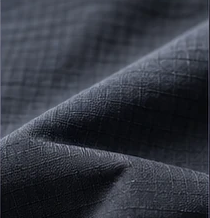
Our original range includes Taslon woven (OW-01), bonded softshell (OW-02), grid-pattern woven (OW-03), brushed fleece (OW-04) and tricot lining (OW-05). The real detail photographs let you compare their different surfaces. These fabrics are available for project enquiries: tell us the garment role and ask for the exact composition, weight, colour and finishing specification rather than choosing from an unnecessarily long generic parameter list.
Give each material a clear responsibility. A woven shell frames the outer garment; a bonded direction brings face and reverse layers into one material conversation; a brushed knit introduces a different contact surface; a lining works between the shell and the outfit. This is a layer system, not a contest between five fabric names. Review the whole jacket with the intended base garment so the surface, bulk and freedom of movement support the same brief.

| Reference | Discussion role | Questions before approval |
|---|---|---|
| KIT-MAT-OW-01 / Taslon woven | Light shell direction | Fibre, finish, hand feel and intended weather requirement |
| KIT-MAT-OW-02 / Bonded softshell | Combined face/reverse direction | Layer identity, bond, movement and care |
| KIT-MAT-OW-03 / Grid-pattern woven | Shell or selected panel direction | Grid, yarn, actual tear evidence and surface finish |
| KIT-MAT-OW-04 / Brushed fleece | Warm-up or internal layer direction | Brushed side, surface change, bulk and garment fit |
| KIT-MAT-OW-05 / Tricot lining | Internal surface direction | Coverage, colour, weight and shell compatibility |
Separate surface water behaviour from penetration and garment protection
ISO 4920:2012 concerns resistance to surface wetting. Its public scope specifically warns that this does not predict rain penetration. ISO 811:2018 separately identifies a hydrostatic-pressure method for fabric resistance to water penetration. A photograph showing droplets on a face, a finish name or the word softshell therefore cannot stand in for both measurements. The laboratory should confirm the method and specimen appropriate to the requirement.
A fabric result does not automatically approve a finished jacket. Review seams, closures, openings, hood configuration and any decoration that changes the construction. If the programme needs evidence for garment-level protection, define that scope separately with competent technical advice. Do not let a shell quotation acquire a waterproof guarantee by association with a coated swatch. Keep test conditions, care state and the relevant performance requirement attached to the proposed product.
Compare layers for movement and comfort without inventing a temperature rating
A shell, reverse layer and lining should be reviewed together in the intended garment. Ask how the layers move during arm raising, bending and seated travel, and examine restriction at shoulders and elbows. Confirm whether lining is full, partial or absent. Extra ease, lining coverage and construction can change the experience even when the outer fabric remains the same. Identify those variables before crediting the fibre or fabric name.
ISO 11092:2026 is the current official reference for steady-state thermal and water-vapour resistance measurements, including multilayer assemblies; the public scope does not supply a wearer-specific comfort rating. It replaced the 2014 edition. Where warmth is an explicit requirement, discuss the relevant test and outfit context rather than translating nominal weight into a temperature claim. Neither brushed appearance nor a soft handle establishes the result of that measurement.
Make durability a failure-mode question
The grid in OW-03 should prompt a conversation about construction, not an automatic promise that it stops tearing. Ask whether the practical risk is snagging, abrasion, tearing, seam failure or damage from a carried bag. These are different mechanisms. The official ISO 13937-2 listing identifies one tear-force method, but the laboratory must decide whether it is appropriate to the candidate and use. No test force or pass threshold is supplied by this catalogue.
For OW-04, compare the brushed and reverse surfaces before and after the agreed care review. Observe visible pilling, loose fibres, shape and hand feel, and document what the buyer considers unacceptable. A casual photograph after one wash is not a general durability certification. If the programme includes frequent shared laundry, bring that care pattern into sample planning instead of assuming that any fleece reference will respond identically.
Approve decoration without compromising the layer decision
Confirm whether embroidery, an applied mark or another process is intended before the jacket pattern is frozen. Discuss access to the outer layer when a lining is present, and decide whether the construction needs a decoration opening. Review backing, clearance, seam positions and the final-size artwork on the selected reference. A crest approval on an unlined top does not settle how the same crest will be applied to a lined shell.
If the proposed finish affects transfer adhesion or the application changes the material surface, test the actual combination. Ask the decorator to identify the candidate, finish and process conditions rather than use a generic softshell approval. Review the appearance, movement and agreed care outcome. Do not assert that all coated fabrics resist transfers or that all linings can be opened after assembly; those are product-specific feasibility questions.
Selection scenario: warm-up, sideline and team travel
Imagine one team programme with three wearing moments. During warm-up, the jacket needs room for an overhead reach; beside the pitch, it is worn over the match shirt; on the bus, the wearer sits with the front closed. Build an illustrative sample brief around those motions. Compare a shell-and-lining configuration with a bonded direction, keeping garment size and the intended base layer consistent. Look at shoulder restriction, elbow folds and the way the front settles when seated.
The crest introduces a construction question as well as a visual one. Decide its position before the lining is closed, review access for the planned application, and check the surrounding panel after decoration. This scenario describes a development approach rather than a customer case or a weather guarantee. It helps a buyer connect an available fabric texture to the wind-and-rain jacket product route and start a precise enquiry.
Release the complete configuration and keep substitutions controlled
Build a sample comparison with the intended size, base layer, shell, lining, closures and decoration. Label every material and version. The buyer can approve the outer construction while leaving a lining decision open for development, but the final release record should show that dependency rather than silently treating the garment as fully approved. Explain which remaining change could affect fit, colour, hand feel or the evidence required.
The final specification should identify each material, its confirmed composition and weight, the finishing route, lining coverage, seam and closure decisions, artwork and agreed care or testing. Preserve the approved physical sample and reject substitutions without review. Keep product quantity, colour split and delivery planning separate from material selection, so a new fabric option does not implicitly create a stock or timing promise.
For a first enquiry, shortlist two or three available references and explain the wearer task. We can discuss the exact specifications, relevant laboratory information and sample configuration for the project. Keep the shell, lining and artwork linked to the same product brief. A strong selection is one in which every layer has a purpose, and the complete garment gives the wearer a coherent fit and appearance.
What to confirm for your project
- Wearer task, conditions and base layers
- Separate shell, bonded layers and lining references
- Confirmed composition, weight, finish and coverage
- Actual decoration and construction route
- Claim-specific tests and care state
- Complete sample approval and substitution rule
Questions to carry into supplier review
- Which part of the garment needs protection, warmth or surface comfort?
- Does the evidence represent the complete jacket?
- Which unresolved lining decision could change the approved fit?
Questions buyers ask next
Can we compare brushed and unbrushed training fabrics before selecting a winter club range?
Use identified samples in the intended garment and care conditions. Compare hand feel, movement and surface change, with separate thermal evidence if warmth is a required claim; brushing alone is not a climate rating.
Can we approve a jacket's outer construction while a custom lining sample is still pending?
An interim development decision can record the approved outer construction and the unresolved lining. Do not release the complete garment until the dependent fit, construction and relevant evidence are reviewed.
What should we check when a fabric's water-repellent finish prevents transfers from bonding?
Have the decorator review the exact fabric, finish and application conditions, then approve the actual combination. Keep adhesion and appearance checks distinct from weather-performance tests.
How should a camp evaluate pilling risk before ordering brushed training tops?
Define the intended use and laundry pattern, compare physical samples, and agree a relevant pilling assessment and acceptance basis. Do not infer the result from a brushed photograph.
Technical references and question evidence
- User-confirmed real textile imagery; specification and performance remain reference-specificKITOEM outerwear material reference library
- Official method scope, not a KITOEM resultISO 4920:2012 — Resistance to surface wetting: official public scope
- Official method scope; full procedure not reviewedISO 811:2018 — Resistance to water penetration: official public scope
- Current official method scope; no comfort rating impliedISO 11092:2026 — Thermal and water-vapour resistance: official public scope
- Official method identification; lab must confirm applicabilityISO 13937-2:2000 — Tear force of trouser-shaped specimens: official listing
Technical references support the discussion method. Question evidence documents public discussion of an issue; it does not diagnose a KITOEM product or establish a test result.