
The decision in one paragraph
Approve the exact shirt and short views, final-size artwork, colour references, roster, measurements, material reference, label files and packing instructions against one revision. A visual mock-up is useful for position and hierarchy, but it does not replace the physical sample or a written production specification.
Approve front, back and shorts as separate views
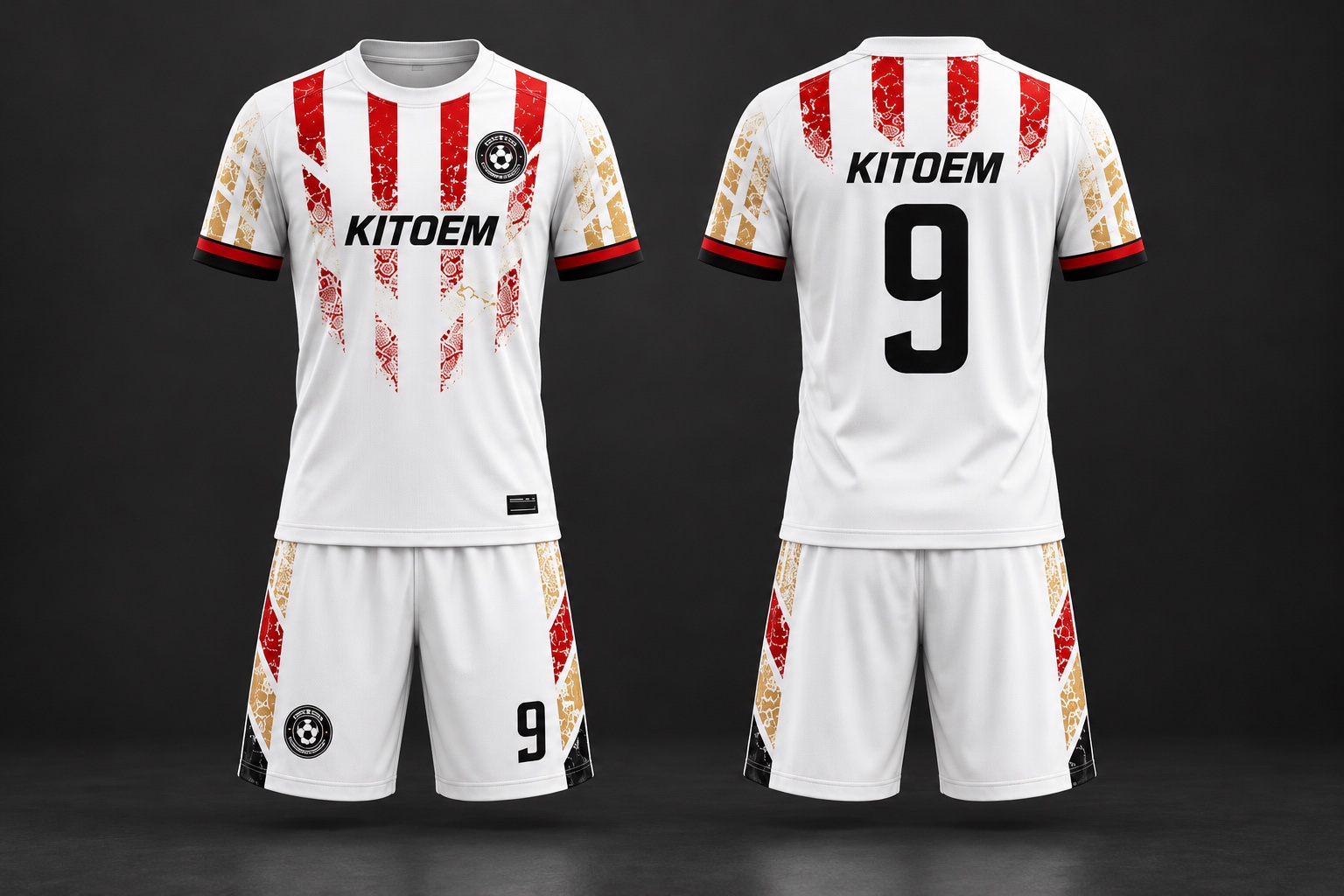
The customer reference shows a chest wordmark and crest on the front, an upper-back identity and player number on the back, plus separate short positions. Treat each view as its own controlled proof. Do not assume that approval of the shirt front covers the back or the shorts.
Give every mark a physical width or height and a position measured from a stable pattern reference. Visual centring alone can be misleading when panels, collars and sizes change.
Release the production artwork, not the presentation mock-up
Supply vector artwork where possible, linked colour references and final font information. Adobe’s print workflow guidance highlights checking fonts, links, image resolution and output settings before production; the garment supplier must still confirm its required file format and process limits.
Keep one proof revision that points to the exact files. When an artwork change is accepted, update the revision instead of approving an isolated screenshot.
Freeze names, numbers and sizes in one roster
Use one row per wearer and connect name, number, shirt size, short size and quantity. Define case, accents, spaces and leading zeros. The buyer should check the roster against the approved font and placement before production release.
Keep product totals and roster totals reconciled. Mixed goalkeeper or alternate colourways should be separated so the correct artwork and size are not inferred from row order.
State what the sample actually approves
A fit sample can confirm measurements and wearer fit. An artwork sample can check placement and reproduction. A pre-production sample may represent the agreed product before bulk release, but it still may not prove every size, colour, material lot or packing component.
Write the sample purpose on the approval record. If an important property is outside the sample scope, leave it open and request the needed evidence instead of treating it as approved.
Use one six-part release check
Production timing begins from the written condition agreed for the project. It should not be inferred from the date a mock-up was viewed or from a general website lead-time guide.
- Product and approved measurements
- Named fabric, colour and component references
- Front, back and short artwork revisions
- Final roster and quantity totals
- Label and packaging files
- Inspection scope, destination and shipment arrangement
What to confirm for your project
- Approved product and measurement revision
- Named material and colour references
- Final-size artwork for every view
- Roster and quantity control totals
- Sample purpose and open points
- Packing, inspection and delivery arrangement
Questions to carry into supplier review
- Who is authorised to release the final artwork?
- Does the sample represent every size and colour?
- What happens if the roster changes after approval?
Technical references and question evidence
- Artwork workflow guidanceAdobe — Produce print-ready PDF files
- Equipment manufacturer guidanceEpson — A digital-printing primer
- Embroidery-material manufacturer guidanceMadeira — Sports and performance wear
- Heat-applied material manufacturer guidanceSTAHLS’ — Material / Fabric Selection Chart
Technical references support the discussion method. Question evidence documents public discussion of an issue; it does not diagnose a KITOEM product or establish a test result.