
The decision in one paragraph
A drawstring bag and a team backpack solve different jobs. Use the drawstring route when the intended items are light, quick access matters and a simple foldable issue format is appropriate. Use a backpack when buyers need more structure, defined compartments, heavier contents or longer shoulder carry. Branding can coordinate both formats, but their quantities, artwork areas, samples and commercial terms stay separate.
Choose by carry job, not by price alone
Write the contents, carry duration, distribution method and storage need before asking for a quotation. A soft bag may be ideal for a short training visit or event handout and still be the wrong choice for bulky equipment or regular travel.
The backpack should not be treated as an automatic upgrade. Its structure, compartments and straps add decisions that should be useful to the programme.
Use a format comparison that keeps claims honest
| Decision | Drawstring bag route | Team backpack route |
|---|---|---|
| Typical planning use | Light training, member issue or event support | Daily player carry and organised travel |
| Opening | Quick drawstring main access | Zipped compartment route varies by product |
| Structure | Soft and foldable | More structured product direction |
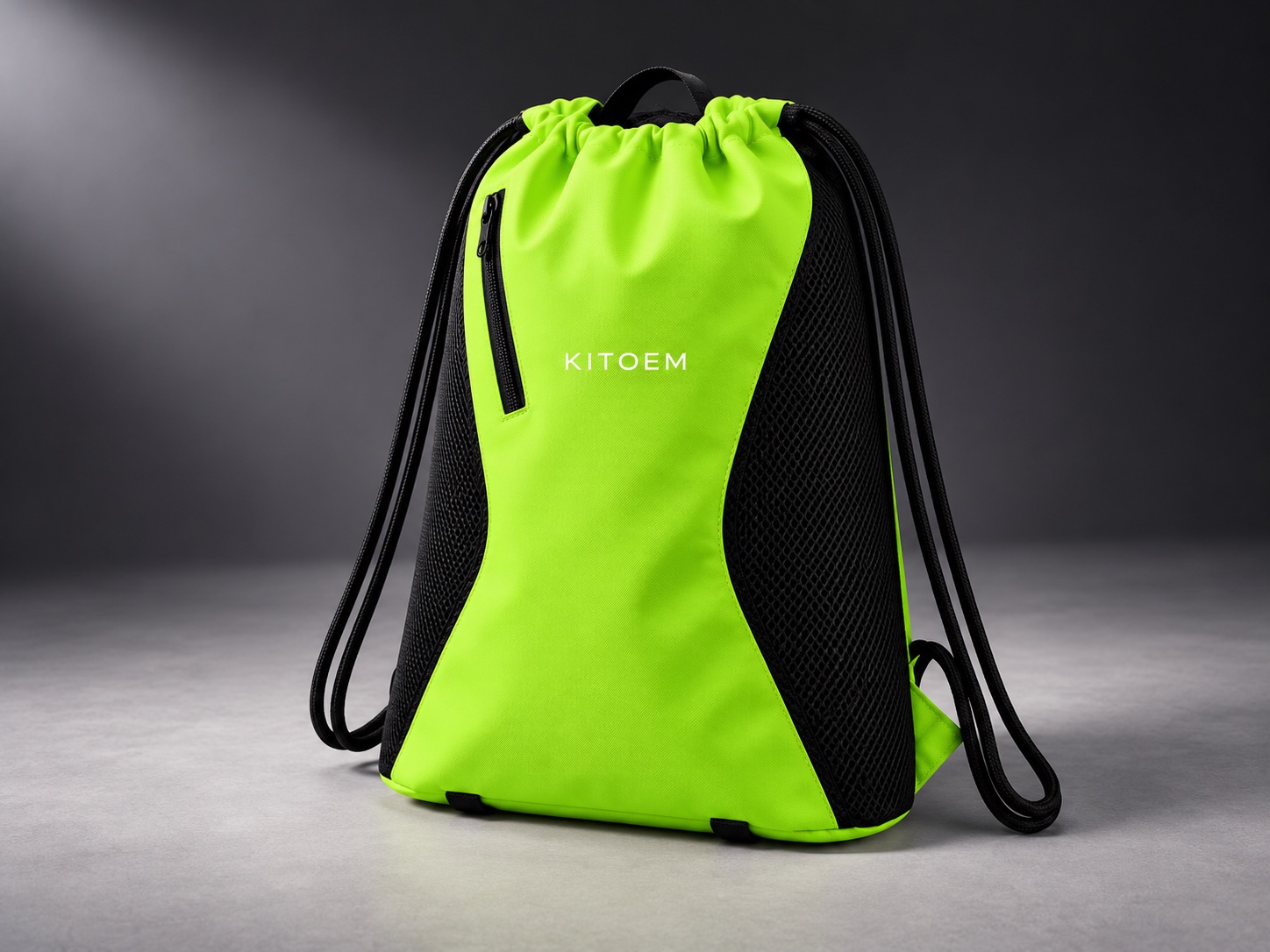
| Small-item control | One visible diagonal front zip pocket on KR-BG-003 | Pocket structure confirmed per backpack |
| Carry review | Cord comfort and load remain to confirm | Strap, back and compartment review remain to confirm |
Let one critical item decide the format
A rigid folder, large shoes, heavy training hardware or item that must stay upright can move the decision toward a backpack. A folded shirt, small towel and light accessories may suit a drawstring route, but that is a planning example rather than a capacity commitment.
If an item is essential, provide its measurements and use it in the sample check. Do not replace that evidence with a litre estimate inferred from external dimensions.
Use different formats in one programme without bundling them
A club may issue a drawstring bag to event participants and reserve backpacks for players, coaches or recurring members. Keep those audiences and quantities separate so buyers can remove one format without reopening the other.
The published football travel bag set remains a separate three-product programme. KR-BG-003 is not silently added to that set.
Approve the physical identity on each format
A logo approved on the flat front of the drawstring bag cannot be copied at the same size to a backpack with different seams, pockets and curvature. Approve physical size, clearance and method separately.
Use the enquiry to carry both products if the buyer wants a comparison. It remains an editable draft until the customer reviews and submits it.
What to confirm for your project
- Intended contents and critical item dimensions
- Carry duration and user group
- Need for structure or compartment separation
- Independent quantity for each format
- Artwork placement by product
- Sample and commercial route
Questions to carry into supplier review
- Which user group needs more structure?
- What is the heaviest intended item?
- Can any audience use the simpler format?
Questions buyers ask next
Which format is better for heavier gym equipment?
Start with a structured backpack review. Neither product should receive a load claim until the contents, carry conditions and sample evidence are defined.
Can a club order both formats?
Yes. Add each as a separate line with its own audience, quantity, artwork and approval route.
Is the drawstring bag self-storing?
The soft body is visibly foldable, but no built-in self-storage pouch or folded dimensions are confirmed.
Can both formats share one logo file?
They can start from the same approved artwork, but physical size, method and placement must be reviewed on each product.
Technical references and question evidence
- KITOEM product recordKITOEM KR-BG-003 source-backed drawstring bag record
- KITOEM product recordKITOEM team backpack product record
Technical references support the discussion method. Question evidence documents public discussion of an issue; it does not diagnose a KITOEM product or establish a test result.