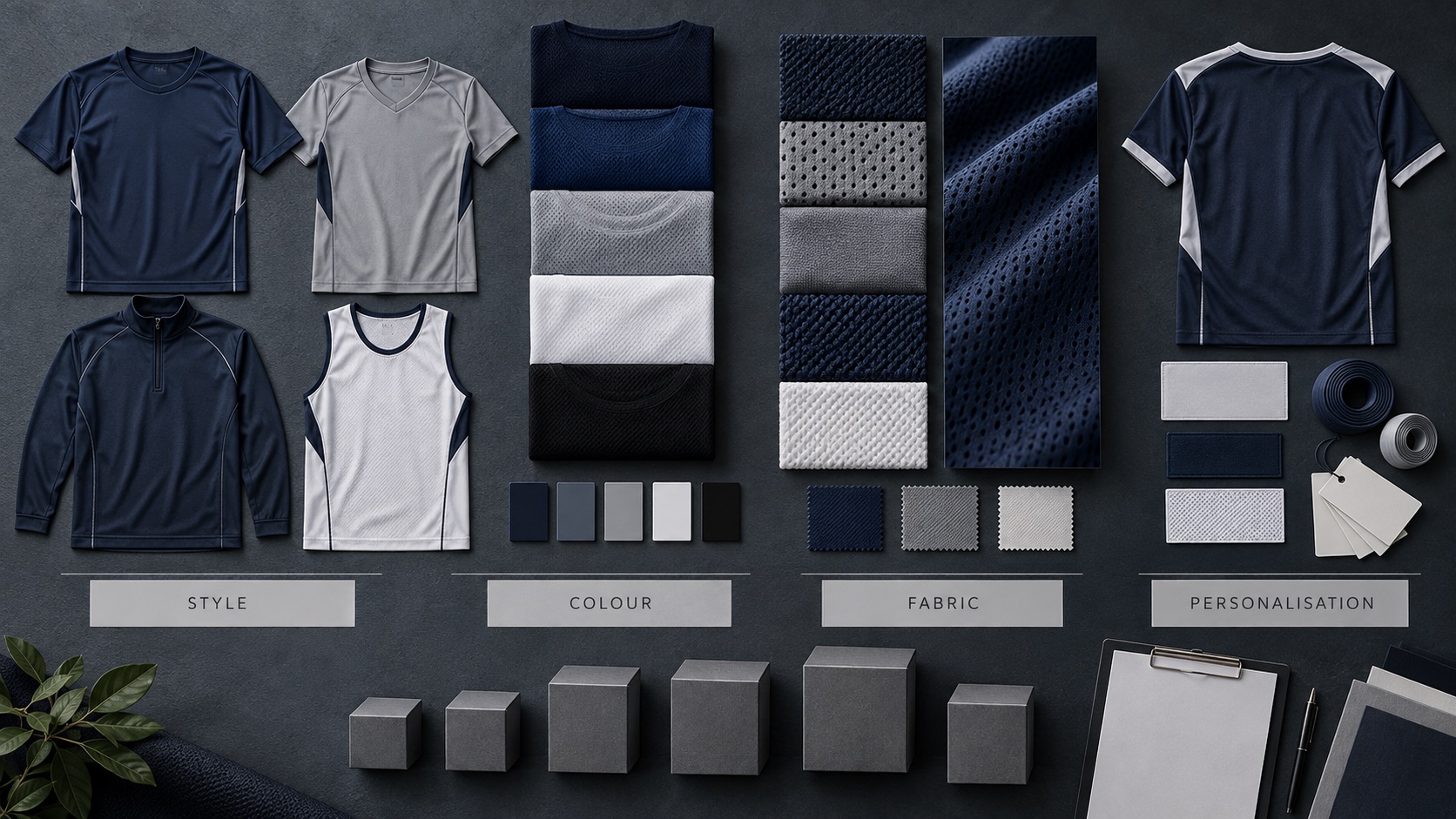
The decision in one paragraph
Ask the supplier to state the MOQ unit and every grouping rule. A quotation should show whether the minimum applies per style, colourway, fabric, gender or youth pattern, artwork, decoration method, size, label or total order. Then test your actual quantity breakdown against those rules. A factory may accept a low total while requiring a minimum for one dyed colour or custom rib. Negotiate by reducing unique setups, sharing compatible materials or using an existing base style, and obtain revised prices and lead times in writing.
1. Treat MOQ as a production rule, not one number
Minimum order quantity is the smallest commercial batch a supplier is prepared to accept under a stated specification and price. It is not automatically the smallest quantity a machine can make. Material purchasing, colour preparation, pattern work, print setup, line change, labels, packing and administration can each create a threshold. Two suppliers can quote the same headline MOQ while applying it to different units.
Write the order as a matrix before asking “What is your MOQ?” Show product, style or pattern, colourway, fabric, decoration, size range, personalisation, labels, packaging and quantity. Ask the supplier to mark which fields can be combined. The answer should make clear whether 100 garments means 100 total, 100 per colour, 100 per style or 100 per fabric-colour combination.
Keep MOQ separate from price breaks. A supplier may technically accept 20 pieces with a small-run charge while the standard price begins at 100. Ask for the lowest feasible quantity, its conditions and price, then request relevant higher bands. This reveals the cost of setup instead of turning “MOQ” into a yes-or-no barrier.
2. Identify material and colour minimums
Stock fabric in an existing colour may support a smaller garment run than custom-dyed or specially knitted material. Ask whether the offered fabric is stocked, made to order or purchased from a mill; which colours and quantities are available now; and whether availability is reserved. A swatch book is not proof that every colour is in stock.
Custom colour may create a mill dye-lot minimum larger than the sewing MOQ. Contrast panels, ribs, cuffs, elastic and thread can add separate thresholds. Record whether leftover material belongs to the buyer, can be stored for reorders, has a shelf-life concern or will be consumed across other orders. Do not assume an unused balance guarantees future matching.
When suppliers propose a close stock colour to reduce MOQ, compare it with the approved identity requirement under controlled conditions. The commercial saving should be weighed against sponsor, retail or team consistency rather than accepted as a purely technical substitution.
3. Separate style, pattern and size-range rules
A men’s or unisex jersey, women’s jersey, youth jersey and goalkeeper jersey may use different patterns and construction even when artwork is shared. Ask whether they count as one style for MOQ and pricing. Sizes usually can be mixed within an approved range, but extended or custom sizes may require separate pattern work, samples or minimums.
Changes that look small on a mock-up can create a new production setup: a different collar, sleeve construction, panel layout, pocket, zip or fabric combination. Ask the supplier to distinguish colourway changes from construction changes. If buyers need several squad identities, a shared base construction with controlled graphic changes may reduce complexity, subject to the print process and supplier rules.
Do not merge products only to reach a minimum if their specifications become unclear. The quotation should preserve each distinct product and show which quantities are aggregated for a specific MOQ rule.
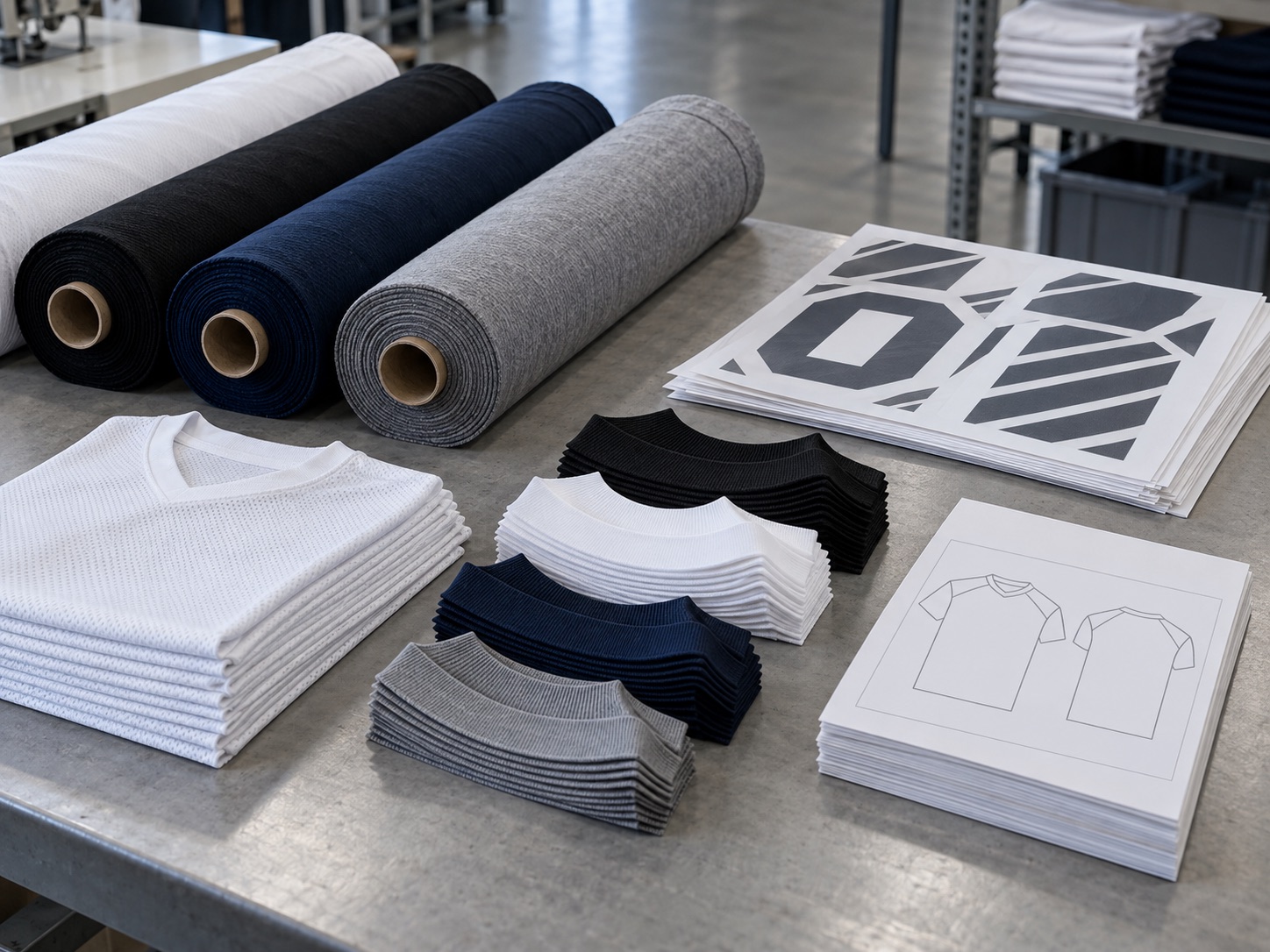
4. Distinguish artwork setup from variable personalisation
Full-panel printing, screen printing, embroidery, transfers and other methods have different setup and batching logic. Ask whether the minimum applies per artwork, placement, colour count, logo or garment. An image of the design cannot establish this; the supplier needs production-ready dimensions, colours and placements to quote accurately.
Names and numbers may be variable within one team design, but variation still creates file preparation and checking. Ask how personalisation is priced, what roster format is required, whether characters or fonts have limits and how corrections are handled. A low garment MOQ does not mean one-off replacements will carry the same price.
Labels and retail packaging can have their own vendor minimums. Separate the minimum purchase from the quantity used in the current order and record ownership or storage of the balance.
5. Require an MOQ and price matrix in the quotation
The supplier response should list every constrained combination, minimum, quoted quantity, unit price, setup charge, unused component purchase, sample condition and lead-time assumption. Include examples for likely scenarios: the opening order, one additional squad, six replacements and a single goalkeeper item. Examples force the calculation method into the open.
Check the matrix against the size breakdown. A supplier may allow mixed sizes but restrict very small or very large sizes, or price a custom size separately. Confirm whether sample and spare quantities count toward MOQ and whether defective replacements are governed by the same commercial rule.
If the seller cannot provide an exact minimum before artwork or material selection, ask for provisional scenarios and identify the decision that will make the number firm. Label the quote accordingly; do not publish or budget a provisional MOQ as a guaranteed term.
6. Negotiate the cause of MOQ
The strongest negotiation changes the cost structure. Options may include selecting a stocked fabric, reducing colourways, sharing a base pattern, using standard trims, simplifying packaging, combining forecasted demand or accepting a transparent small-run charge. Feasibility depends on the supplier and product, so request a revised written offer rather than assuming each change reduces the minimum.
Avoid asking a supplier to “make an exception” without identifying what will happen operationally. The seller may substitute material, group your order with another batch, use a sample process, absorb setup temporarily or quote below cost. Ask which specification, timing or repeat condition changes with the exception.
Compare total delivered cost and risk. Buying excess units to reach MOQ can create obsolete sponsor marks and unusable sizes. Paying a setup charge may be cheaper than surplus stock. A standard base garment with later decoration can help some programmes, but it changes product and inventory responsibility.
7. Confirm MOQ again for reorders
Opening-order MOQ rarely guarantees repeat-order MOQ. Materials may no longer be stocked, setup may need to be recreated and the original quantity band may not apply. Before the first order, ask for current examples of small additions, file-retention terms and triggers for a new sample.
Plan spares using the repeat matrix, roster volatility and critical sizes. Preserve approved specifications and references so the supplier can identify the same construction. If a new batch falls below the material minimum, require any proposed alternative to follow the change-notice and approval route.
MOQ is useful when it reveals the production constraint. Buyers should leave the discussion with a calculation they can reproduce, not a number detached from style, colour, material and process.
8. Test the rule with your real order breakdown
Build a small scenario table before selecting the offer. Show the opening quantity by style, colour, fabric and fit; a likely mid-season replacement; and a new squad using the same identity. Ask the supplier to calculate all three and identify the setup that drives each minimum. Reconcile any unused labels, fabric or trims as separate inventory. This exercise often reveals that a headline minimum applies only to the easiest configuration, while the buyer’s actual colour or pattern split creates several production batches.
Record the date and validity of the calculation. Material availability and production policy can change, so the matrix supports the quoted project rather than a permanent public claim.
What to confirm for your project
- MOQ unit and combination rules
- Stock or made-to-order fabric and colour status
- Pattern, size and construction grouping
- Decoration, labels and packaging minimums
- Small-run charges and price bands
- Reorder MOQ and change conditions
- Dated calculations for the opening order, replacements and an additional squad
MOQ, sampling conditions, production timing, exact material options and service scope are confirmed for the specific product and order. This guide does not replace a current quotation, approved sample or production specification.
Questions to carry into supplier review
- Can sizes be mixed inside the minimum?
- Which material or process creates the threshold?
- What changes if the order is below the standard minimum?
- Does the same rule apply to replacements?
Questions buyers ask next
Can different sizes be combined to meet MOQ?
Often, but not always. Ask whether sizes share the same style, pattern family, material, colour and production setup. Extended or custom sizes can have separate development conditions. The supplier should confirm the allowed size mix in the quotation.
Can men’s, women’s and youth jerseys share one MOQ?
They may share materials or artwork, but different patterns and construction can make them separate styles. Provide the quantity by fit and size, then ask the supplier to show which totals are combined and which are not.
Why does a custom colour increase MOQ?
A mill or dye process may require a minimum lot to prepare and run one colour economically and consistently. The garment factory’s sewing minimum can be smaller than this upstream material minimum. Ask for stock-colour and custom-colour scenarios.
Is paying a surcharge better than buying extra units?
Compare the surcharge with the landed cost and obsolescence risk of excess stock. Extra personalised or sponsor-specific garments may never be usable. A transparent setup charge can be commercially cleaner if the supplier can still meet the specification and quality controls.
Does a low MOQ prove a supplier is better for small teams?
No. Check what product, material, process, price and approval route the low minimum covers. It may be a strong fit, or it may rely on limited choices and sample-level production. Compare the complete offer and repeat-order route.
Technical references and question evidence
- Technical referenceASTM International — Textile standards catalogue
Technical references support the discussion method. Question evidence documents public discussion of an issue; it does not diagnose a KITOEM product or establish a test result.