
The decision in one paragraph
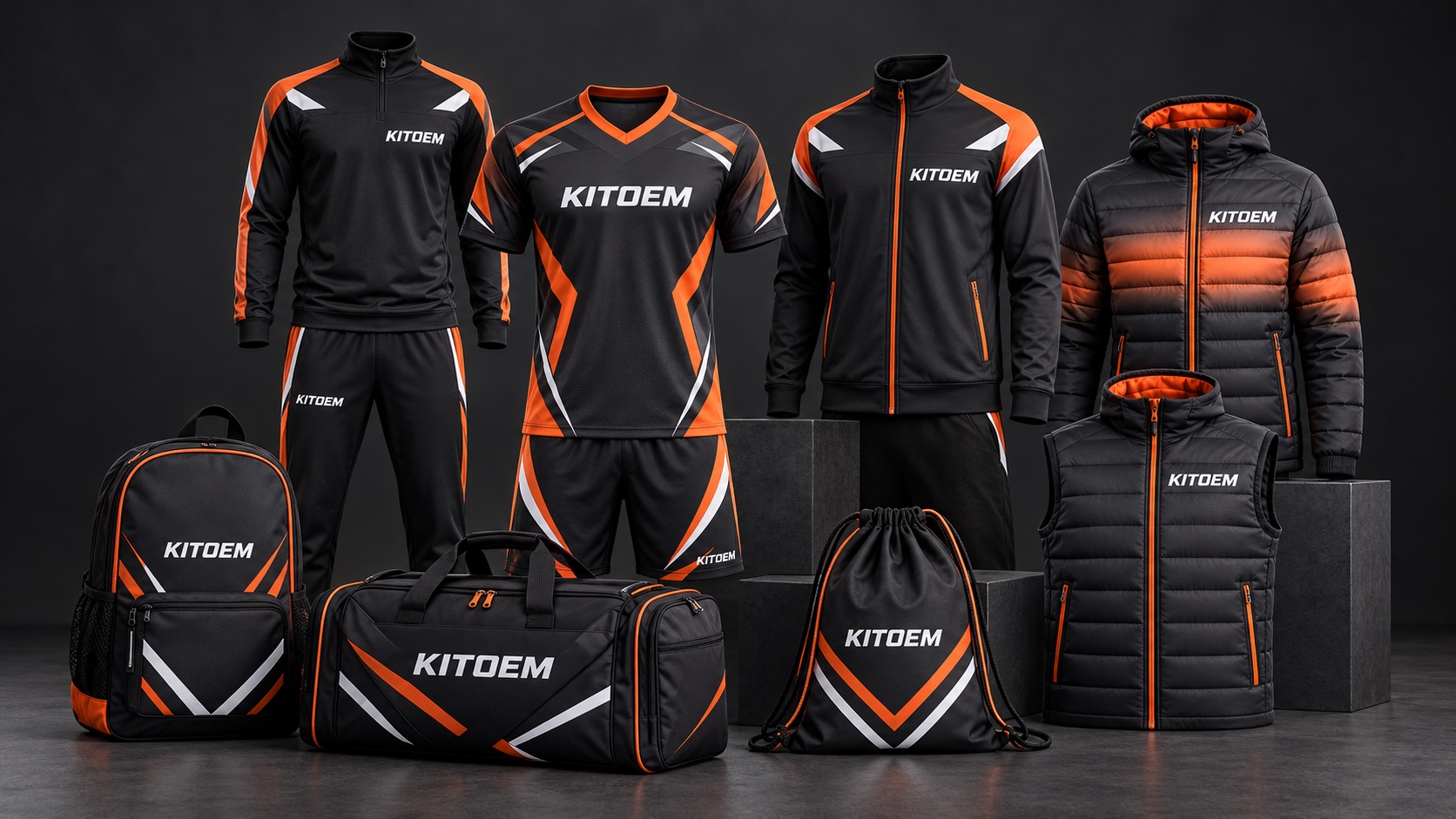
Start with the programme architecture: match, training, travel and accessories. Define the identity elements that should repeat, then specify and approve every product separately. A coordinated visual reference is not proof that all items share one pattern, material, supplier, MOQ or production route.
Build the programme before choosing individual decoration details
List what people wear for competition, training, warm-up, travel and team operations. The black and orange customer reference shows a clear visual relationship across these uses, but it does not establish that every item was produced in one order or by one facility.
Create one programme map with a separate line for every product. Record intended user, quantity, size range, identity marks, material direction, packing and required arrival. This lets the range look coordinated without hiding product-level decisions.
Define which identity elements repeat
Choose the elements that create recognition: colour hierarchy, angled panel direction, trim colour, wordmark position and the scale relationship between primary and secondary marks. Record which elements are fixed and which can adapt to a jacket, shirt or bag.
A wordmark that works across the chest may need a different physical size on a bag. Approval should therefore protect the identity system while showing each item at its real dimensions.
Keep a separate product record for every item
| Record | Programme-level decision | Product-level decision |
|---|---|---|
| Identity | Colours and visual hierarchy | Artwork size, position and method |
| Quantity | Total users and use cases | Quantity by product, colour and size |
| Material | Desired look and use | Named fabric or component specification |
| Approval | Authorised buyer and deadline | Sample purpose and accepted revision |
| Supply role | Opening range plan | Own production or supporting supplier confirmed in writing |
Sample the decisions that can change the whole range
Begin with the identity and highest-risk products rather than commissioning unrelated samples. A match shirt may establish colour and graphic proportion; a track layer can test how that system adapts to seams, zips and heavier materials.
State what each sample is intended to approve. One item should not silently approve the material, construction or badge method of every other product.
Prepare the range for future review
Archive the final product codes, artwork versions, colour references, approved sample scope, label files and packing rules. Mark which items depend on supporting suppliers or materials that may change.
A repeat order is still reviewed against current quantity, material availability and production conditions. The case visual explains coordination; it does not promise permanent stock or identical future supply.
What to confirm for your project
- Product list by use
- Quantity for every item
- Fixed and adaptable identity rules
- Product-specific materials and methods
- Sample purpose for each selected item
- Supply responsibility and packaging scope
Questions to carry into supplier review
- Can products share one colour reference but use different materials?
- Which item should establish the identity sample?
- How should accessory responsibility be recorded?